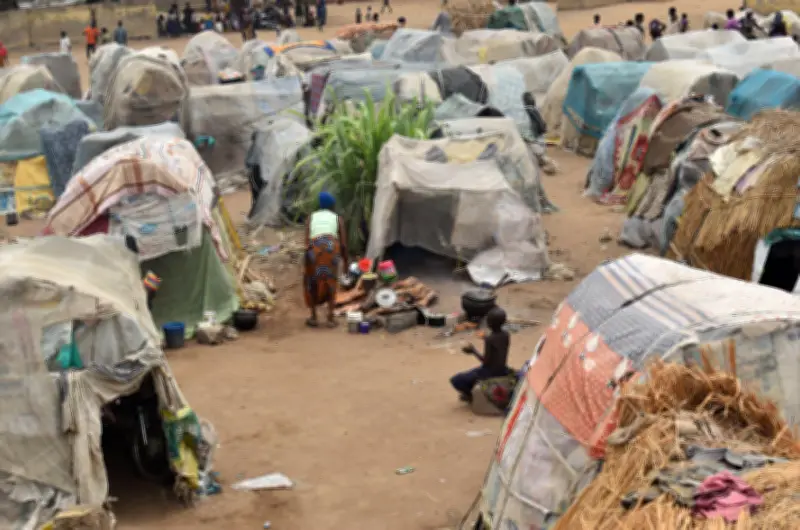
A detailed investigation into Benue State's audited financial statements from 2018 to 2025 reveals a troubling pattern of opaque spending, unaccounted billions, and systemic failures in managing funds meant for internally displaced persons (IDPs). Despite receiving over ₦20 billion in IDP-tied capital receipts in 2024 and 2025 alone, only ₦8.9 billion was reportedly spent on welfare interventions, leaving approximately ₦5.8 billion unaccounted for, according to records from the Open Nigerian States platform and Benue State Budget and Economic Planning Commission.
Hundreds Protest Neglect on Makurdi-Lafia Highway
On 31 July 2025, hundreds of IDPs blocked the Makurdi–Lafia expressway in Makurdi, protesting hunger, neglect, and broken promises. The protest came less than 24 hours after Nigeria's First Lady, Oluremi Tinubu, visited Benue State and announced a ₦1 billion donation to support displaced persons following the Yelewata attack. Mwuese Ugela, a protester, said, 'We heard in the news that the First Lady had given the Benue State Government ₦1 billion. And if we don’t protest, that money will never reach us. They have been doing this to us over and over.'
Historical Pattern of Unaccounted Donations
A review of Benue State’s 2018 audited financial statements shows no clear evidence that a ₦200 million donation from Rivers State Governor Nyesom Wike was recorded under capital receipts. In November 2018, the then Executive Secretary of the Benue State Emergency Management Agency (SEMA), Emmanuel Shior, publicly confirmed the funds were received and 'judiciously utilised' for food and non-food relief materials. However, the state budgeted only ₦50 million for 'Rehabilitation of IDPs' and spent ₦46 million, while recurrent 'Welfare Packages' recorded just ₦328,000. The discrepancy raises the question: what happened to the remaining ₦150 million?
Near-Zero Spending Amidst Crisis
In 2019, despite ₦80 billion in total revenue, only ₦15,000 was recorded as capital expenditure on IDP welfare—an implementation rate of 0.05 per cent against a ₦30 million budget. In 2020, COVID-19 interventions for IDPs saw ₦86.2 million in recurrent spending, but capital rehabilitation remained low at ₦4.24 million. The most disturbing pattern emerged in 2021 and 2022, where audited records show no actual expenditure on IDP-related capital projects. In 2022, the state approved ₦800 million for 'Welfare Packages' but spent zero. This occurred despite reports of over 308 killings in 2021 and 335 in 2022, with thousands displaced.
Billions Received, Billions Unaccounted
In 2024, Benue recorded over ₦11.6 billion in IDP-tied capital receipts, including ₦2.79 billion from local governments, ₦1.64 billion from UNHCR, ₦1.31 billion from ActionAid, and ₦4.03 billion from the federal government. However, only ₦4.5 billion was reported as expenditure, leaving a gap of about ₦7.1 billion. In 2025, receipts stood at ₦8.9 billion, but spending reached ₦10.3 billion, with ₦5.8 billion going to administrative costs of the Benue State Emergency Management Agency (BESEMA) and only ₦4.4 billion on welfare packages. Combined, total IDP-tied receipts for both years were approximately ₦20 billion, with ₦14.7 billion spent, leaving ₦5.8 billion unaccounted for.
Vague 'Welfare Packages' Mask Spending
The major spending entry in both years was a vague recurrent item called 'Welfare Packages,' with over ₦4.5 billion in 2024 and ₦4.47 billion in 2025, lacking breakdowns on beneficiaries, communities, or procurement. Ternugwa Azende, a chartered accountant and professor at Benue State University, said, 'Vague descriptions like this can make such expenditures appear questionable and difficult to verify.' Timothy Agum, an auditor, noted that categorising billions as 'welfare packages' without specific programmes raises serious accountability concerns.
Capital Projects Ignore IDPs
Despite rising welfare figures, none of the 19 listed capital projects in 2024 and 2025 specifically mention IDPs. Projects for 'Resettlement, Rehabilitation and Reintegration Projects for IDPs' and 'Skills Acquisition for 600 Female IDPs' recorded zero actual spending despite budgetary allocations. The IDP crisis remains invisible in capital development planning.
Harsh Realities in the Camps
According to the International Organisation for Migration’s Displacement Tracking Matrix, Benue has an estimated 480,000 IDPs. Visits to camps reveal no functional health facilities, irregular food distribution, and reliance on NGOs. Comfort Orban, a mother of two, said, 'There is no functional clinic here. In 2025, UNICEF set one up, but since the start of this year (2026), it has not been operational.' Iember Akosu, a mother of three in Naka camp for over seven years, said, 'It has been NGOs and humanitarian organisations that come to our aid. We barely get support from the government.'
Donor Intervention Highlights Governance Failure
In February 2026, the European Union commissioned a 500,000-capacity water facility in Naka, part of a ₦1.7 billion intervention package. This raises questions why basic infrastructure was not provided by the local government, which received over ₦22 billion in FAAC allocations from 2018 to 2025, including ₦5 billion in 2025 alone.
Systemic Accountability Failures
Across eight years, three persistent failures emerge: expenditure reports fail to explain how IDP-specific funds were spent; vague descriptions like 'Welfare Packages' conceal the destination of billions; and there is no outcome-based reporting on shelters, camps, or beneficiaries. The audited accounts provide little evidence of what displaced persons actually received. This report was commissioned with support from the Center for Journalism Innovation and Development (CJID) under a journalism initiative funded by the Royal Norwegian Embassy.