The Central Bank of Nigeria (CBN) has clarified that the controversial N50 charge appearing on many bank transaction alerts is not a levy imposed by banks, but a statutory tax directed by the federal government through tax authorities.
CBN Governor Clarifies Stamp Duty Collection
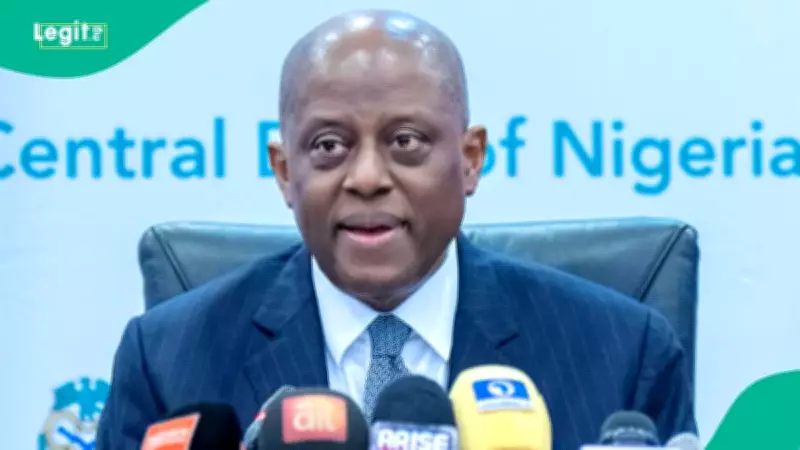
CBN Governor Olayemi Cardoso made the clarification on Tuesday, May 20, 2026, while briefing journalists after the conclusion of the Monetary Policy Committee (MPC) meeting held in Abuja. According to Cardoso, commercial banks merely serve as collection channels for the charge, commonly labelled as “Stamp Duty” on transaction notifications sent to customers.
CBN Distances Banks from Stamp Duty Charges
Speaking on growing complaints from bank customers over unexplained deductions, the CBN governor stressed that the banking system did not create the levy. “The stamp duty is not the outcome of the banking system… this is something that emanates from the tax authorities,” Cardoso said. He explained that banks are only responsible for deducting and remitting the charge to the appropriate government authorities, dismissing widespread assumptions that financial institutions introduced the fee independently. The clarification comes amid rising public frustration over multiple deductions and transaction-related charges on bank accounts across Nigeria.
Customers Confused by Multiple Debit Alerts
Cardoso acknowledged that confusion among customers has been worsened by the flood of transaction alerts often sent by banks for a single banking activity. According to him, fragmented notifications frequently make it difficult for account holders to identify the exact source of deductions. He noted that customers often receive “a whole slew of different advice,” creating uncertainty over whether charges are legitimate or duplicated. To address the issue, the apex bank is considering reforms that could simplify how transaction alerts are delivered to customers. One of the proposals under review is the introduction of a single, consolidated notification that clearly itemises all charges linked to a transaction instead of sending multiple separate alerts.
CBN Sets Up Consumer Complaint Committee
The CBN governor also disclosed that the apex bank has established a standing committee dedicated to resolving recurring customer complaints in the banking sector. The committee is expected to investigate issues ranging from unexplained deductions to poor transaction transparency and other consumer-related concerns frequently raised by Nigerians. Cardoso said the move forms part of broader efforts by the central bank to improve trust, accountability, and customer experience within the financial system. The announcement is likely to provide some reassurance to bank customers who have repeatedly questioned the legality and transparency of certain deductions appearing on their accounts.
MPC Retains Interest Rate at 26.5%
The clarification on stamp duty charges came shortly after the Monetary Policy Committee concluded its 305th meeting held between May 19 and 20, 2026. At the meeting, the MPC retained the Monetary Policy Rate (MPR) at 26.5 per cent, leaving all other key monetary parameters unchanged. The decision reflects the CBN’s continued cautious approach toward inflation management and economic stability as Nigeria navigates persistent price pressures and financial market uncertainties.
Banks Alert Customers on N50 Stamp Duty
Legit.ng earlier reported that Access, United Bank of Africa, Wema, Zenith and other Nigerian banks have alerted customers to changes in electronic transfer charges as the Nigeria Tax Act 2025 takes effect from Thursday, January 1, 2026. The update affects transfers of N10,000 and above, which will now attract a N50 stamp duty, payable by the sender rather than the recipient. First Bank and Zenith Bank issued similar advisories, noting exemptions for small transfers and salary payments, and the separation of the stamp duty from regular transfer fees, theCable reports.