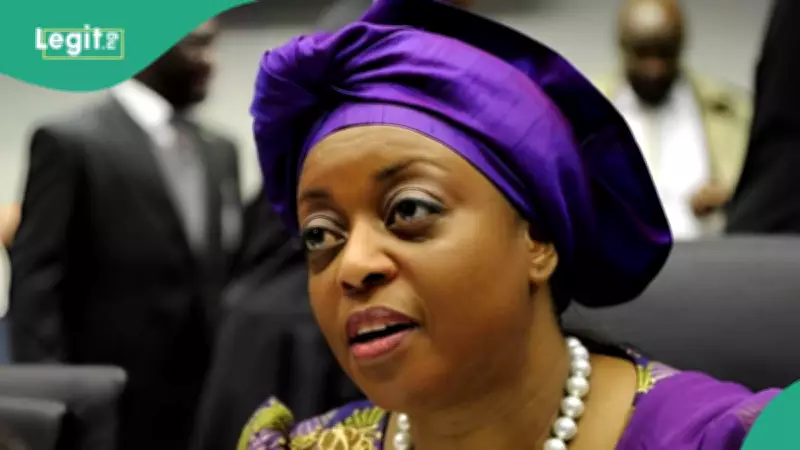
Former Nigerian Petroleum Minister Questions Fairness of UK Bribery Proceedings
In a significant development in the high-profile corruption case, former Nigerian Petroleum Minister Diezani Alison-Madueke has publicly challenged the fairness of her ongoing bribery trial in London. The former minister, who served from 2008 to 2015, has raised serious concerns about procedural justice as her legal team contends that both British and Nigerian authorities have obstructed access to vital defence materials.
Legal Team Highlights Document Access Issues
Through a statement released by her media aide Bolouere Opukiri, Alison-Madueke revealed that her defence lawyers, led by Jonathan Laidlaw and Alistair Richardson, have argued that the denial of crucial documents undermines her ability to mount a proper defence. The legal team maintains that the trial should not proceed under current conditions where essential materials remain inaccessible.
"Both the British and Nigerian governments have effectively placed my client at a significant disadvantage," the statement emphasized, highlighting what they describe as a fundamental breach of fair trial principles. The defence insists that transparency and access to all relevant documentation are essential prerequisites for any legitimate judicial proceeding.
Southwark Crown Court Proceedings
The case, being heard at Southwark Crown Court in London, involves multiple defendants alongside the former minister. Alison-Madueke's brother, 69-year-old Doye Agama, has pleaded not guilty to conspiracy to commit bribery charges related to his church activities. Their co-defendant, 54-year-old Olatimbo Ayinde, has similarly denied charges of bribing Alison-Madueke between 2012 and 2014, as well as bribery of a foreign public official.
This complex legal battle represents one of the most significant corruption cases involving a former Nigerian government official in international courts. The proceedings have drawn attention to the intricate relationship between Nigerian political figures and international legal systems.
Background of the Former Minister
Diezani Alison-Madueke remains one of Nigeria's most recognizable political figures from the oil and gas sector. As the first woman to serve as Nigeria's Minister of Petroleum Resources, she held the position from 2008 to 2015 under the administration of former President Goodluck Jonathan. During her tenure, she briefly served as President of the Organization of the Petroleum Exporting Countries (OPEC), marking a historic achievement for Nigerian representation in global energy governance.
However, her distinguished career has been overshadowed by persistent corruption allegations that have followed her into retirement. The current trial represents the culmination of years of investigations by both Nigerian and British authorities into alleged financial misconduct during her time in office.
Luxury Spending Allegations Surface in Court
Recent court proceedings have revealed startling details about the former minister's alleged lifestyle. Prosecutors have informed jurors that more than £2 million (approximately N3.8 billion) was spent at the luxury department store Harrods on behalf of Alison-Madueke. This extravagant spending, according to prosecution arguments, formed part of an arrangement that provided a lavish lifestyle in the United Kingdom.
The 65-year-old former minister denies five counts of accepting bribes and one charge of conspiracy to commit bribery. These allegations are specifically linked to oil and gas contracts awarded during her tenure as petroleum minister, highlighting the intersection of political power and resource management in Nigeria's energy sector.
Implications for Nigeria's Anti-Corruption Efforts
This case carries significant implications for Nigeria's ongoing battle against corruption in public office. As a former high-ranking official faces trial in foreign courts, questions arise about the effectiveness of domestic anti-corruption mechanisms and international judicial cooperation. The document access dispute between Nigerian and British authorities further complicates the narrative of transnational legal proceedings.
The trial continues to unfold at Southwark Crown Court, with legal observers closely monitoring how the document access issue will be resolved and what precedent it might set for future cases involving Nigerian officials in international courts. The outcome could influence how similar cases are handled in the future, particularly regarding evidence sharing between nations with different legal systems and political considerations.