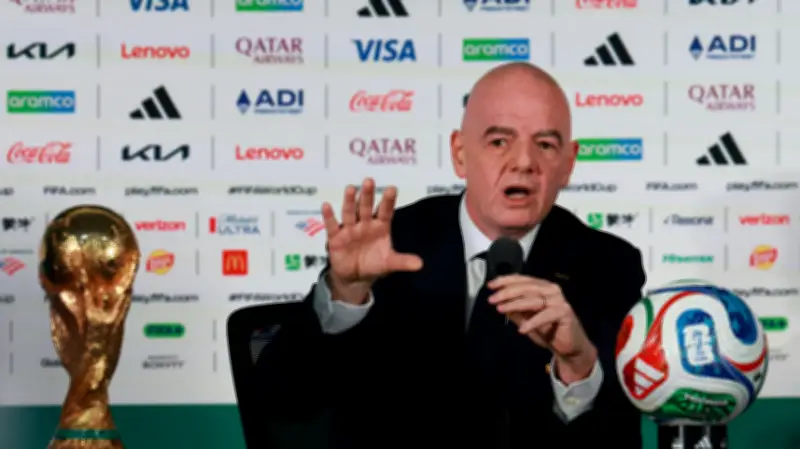
FIFA has issued an ultimatum to its 211 member associations: support the proposed sale of a $4 billion stake in the World Cup and receive up to $40 million per association, but sign the agreement by 19 September or the offer expires. The unprecedented move, announced on Tuesday, 28 July, has already provoked fierce opposition from European and Asian football governing bodies.
Subsidiary Plan and Backlash
The world football governing body revealed plans to establish a commercial subsidiary that would manage major tournaments, including the World Cup. This proposal sparked immediate condemnation from UEFA, which declared that the World Cup is not an “asset to trade.” The Asian Football Confederation (AFC) echoed the sentiment, stating it had not been consulted prior to the announcement. European Union sports chief Glenn Micallef directly addressed FIFA on Wednesday, asserting: “Hands off our game.”
Infantino's Letter Details Financial Packages
According to a letter from FIFA President Gianni Infantino obtained by The Times, member associations face a clear choice between two financial paths. “Should you wish to proceed, this $10 billion package will become available as of 1 January 2027, ushering in the next phase of our journey together,” Infantino wrote. He contrasted this with the status quo option: “Should you wish to retain the status quo and reject this proposal we still have our planned expansion of the Forward programme (development funds) of $2.7 billion as previously presented.”
Infantino emphasised that under the proposal, “each member association will have the possibility of access up to $40 million per member association.” The total $10 billion package would thus fund the $40 million per association allocation, alongside other investments.
Opponents Label Offer as “Pure Bribery”
The Times report noted that sources opposed to the plan have branded the offer “pure bribery,” insinuating that FIFA is using financial incentives to force through a controversial structural change. The $40 million per association represents a substantial increase over the standard development funding, raising concerns about undue influence on member associations' voting decisions.
Implications for Football Governance
If approved, the subsidiary would effectively transfer control over World Cup commercial rights from FIFA's member-based democratic structure to a separate entity. Critics argue this could undermine transparency and concentrate power within FIFA's executive leadership. UEFA and AFC are rallying opposition, though the September 19 deadline leaves little time for coordinated resistance. FIFAs proposal, if enacted, would reshape football finance and governance for decades, with the World Cup as the centrepiece of a new commercial venture.