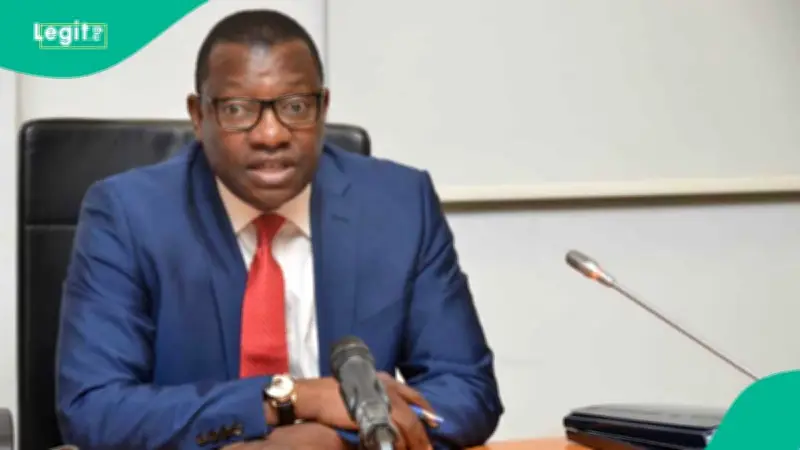
Bala Wunti, a senior figure with decades of experience in Nigeria's oil and gas sector, appeared before the Nigerian Senate to address the N210 trillion controversy surrounding the Nigerian National Petroleum Company Limited (NNPC). His testimony, according to policy analyst Engr Ike Onwuachu, shifted the debate from sensationalism to factual analysis, drawing a clear line between funds described as missing and figures that require reconciliation or accounting explanation.
Bala Wunti's Senate Testimony Provides Clarity
In an op-ed made available to Legit.ng on Sunday, July 19, Onwuachu argued that Wunti's command of petroleum operations, investment structures, and financial accounting allowed him to methodically break down complex ledger entries, giving lawmakers a firmer factual foundation. Central to Wunti's intervention was the distinction between concepts often conflated in public commentary, such as 'unaccounted for,' 'receivables,' 'payables,' 'outstanding obligations,' and 'missing funds.' These terms carry fundamentally different legal and financial meanings, and Onwuachu contends that conflating them distorts public understanding and legislative scrutiny.
Accounting Terms at the Heart of the Controversy
Onwuachu emphasized that an accounting entry requiring explanation or reconciliation is not automatically evidence of money that has vanished. For weeks, the N210 trillion figure circulated in public discussion in ways that implied otherwise. Wunti's Senate appearance re-anchored the conversation in documentary evidence, providing a clearer picture of the financial records.
Senate's Oversight Role Under Scrutiny
Onwuachu called on the Senate to build on the clarity Wunti provided, urging lawmakers to pursue their constitutional oversight responsibilities without presumption or predetermined conclusions. He described effective legislative scrutiny as one that follows records wherever they lead, demands proper reconciliation of every material figure, and remains insulated from political pressure. The analyst also pointed to the value of institutional memory in interrogating the finances of Nigeria's complex petroleum sector, noting that reading numbers off a balance sheet is insufficient without understanding historical transactions and operational structures. That depth of knowledge, he argued, was visible in Wunti's testimony.
Senate Committee Issues Clarification
Earlier, Senator Ibrahim Dankwambo, chairing the Senate Committee reviewing the NNPCL's 2023 audited financial statements, pushed back against public reports describing N210 trillion as funds 'missing' from the company's accounts. At a press conference on Thursday, July 16, Dankwambo drew a sharp distinction between the committee's official position and how the figure has been characterized in wider public discourse. 'We never said it's missing. Unaccountable. Unexplained,' Dankwambo told journalists, insisting the committee had found no evidence that any money had disappeared from NNPC Ltd.'s books.
Impact and Path Forward
The N210 trillion question, in Onwuachu's assessment, should ultimately be resolved not by competing narratives but by transparent reconciliation of records, with the Senate bearing responsibility for bringing that process to a credible conclusion for the Nigerian public. The testimony and subsequent clarifications have shifted the focus from sensational allegations to the need for thorough financial scrutiny.