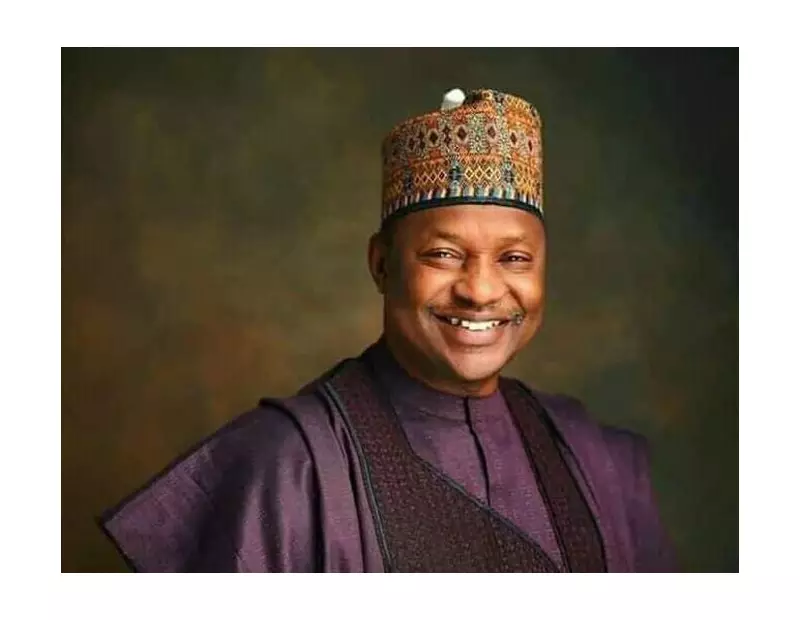
Denge Josef Onoh, a former spokesman for President Bola Tinubu in the South-East, has called on former Attorney-General of the Federation, Abubakar Malami, to fully cooperate with the Economic and Financial Crimes Commission (EFCC). Onoh insists Malami should submit to the ongoing investigations instead of demanding the recusal of the EFCC Chairman, Ola Olukoyede.
Onoh Counters Malami's Recusal Argument
In a statement issued from Paris, France, Onoh responded to Malami's recent request for Chairman Olukoyede to step aside from probes concerning him. Malami had cited alleged conflicts of interest linked to the Justice Ayo Salami Judicial Commission of Inquiry Report.
Onoh stated he reviewed Malami's position and disagreed with his interpretation of the Salami Panel's findings. He argued that the report does not prevent the EFCC from investigating former public officials. He emphasized that any call for recusal must be strictly guided by law and established principles of fairness.
The EFCC's statutory mandate empowers it to investigate economic crimes without fear or favour, Onoh noted. He clarified that the Salami Panel was established to strengthen accountability and institutional integrity, not to grant immunity to any individual.
A History of "Hypocrisy" and Weaponised Power
Onoh accused Malami of hypocrisy, recalling the former AGF's tenure. "It is the height of hypocrisy for former AGF Abubakar Malami to now accuse the EFCC of 'personal vendetta'," Onoh stated.
He reminded the public that Malami orchestrated the aggressive 2020 campaign to remove the then-acting EFCC Chairman, Ibrahim Magu. As Attorney-General, Malami personally drafted memos to President Muhammadu Buhari, levelling over 22 serious allegations against Magu. These included diversion of recovered loot and insubordination, stemming from clashes over control of seized assets.
On July 6, 2020, Magu was arrested in Abuja and suspended the next day. The Justice Ayo Salami Commission was set up under Malami's supervision to probe the allegations. Notably, Malami refused to appear before the panel despite a subpoena, denying Magu a chance to confront his accuser. Magu was never convicted, but his career was ended.
Onoh listed other instances he viewed as the weaponisation of power under Malami's watch:
- Col. Sambo Dasuki: Malami defended the government's refusal to obey court orders granting Dasuki bail, leading to over four years of detention.
- Olisa Metuh: The prosecution of the former PDP spokesman was seen by many as targeted harassment.
- IPOB and Nnamdi Kanu: Malami oversaw the proscription of IPOB and the extraordinary rendition of its leader, acts condemned as suppressing dissent.
"These actions exemplified the weaponisation of prosecutorial powers that Malami now decries when the tables are turned," Onoh declared.
EFCC Must Proceed, Onoh Insists
Onoh urged the EFCC to continue its investigation into Malami without interference. He described Malami's recusal demand as "a desperate attempt to blackmail and intimidate the EFCC Chairman" to evade accountability for allegations of abuse of office and money laundering.
He firmly stated that the Salami Report, including its Chapter Nine, does not bar the EFCC from probing former officials like Malami. On the contrary, the panel's work was meant to strengthen the agency's mandate.
Chairman Ola Olukoyede has no legal or ethical duty to recuse himself, Onoh argued. The prior role as Secretary to the Salami Panel does not create a conflict in routine law enforcement investigations. The law on recusal applies to judicial proceedings, not investigations under the EFCC Act.
Onoh challenged Malami: "If he is truly confident in his innocence, he should submit fully to the investigative process." He also called for transparency, urging Malami to declare his net worth from 2010 before assuming office for public comparison.
Concluding, Onoh assured that under President Bola Tinubu, attempts to undermine the EFCC through blackmail would fail. "Nigerians demand justice without selective application," he stated.