Pat Utomi Decries Nigeria's 'Complete Mess' Citing Failed Leadership and Corruption
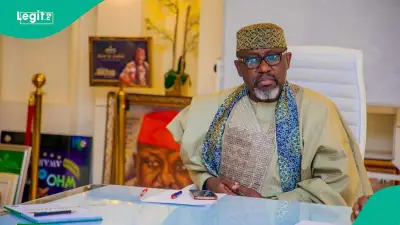
Political economist and African Democratic Congress chieftain, Professor Pat Utomi, has declared that Nigeria is in a "complete mess" due to failed leadership, deepening corruption, and collapsing public confidence in government institutions. In a recent interview with Vanguard, Utomi provided a stark assessment of the nation's dire state, using vivid comparisons to highlight systemic failures.
Power Crisis as Symbol of Leadership Failure
Utomi pointed to Nigeria's chronic power problems as a prime example of leadership inadequacy. "Power is a complete mess in Nigeria," he stated, referencing President Bola Tinubu's promise to be judged on power improvements within one year. "I wonder why we have not chased him out yet," Utomi questioned, noting that despite living in a Band A area with supposedly premium service, he experiences frequent outages while paying exorbitant costs.
"I still pay three times what a university professor's salary is, for power that is less than half the need that I have," Utomi revealed, explaining he relies on solar and diesel generators as supplements. This situation, he argued, cripples industries and makes small businesses uncompetitive due to high fuel costs for backup power.
Contrast with Egypt's Infrastructure Progress
Utomi contrasted Nigeria's stagnation with Egypt's ambitious development, describing a conference in Cairo where he witnessed Egypt building a new city with 14-16 lane highways in the desert. "Egypt is building a new Cairo, a new city, out there in the desert," he observed, noting it might soon compete with Dubai. During this visit, Nigerian attendees lamented their country's situation, particularly regarding power infrastructure.
He highlighted how both Nigeria and Egypt approved Siemens power projects around the same time, but with drastically different approaches. "Egypt's strategy is to always have twice as much power as it needs at any point in time," Utomi explained, while Nigeria struggles to increase supply to 10,000 megawatts. Egypt provided state guarantees for Siemens to raise funds and build capacity, whereas Nigeria attempted to pay directly despite lacking resources.
Corruption in the Siemens Deal
Utomi alleged that Nigerian leaders' focus on personal gain sabotaged the Siemens agreement. "Because the Nigerian leadership is about stealing, they want to collect the money for the project so they can put most of it in their own pocket," he claimed. This resulted in an "unintelligent deal" compared to Egypt's arrangement. The Ukraine war further complicated matters, with Siemens informing Nigeria that equipment manufacturing in Ukraine might delay deliveries, while Egypt's project proceeded smoothly with Siemens-funded financing.
A Tale of Two Leadership Styles
The economist shared a revealing story from the president of the African Finance Corporation about a road project in Egypt. When contractors reported a mountain obstructing an 18-month deadline, Egypt's president summoned all parties to the site two weeks later. "There was no mountain. The man within those two weeks had blown the mountain off the face of the earth," Utomi recounted. The president then asked if there were any remaining deadline problems, demonstrating decisive leadership.
"That's the kind of seriousness of leadership that Nigeria has lacked," Utomi concluded. "And this is why it is in a mess." His comments underscore growing concerns about governance, infrastructure, and economic competitiveness in Africa's most populous nation.