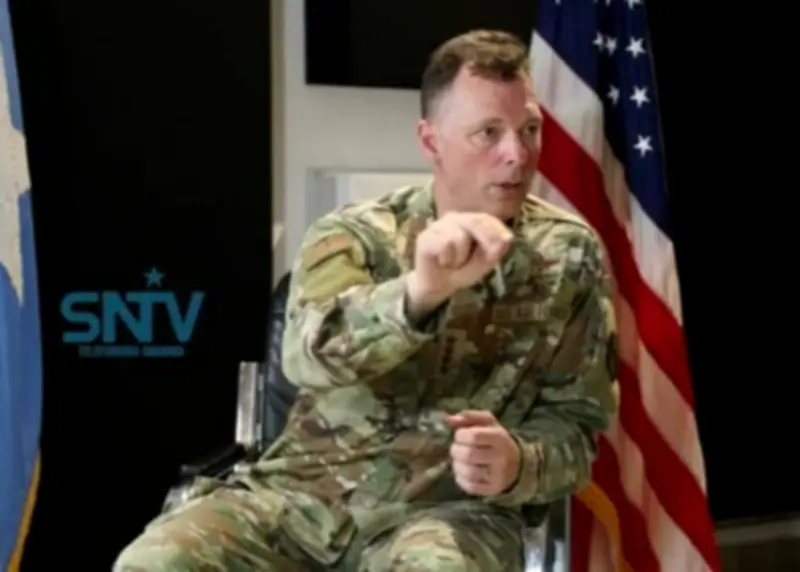
The United States Africa Command (AFRICOM) has reported a six-fold surge in security threats across the African continent over the past two years, including a dramatic rise in narcotics trafficking and human trafficking operations. The warning came during the 2026 Africa Logistics and Communications Symposium, where senior military officials emphasized that these converging dangers now threaten both regional stability and mutual prosperity between Africa and the United States.
Threat Landscape Worsens Rapidly
Brigadier General Paul G. Filcek, speaking at the symposium, highlighted the unprecedented increase in illicit activities that undermine security. “There was a six fold surge in security threats across Africa in the last two years,” he stated, attributing the growth to interconnected criminal networks exploiting weak governance and porous borders. The general noted that the nature of threats has shifted, with non-state actors increasingly partnering with transnational criminal organizations to traffic drugs, weapons, and people.
Logistics and Communication as Strategic Pillars
Filcek stressed the critical link between logistics and communications in countering these threats. “We are now lacing those two together because of the critical importance and symbiotic relationship of those warfighting functions,” he explained. The symposium, which saw record industry participation, aims to develop scalable solutions for the entire continent. “We have a record of industry participation for an event of this scale, which enables us to come up with scalable solutions for effect across the entire continent,” Filcek added.
General Dagvin R.M. Anderson reinforced the strategic necessity of robust supply chains and communication lines to counter regional instability. “No matter what weapons or future technology you buy, if you can't sustain it and you can't get it to the battlefield, it doesn't matter,” he said. “The path to independence is sustainment and logistics.” Anderson’s remarks underscored the shift from traditional kinetic operations towards enabling partner nations to manage their own security through improved logistics and infrastructure.
US Technical Assistance and Partnerships
To strengthen regional resilience, the United States introduced a new technical assistance program aimed at developing bankable infrastructure projects. Nigeria, Kenya, and Côte d'Ivoire have been named as key partners in this initiative, which seeks to attract private investment and foster long-term stability. The program is designed to help African nations build and maintain critical infrastructure such as roads, ports, and communication networks that are essential for both economic growth and security operations.
A3I Program Enhances Interoperability
AFRICOM also highlighted its A3I program, which assesses partner readiness and capacity for regional interoperability. This tool allows the command to evaluate the effectiveness of partner forces and identify gaps in training, equipment, and logistics. By sharing data and best practices, the US aims to create a more cohesive security architecture across the continent, enabling countries to collaborate more effectively against common threats.
Implications for Regional Stability
The six-fold increase in threats poses significant challenges for African governments already struggling with insurgencies, climate change, and economic pressures. Narcotics trafficking, in particular, has been linked to increased violence and corruption in several West African nations, while human trafficking networks continue to exploit vulnerable populations. The US military’s focus on logistics and sustainment reflects a broader strategy of shifting from direct intervention to building partner capacity, a model that has been used in other regions such as the Middle East.
As the symposium concluded, officials expressed cautious optimism that the new partnership initiatives could help reverse the trend. However, they warned that without sustained investment in infrastructure and governance, the security situation could continue to deteriorate. Brigadier General Filcek concluded by calling for a whole-of-society approach, involving not just military forces but also civilian agencies, private sector, and local communities in the fight against transnational crime.