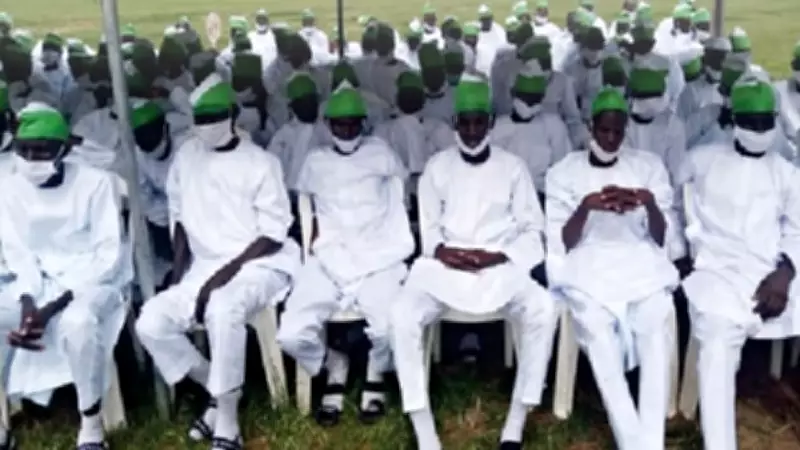
The commencement of the prosecution of terrorism suspects responsible for years of mass killings and devastation, particularly in the North, brings both relief and expectations. For a country that has watched thousands die while perpetrators often escaped justice, this moment, after years of delay, should mark Nigeria's final reckoning with terrorism.
A Long-Awaited Step Toward Accountability
For over a decade, mass murder has remained a recurring decimal in many communities, especially in the North. Villages have been razed, schoolchildren abducted, farmers driven from their land, and entire regions destabilised. The suffering is not abstract—it is daily, visible, and ongoing. Rural communities remain especially vulnerable, trapped between violent groups and an overstretched state. Reports of killings and destruction continue to underline a grim reality: terrorism in Nigeria is far from defeated.
The scale of the current prosecutions suggests intent. With more than 500 suspects facing trial and 227 already arraigned before multiple judges in Abuja, the government appears determined to show resolve. This shift—from military force to the use of the courts—matters. Counter-terrorism is not only about firepower; it is about the credibility of justice.
The True Test: Depth, Not Numbers
Yet, the true test lies not in numbers, but in depth. For years, the dominant criticism has been the state's reluctance—or inability—to arrest and prosecute those responsible for terrorism, banditry, and mass violence. The decision to proceed with trials is welcome, even if overdue. Justice delayed on this scale has already weakened public confidence. What now matters is whether justice will be done properly—and completely.
The Attorney General of the Federation, Lateef Fagbemi, has pledged adherence to due process. That promise should be honoured. Every defendant is entitled to a fair trial. Every conviction must rest on credible evidence. Every acquittal must be respected. Without this, the trials risk becoming mere sham.
Focusing on Low-Level Actors Raises Concerns
But an even deeper concern is emerging. Early convictions suggest that many of those being punished are low-level actors—individuals who supplied food, livestock, or basic goods to insurgents. These are not masterminds. They are not financiers, arms suppliers, or ideological leaders. In many cases, they appear to be poor, vulnerable, and operating under conditions of coercion or desperation.
Their actions are criminal and cannot be excused. Terrorism depends on networks of support, and those who sustain it must face consequences. But a justice process that focuses on the weakest links risks missing the larger picture. Where are the architects of this violence? Terrorism on this scale is not sustained by foot soldiers alone. It requires money, weapons, coordination, and protection. It requires networks—often invisible, often powerful.
If these trials fail to reach those who finance, arm, and enable terror, they will fall short of true accountability. This is the central challenge facing the government. It is not enough to prosecute; it must prosecute upward.
Balancing Speed and Fairness
While the commencement of proceedings is a step forward, justice delayed raises serious constitutional and moral questions. Yet, speed should not come at the expense of fairness. To its credit, the government has allowed observers, including the Nigerian Bar Association, and tightened security around the trials. Moving proceedings to Abuja has increased visibility and, with it, public scrutiny. That scrutiny is necessary. Justice must not only be done—it must be seen to be done.
Nigeria now stands at a critical juncture. This could mark the beginning of genuine accountability, or it could become another cycle of symbolic action without structural impact. If these trials are to mean anything, they must go beyond statistics. Beyond 227 arraigned. Beyond 500 expected. They must deliver real accountability—across the entire chain of terror. They must deliver justice. Anything less will leave the system punishing the periphery while the core remains untouched.
Credibility Requires Diligent Prosecution
Credibility will not be earned through optics alone. There must be a serious commitment to diligent prosecution. The trials must address commanders or ideological leaders, not mere peripheral actors operating in deeply impoverished and terrorised environments like Borno State. Some claimed poverty as a motivating factor—arguments the court firmly rejected. And while the law must take its course, the moral and strategic question remains: is Nigeria winning the war against terrorism by imprisoning its weakest links?
Clearly, aiding a terrorist group—whether through logistics, supplies, or finances—is a serious crime. No state can tolerate a support network that sustains insurgency. The court's insistence on accountability is therefore justified. But justice must also be proportional and discerning. When most convictions arise from guilty pleas by low-level actors, it raises concern that the justice system may be capturing the visible and vulnerable, while the architects and financiers of terror remain in the shadows.
The Role of Legal Aid and Mass Trials
The presence of the Legal Aid Council is reassuring, but mass trials—by their very nature—risk becoming assembly lines of conviction rather than careful examinations of guilt. A counter-terrorism strategy that focuses primarily on low-level operatives—many of whom may be driven by poverty, coercion, or survival—while ignoring the elite networks that organise and sustain violence is fundamentally incomplete. It risks treating symptoms while leaving the root causes intact.
To fully address terrorism, the government cannot afford to ignore claims, including from figures like Sheikh Ahmad Gumi, that the Nigerian government knows the identities of terrorism sponsors. Official silence on this weighty allegation tends to point to an element of truth in it. Similarly, public discourse has invoked the names of prominent individuals as sponsors and financiers of terrorism in Nigeria.
If the government possesses actionable intelligence on financiers and enablers, the logical expectation is clear: it should pursue thorough investigations and prosecutions consistent with the rule of law. Failure to do so raises legitimate concerns about political will, official complicity, institutional capacity, or the possible protection of powerful interests.
Dismantling Terror Structures
Targeting only the most visible actors may produce short-term results, but it does little to dismantle the structures that make terrorism resilient. Effective counter-terrorism requires disrupting financial flows, prosecuting high-level sponsors, strengthening intelligence systems, and ensuring that no individual—regardless of status—is above the law. Until those who fund, arm, and shield terrorist networks are held accountable, efforts to combat terrorism will remain limited, and public trust in the system will continue to erode.
The government's policy of negotiating or dialoguing with terrorists and bandits is not helping the cause of anti-terrorism, given reports that many so-called rehabilitated terrorists relaunch themselves into crime, using as an advantage vital information they had obtained during rehabilitation. The state should adopt a hardline stance—arrest and prosecute, drawing strength from a basic principle of criminal law: wrongdoing must attract punishment.
Justice affirms the value of human life and the authority of the state. Offering blanket amnesty to those responsible for atrocities risks sending the wrong message that atrocities are rewarding. Nigerians demand not just more arrests or harsher rhetoric, but a credible justice process: independent courts, strong evidence, protection for witnesses, and consistent follow-through. If this mass trial becomes the beginning of a sustained, diligent, and transparent accountability system—rather than a one-off spectacle—then it will truly be a step in the right direction.