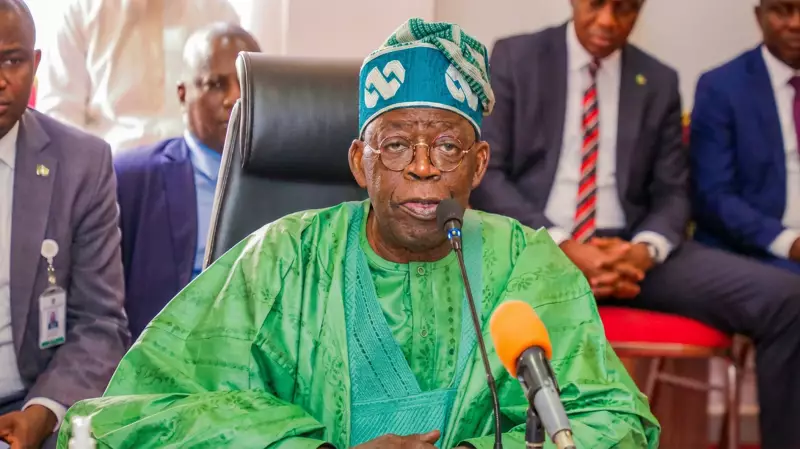
President Bola Ahmed Tinubu's sweeping reforms of Nigeria's public procurement system have been described as a historic turning point for the nation's economic governance. The Network for the Actualization of Social Growth and Viable Development (NEFGAD) has lauded the measures, stating they are fundamentally redefining fiscal discipline, transparency, and the path to sustainable development.
A Decisive Break from the Past
In a statement released on Saturday, NEFGAD's Acting Head of Office, Barrister Unekwu Blessing Ojo, asserted that the reforms President Tinubu outlined during the presentation of the 2026 Appropriation Bill to the National Assembly mark a clear departure from decades of inefficiency, waste, and weak accountability in public spending. The advocacy group emphasized that the comprehensive framework, initiated in November 2024, represents a decisive break from entrenched problems like bureaucratic delays, inflated contracts, and poor oversight that once plagued the procurement process.
According to NEFGAD, the reforms have already yielded measurable results. These include significantly shorter procurement timelines, improved compliance across various Ministries, Departments and Agencies (MDAs), and the imposition of tougher sanctions on contractors and public officials who violate regulations.
Leadership and the 'Nigeria First' Mandate
The group noted that the reform drive gained momentum with the assumption of office of the Director-General of the Bureau of Public Procurement (BPP), Dr. Adebowale Adedokun. NEFGAD stressed that the progress acknowledged by President Tinubu is being vigorously pursued under Dr. Adedokun's leadership, aligning perfectly with the administration's broader reform agenda.
A cornerstone of the new approach is the Nigeria First Policy. This policy mandates all MDAs to prioritize Nigerian-made goods and local companies in their procurement activities. NEFGAD praised this as a strategic economic tool designed to achieve multiple goals:
- Deepening local content in the economy.
- Stimulating growth in domestic industries.
- Creating sustainable job opportunities.
- Encouraging homegrown innovation.
- Reducing the country's heavy dependence on imports.
"Public procurement has moved beyond routine administration," the group stated. "It has become a deliberate instrument for economic transformation, industrial growth, and national self-reliance."
Unprecedented Savings and a Call for Vigilance
In a staggering revelation, NEFGAD commended the BPP for recording savings exceeding ₦1 trillion in just one year. This feat was achieved through enhanced price intelligence and rigorous benchmarking mechanisms. The group described this achievement as unprecedented, noting that this single-year saving surpasses the cumulative savings the BPP recorded over 17 years, from 2007 to 2024.
"It represents the most significant cost-saving milestone in the history of the Bureau and arguably one of the largest by any public institution in Africa within a single budget cycle," the statement declared.
While applauding these substantial gains, NEFGAD issued a cautionary note. The group insisted that the progress must be protected through sustained transparency, strict adherence to due process, and robust institutional safeguards. It called on MDAs, civil society organisations, and the media to intensify their monitoring of procurement implementation.
NEFGAD also warned that the Nigeria First Policy must not be hijacked by vested interests or degraded into a mere tool for political patronage. According to the group, Nigeria's evolving procurement landscape now offers a credible template for good governance that could be replicated in other sectors. With consistent oversight and unwavering political will, these reforms have the potential to be a powerful engine for economic growth, job creation, and long-term national prosperity.