Fresh Political Defections Rock Nigeria's House of Representatives
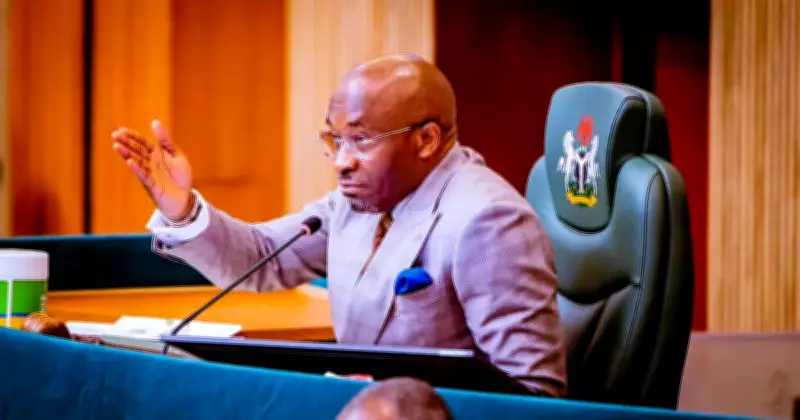
In a significant political development, twelve lawmakers from Nigeria's House of Representatives have officially defected from their respective parties, creating a new wave of realignment within the National Assembly. The defections were formally announced during Thursday's plenary session by Deputy Speaker Benjamin Kalu, who read out resignation letters submitted by the legislators.
Details of the Defections
According to the announcement made by Deputy Speaker Kalu, six lawmakers have abandoned the opposition Peoples Democratic Party (PDP) to join the ruling All Progressives Congress (APC). Meanwhile, other legislators have moved from the Young Progressives Party (YPP) and the Labour Party (LP) to the African Democratic Congress (ADC).
Kalu explained that while the House has officially received the resignation letters, ceremonial acknowledgements will be completed when some of the defecting lawmakers are physically present in the chamber. "It's treated as received, but the ceremonial announcement will be made when they're in the house. They have to be here so they don't deny it tomorrow," the Deputy Speaker stated.
List of Defecting Lawmakers
Lawmakers Who Moved From PDP To APC:
- Bamisele Komolafe
- Beatrice Lowery
- Muktar Aliyu Betara (Biu/Bayo/Shani and Kwaya Kusar Federal Constituency, Borno State)
- Zakari Dauda Nyampa (Michika/Madagali Federal Constituency, Adamawa State)
Lawmakers Who Moved From Other Parties To ADC:
- Peter Ifeanyi Uzokwe (Nnewi North/Nnewi South/Ekwusigo Federal Constituency, Anambra State) - defected from YPP to ADC
- Bright Iyamu
- Jesse Oke Onakpasa - moved from Labour Party to ADC
- Shuaib Abiola Sowunmi - moved from Labour Party to ADC
Additional Lawmakers Awaiting Formal Announcement
The Deputy Speaker also mentioned several lawmakers whose letters had been received but whose ceremonial announcements would be made once they were present in the chamber. These include:
- Murphy Osaro Omoruyi
- Jafaru Yakubu
- Prince Sadiq Abbas Tafida
- Victor Afam Ogene
- Kafilat Ogbara
- Peter Udo Udofia
- Professor Obi Lilian Orogbu
- Barrister Mohammed Bello Shehu
- Dankawu Idris
- Hassan Shehu Hussaini
- Muhammad Ghali Tijjani
- Jimbo Ibrahim
Political Context and 2027 Elections
These defections highlight another moment of shifting alliances within Nigeria's National Assembly, a pattern that has become increasingly common in the country's political landscape as lawmakers reposition themselves ahead of future political developments. Politicians have already begun strategizing for the upcoming 2027 general elections, with cross-carpeting becoming a prominent feature of Nigeria's political scene.
In recent months, Nigeria's political arena has witnessed significant party switching, with several prominent politicians abandoning their parties to align their interests with the ruling All Progressives Congress. Notably, in 2026, five governors left their respective parties to join the APC, which now controls 31 of Nigeria's 36 states, leaving only five governors outside the ruling party's fold.
The recent mass defection in the National Assembly captures the evolving power dynamics that are expected to play a crucial role in the general elections scheduled for January 2027. This political realignment reflects the ongoing calculations and strategic positioning that characterize Nigeria's complex political environment as various actors seek to maximize their influence and prospects ahead of the next electoral cycle.