As the 2027 general election approaches, a silent succession war is unfolding in Oyo State, determining not only the next governor but also the dominant political coalition in the post-Governor Seyi Makinde era. Quiet negotiations, internal party tensions, and strategic defections are reshaping the contest for the Agodi Government House, with alignments shifting political calculations.
Unlike previous electoral cycles dominated by two major parties, the current political climate reflects an unpredictable landscape. Across major parties and smaller platforms, there are visible cracks, succession intrigues, competing ambitions, and growing calculations over who will succeed Governor Makinde in 2027. The scramble for the soul of the Pacesetter State is now between competing tendencies, coalitions, and personalities, not just parties.
Makinde's National Profile Alters Political Balance
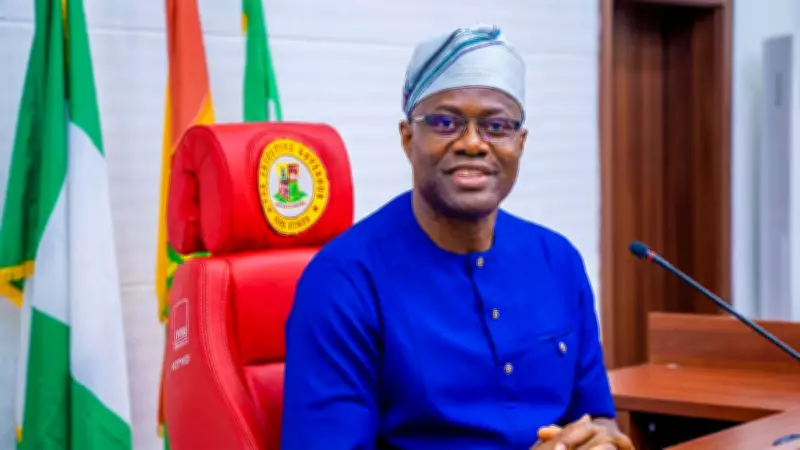
At the center of these calculations is Governor Makinde, whose growing national political profile and alignment with the Allied People's Movement (APM) have significantly altered the traditional balance in Oyo's political architecture. His evolving direction has introduced fresh uncertainty into Oyo politics, especially regarding the future of the People's Democratic Party (PDP) structure that brought him to power in 2019 and secured his re-election in 2023.
Professor Dhikru Adewale Yagboyaju, Head of the Department of Political Science at the University of Ibadan, described the current atmosphere as typical of pre-election politics, characterized by intrigues, horse-trading, and strategic realignments. He noted that political contests naturally generate conflicts and competing interests, particularly during candidate selection processes. However, he warned that the major challenge for parties would be managing post-primary grievances, especially amid debates over consensus candidacies and direct primaries. Internal conflict management mechanisms must be prepared for reconciliation to avoid going into the general election with divided houses.
APC Succession Debate Becomes Contentious
Within the All Progressives Congress (APC), the succession debate has become highly contentious following the emergence of multiple governorship aspirants and disagreements over alleged attempts to impose a candidate, despite the party opting for direct primaries. Although party leaders have spoken about unity, underground rivalries persist among competing blocs loyal to different political heavyweights.
Professor Gbade Ojo, a Political Science lecturer at the University of Ilorin and former Chief of Staff to late Governor Abiola Ajimobi, noted that Oyo politics remains unique because no single political godfather completely controls the state's electoral direction. The state is divided into zones, each with unique political attributes, and there is no overriding godfather. However, he observed that Governor Makinde has gradually emerged as the dominant political figure in the state. If Makinde can use his influence to deliver the state to APM, opposition elements must have been politically castrated, he added.
Smaller Parties Gain Relevance
That possibility is generating anxiety among opposition figures who fear Makinde may deploy incumbency influence and grassroots networks beyond the PDP framework. Several political actors who once aligned with the PDP are exploring alternative platforms, including Accord, the Social Democratic Party (SDP), and APM, amid uncertainty surrounding future party alignments. The quiet movement of politicians across party lines has reinforced perceptions that the 2027 contest may become one of the most fragmented governorship races in Oyo's recent political history.
A major feature of the unfolding scenario is the growing relevance of smaller parties, particularly Accord. Once regarded as a fringe platform, Accord is attracting politicians, technocrats, and younger political actors such as Solomon Emiola, Ishola Adeyemi, and others seeking alternatives outside the dominant APC and PDP. The entrance of notable figures has strengthened speculation that Accord may become a major third force capable of influencing the election outcome. Former Lagos Commissioner of Police and one-time Special Adviser on Security Matters to Governor Makinde, Fatai Owoseni, recently aligned with Accord after resigning from the Makinde administration. Ibadan-based broadcaster Oriyomi Hamzat has also emerged as a notable figure linked with the party's governorship calculations. This development has heightened discussions around protest voting, grassroots populism, and voter fatigue with traditional political establishments.
Judicial Interventions Muddy Political Space
Veteran broadcaster and former Nigerian Ambassador to the Philippines, Dr. Yemi Farounbi, argued that the political space has become increasingly muddled due to judicial interventions, electoral disputes, and shifting party loyalties. In the past, it was easier to predict the landscape consisting of two major parties and several smaller ones. But with the narrowing of the political space through judicial interventions, INEC interventions, and alleged subterranean presidential interventions, the landscape is muddled. He noted that the PDP's internal uncertainties and Makinde's coalition politics have significantly weakened the party's traditional dominance. APM is the haven for Makinde and his faction of PDP, and given his generally acclaimed performance, APM cannot be written off. It can give APC a really good fight. He described Accord as an up-swelling of the common people but cautioned that electoral success would depend on organizational capacity and grassroots mobilization.
For many, the real battle in Oyo may revolve around structure, reconciliation, and voter mobilization rather than merely popularity. Dr. Stephen Lafenwa of the Political Science Department, University of Ibadan, believes the present climate reflects growing tension and heightened competitiveness. With Makinde's declaration of interest to contest under the APM-PDP coalition, internal party crisis in APC arising from strong aspirants, and many defections to minor parties such as Accord and SDP, the political climate is tense and highly competitive. He noted that voters themselves are becoming confused by complex political maneuverings, zoning calculations, and coalition arrangements.
Zoning Emerges as Sensitive Issue
Zoning has quietly emerged as another sensitive issue shaping the succession debate. Ibadan politicians continue to rely on the city's voting strength and demographic advantage, while other zones insist power rotation and political inclusiveness should shape the 2027 contest. The silent succession war within the ruling camp has also become more pronounced. Though Governor Makinde has not publicly endorsed any successor, political actors believed to enjoy his confidence have become visible across strategic engagements. Among such figures is former Commissioner for Finance, Bimbo Adekanmbi, whose growing consultations and public appearances have intensified speculations about his governorship ambition. Adekanmbi has repeatedly pledged to sustain the sectoral legacies of the Makinde administration, especially in infrastructure, workers' welfare, education, and economic expansion. His recent meetings with influential stakeholders, including media entrepreneur Yinka Ayefele, were widely interpreted as part of broader consultations ahead of 2027.
Yet, not everyone within the Makinde-led PDP fold appears comfortable with the succession calculations. Some loyalists believe the process is gradually narrowing political space within the party, while others fear that unresolved ambitions may trigger defections before the election.
Analysts Warn of Internal Implosion
Political analysts warn that mishandling candidate selection may create deep divisions capable of weakening even dominant parties. Farounbi specifically warned that the APC could face internal implosion if its selection arrangements are poorly managed. APC claimed to have a consensus candidate even before nomination started, then several persons collected nomination forms. In a top-driven party like APC, disqualification can be used to arrive at their candidate. There may be implosion arising from failure to reach consensus through negotiated agreement among all aspirants, leading to rebellion by unhappy aspirants.
Aside from elite politics, there are growing concerns over possible tensions and violence as political activities intensify. The Inter Party Advisory Council (IPAC) has reportedly raised concerns about the possibility of political violence if parties fail to properly manage their supporters and internal disputes. Lafenwa stressed the need for security agencies to remain proactive before, during, and after the elections.
National Political Uncertainties Reflect in Oyo
The unfolding scenario also reflects broader national political uncertainties. The weakening ideological boundaries between parties, increasing coalition politics, and widespread defections have made party identity less rigid than before. For many politicians, survival, structure, and access to influence now appear more important than ideological loyalty. In Oyo, this reality is visible as alliances cut across party lines and former rivals quietly negotiate political understandings ahead of the elections.
Analysts say the eventual outcome may depend largely on three major factors: the strength of Makinde's political influence after leaving office, the ability of opposition parties to manage internal disagreements, and the capacity of emerging parties to convert growing popularity into electoral structures. Another factor is voter sentiment regarding governance performance. While Makinde continues to enjoy considerable support in several parts of the state due to infrastructure development and workers' welfare policies, economic hardship and national political realities may also influence voter behavior by 2027. The APC, despite its internal challenges, still retains considerable grassroots presence and federal influence, while smaller parties hope to capitalize on public frustration with mainstream political actors.
What remains clear is that Oyo's 2027 governorship race is already evolving into far more than a routine succession contest. It is becoming a battle over political dominance, coalition survival, regional balancing, elite negotiations, and the future direction of power in one of the South-West's most politically strategic states. For now, the horse-trading continues quietly behind the scenes. Meetings are being held in private residences. Loyalists are mobilizing discreetly. Aspirants are strengthening alliances. Political camps are testing their structures. Smaller parties are gaining unusual visibility. And beneath the surface of public declarations and political consultations lies a silent succession war that may finally determine not only who governs Oyo in 2027, but also which political coalition emerges dominant in the post-Makinde era.