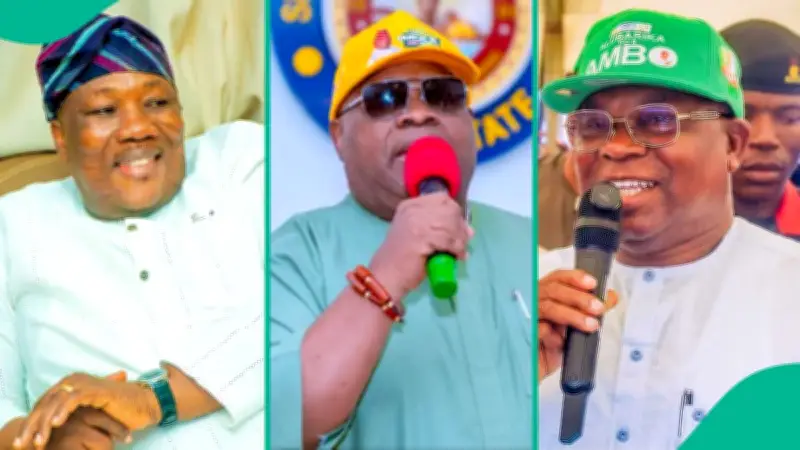
Osun State is set to hold Nigeria's final off-cycle governorship election before the 2027 general elections, with over 2.3 million registered voters expected to cast ballots on Saturday. The Independent National Electoral Commission (INEC) faces pressure to ensure a credible exercise amid a crowded field of 14 candidates, but three names dominate the race: incumbent governor Ademola Adeleke of the Accord Party, All Progressives Congress (APC) candidate Bola Oyebamiji, and Najeem Salam of the African Democratic Congress (ADC).
Party Alliances and Internal Dynamics Shape the Contest
Adeleke won the 2022 election on a Peoples Democratic Party (PDP) ticket before defecting to the Accord Party, reportedly pulling much of the PDP's local structure along with him, including a senator, six House of Representatives members, and state assembly members. However, some senior PDP figures who backed him in 2022, including former governor Olagunsoye Oyinlola, have since endorsed Oyebamiji, which could cost Adeleke votes he previously relied on.
On the APC side, the disqualification of several aspirants during the primaries, including Iyiola Omisore, means the party enters the election with unresolved internal tensions, particularly in the Ife zone. These dynamics could affect turnout and support distribution across the state.
Celebrity Appeal and Campaign Influence
Adeleke's public image as the "dancing governor" has given him popularity that extends beyond Osun, and his nephew, Afrobeats star Davido, actively campaigned for him again in 2026. Analysts say this could help mobilise younger voters, though APC National Chairman Nentawe Yilwatda dismissed Adeleke's celebrity appeal as insufficient to guarantee electoral success.
In contrast, Salam's chances may rest more on voters' memories of former governor Rauf Aregbesola's eight-year record, under whom Salam served as speaker of the Osun State House of Assembly. That record includes significant infrastructure projects but also the divisive school reclassification policy and prolonged periods of half-salary payments to civil servants.
Oyetola's Shadow and Federal Government's Position
Former governor Gboyega Oyetola, now Minister of Marine and Blue Economy, is not on the ballot but looms large over Oyebamiji's campaign. Oyetola's handling of the inherited half-salary crisis and his conduct during the 2022 election debate, where he reportedly dismissed Adeleke's promise to clear salary arrears, are issues the APC must contend with by association.
The federal government, controlled by the APC, also plays a role. The Economic and Financial Crimes Commission (EFCC) recently froze the state government's account, but President Bola Tinubu ordered it unfrozen just 10 days before the election, complicating the picture of federal neutrality. Reports also indicate that Adeleke has publicly endorsed Tinubu's re-election bid for 2027, raising questions about how aggressively the centre will push for an APC win.
Infrastructure, Workers' Welfare, and the Osogbo Agenda
Adeleke is banking heavily on roads, bridges, and public works completed during his first term. Critics within the opposition have questioned the quality of some projects, though no regulatory body such as the Council for the Regulation of Engineering in Nigeria (COREN) or the Federal Ministry of Works has issued any formal assessment.
In a state where the civil service is a dominant employer, Adeleke's salary record carries real electoral weight. In his May 1, 2026, Workers' Day address, he said his administration had cleared over N50 billion in pension arrears, implemented a N75,554.28 minimum wage, and had been consistent with monthly payments. Labour leaders in the state formally endorsed him for a second term, citing these achievements and his efforts to offset the 30-month backlog of half salaries left by previous APC administrations.
Osun has no legally binding rotational governorship arrangement, but the informal expectation exists. Osun Central has produced three governors since 1999, and Adeleke, from Osun West, is the zone's first governor in the democratic era. Since all three major candidates are from Osun West, voters in Osogbo and Ife, who have not produced a governor of their own, may factor this into their decisions. APC National Secretary Ajibola Basiru acknowledged as much during a campaign visit to the Ataoja of Osogbo's palace, saying "the future of Osogbo's governorship agenda is in God's hands," a remark that signals the issue remains politically live.
Violence and Vote-Buying Risks
Civil society organisations have flagged 13 local government areas as high-risk zones for election-day violence, including Osogbo, Ede South, Irepodun, and parts of Ilesa. Reports of political violence and killings during the campaign period have already raised concerns about voter turnout. Vote-buying also remains a serious threat, with parties expected to deploy cash inducements as seen in the recent Ekiti governorship election.
The outcome of Saturday's election will hinge on how these factors interact, with the potential for a tight contest that could shape Nigeria's political landscape ahead of 2027.