ADC Leadership Crisis Intensifies with Emergence of New Faction
The leadership crisis within the African Democratic Congress (ADC) has escalated dramatically as a new faction has emerged to challenge the party's current leadership structure. With approximately one month remaining before the deadline for political parties to submit membership registers and conduct primaries for the 2027 general elections, the internal conflict has reached a critical juncture that threatens the party's participation in upcoming electoral processes.
New Faction Announces National Convention Plans
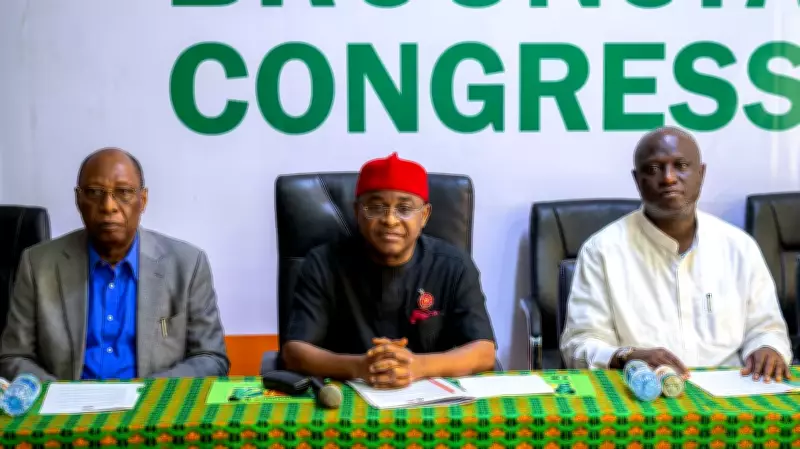
A coalition of state chairmen, led by the party's 2023 presidential candidate Dumebi Kachikwu, has declared their intention to convene a national convention and establish an interim leadership structure to manage party affairs. This development represents a significant challenge to the existing David Mark-led faction that has been at the helm of the party's operations.
Addressing journalists on behalf of the new bloc, Abia State Chairman Don Norman Obinna emphasized that the emergency National Executive Committee (NEC) meeting was necessary to "rescue the party from the hands of impostors" and restore proper governance pending a formal convention. The group has appointed a nine-member caretaker committee to oversee party operations until all legal disputes are resolved.
Support for INEC's Delisting Decision
The newly formed faction has expressed unequivocal support for the Independent National Electoral Commission's (INEC) decision to delist the David Mark-led leadership from official recognition. Obinna stated clearly that "we are in total support of INEC in derecognising the Mark-led faction" and asserted that the ADC under Kachikwu's leadership represents the only legitimate authority within the party.
The group dismissed allegations that they were being sponsored by the ruling All Progressives Congress (APC) to undermine opposition coalition efforts, describing such claims as "the height of propaganda." They maintained that the ADC remains a unified entity that does not recognize any competing factions within its ranks.
Allegations of Past Misconduct and Leadership Disputes
The new faction has leveled serious accusations against former National Chairman Ralph Nwosu, claiming he illegally transferred party control to Senator David Mark and Rauf Aregbesola. They further asserted that Nafiu Bala never legitimately held the position of Vice Chairman, emphasizing that Nwosu's tenure officially concluded in August 2022.
In response, Queen Okiyi, Deputy National Publicity Secretary of the Mark-led camp, dismissed the new faction's authority, accusing its members of pursuing personal interests and being compromised financially. "They've been bought over. They are state chairmen whose conduct has been questioned, and who believe they can hold the party to ransom by going wherever they are paid," Okiyi stated.
Okiyi further detailed alleged misconduct by members of the rival camp, including selling party property and accepting payments from individuals. She emphasized that the party had previously suspended these members for disciplinary violations, but they had refused to accept the sanctions and continued to present themselves as legitimate chairmen.
Broader Political Implications and External Reactions
The ADC crisis has drawn commentary from various political figures across Nigeria's political landscape. Paul Ibeh, media aide to former Vice President Atiku Abubakar, accused President Bola Tinubu and INEC Chairman of working to undermine opposition parties and democratic processes in Nigeria. In social media posts, Ibeh questioned what had changed since INEC previously challenged Bala's eligibility for the ADC chairmanship through court processes.
Meanwhile, the Lagos State chapter of the APC issued a statement asserting that Nigeria's democratic system would remain functional even if the ADC and other political parties were absent from the 2027 ballot. APC spokesperson Seye Oladejo emphasized that "democracy operates based on laws and institutional processes, not sentiment, entitlement, or alarmist narratives."
The ruling party drew parallels to its own experience of exclusion from elections in Zamfara and Rivers states during the 2019 general elections due to procedural lapses, stressing that all parties must comply with electoral regulations. APC National Publicity Secretary Felix Morka strongly dismissed allegations of interference in ADC affairs, attributing the crisis to "internal dysfunction and the arrogance of the leaders of the ADC."
Academic and Civil Society Perspectives
Political economist Professor Pat Utomi has called on the Nigerian Bar Association (NBA) to intervene with INEC Chairman Joash Amupitan to prevent what he described as the "free fall" of Nigeria's democratic institutions. In a series of social media posts, Utomi urged religious leaders, traditional rulers, and senior lawyers to speak truth to power and address what he perceives as deteriorating standards in electoral governance.
Utomi drew historical parallels between current developments and authoritarian tendencies, warning that "history will hold all Lawyers and Amupitan accountable in a way that will embarrass the children of their children" if institutional safeguards continue to erode.
Missed Opportunities for Reconciliation
Adding to the complexity of the situation, party chieftain Rabiu Musa Kwankwaso expressed disappointment after waiting until dawn for a meeting with Nafiu Bala that never materialized. Kwankwaso described the missed encounter as a lost opportunity for "fatherly counsel" and used a local metaphor to caution Bala against becoming "the lizard at the mouth of the pot."
The former governor appealed to those close to Bala, including the Emir of Gombe, to guide the young politician and advise him against actions that could further destabilize the ADC. This incident highlights the personal dimensions of the political conflict and the challenges facing reconciliation efforts within the party.
As the deadline for 2027 election preparations approaches, the ADC faces mounting pressure to resolve its internal divisions and present a unified front. The emergence of competing factions, allegations of external interference, and questions about leadership legitimacy have created a complex political scenario with significant implications for Nigeria's opposition landscape and democratic processes.