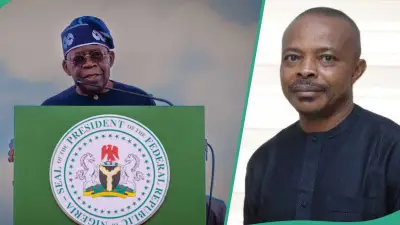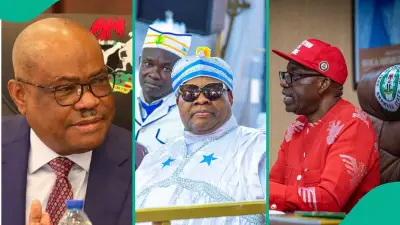
A prominent figure within Nigeria's ruling All Progressives Congress (APC) has made a bold declaration about the political future of Peter Obi, the Labour Party's presidential candidate in the 2023 elections. Biodun Ajiboye, an APC chieftain, has asserted that Obi has lost total control of the South East, his home region, and consequently faces a steep decline in electoral prospects for the 2027 general election.
The Core Argument: A Shift in Political Scenarios
In an interview with Channels TV on Monday night, January 19, Ajiboye laid out his analysis of the changing political landscape. He directly contrasted the situation in 2023 with the current reality, stating, "The scenario of 2023 is not the scenario of today." His central claim is that Peter Obi no longer commands the massive followership that propelled him to a surprising third-place finish in the last presidential race, where he secured 6,101,533 votes against President Bola Tinubu of the APC and Atiku Abubakar of the Peoples Democratic Party (PDP).
Ajiboye pointed to the current composition of state leadership as a key indicator of this shift. He highlighted, "We have 28 governors today," implying a consolidation of power by the APC across states. When questioned on whether a large number of governors automatically translates to presidential votes, he clarified that his point was about control and influence. "A governor is supposed to be in charge of his state. It is a natural thing," he stated, suggesting that the incumbent governors' grassroots reach and the party's achievements would naturally work in its favour.
Questioning Obi's Regional Base
The APC chieftain specifically targeted Obi's stronghold, arguing that his influence in the South East has evaporated. "Obi is no longer commanding the followership he was commanding before," Ajiboye claimed. He challenged the notion of Obi's regional dominance by asking, "Tell me that Governor in the South East that is APGA or LP or ADC." This rhetorical question was meant to underscore the absence of governors from Obi's Labour Party or the traditionally Igbo-favoured All Progressives Grand Alliance (APGA) in the region, suggesting a breakdown of his political machinery.
Ajiboye concluded emphatically, "What I am saying is that scenarios have changed. What I am saying is that in the past, Obi had sway of the South East." This statement frames his entire argument: the political dynamics that enabled Obi's 2023 performance are no longer in place, severely limiting his potential for a repeat or improved showing in the next election cycle.
Implications for the 2027 Presidential Race
This public assessment from a key APC member signals the ruling party's early narrative-setting for the next election. By declaring Obi's diminished capacity, the APC aims to psychologically influence the electorate and potential supporters, painting the Labour Party as a weakened force. The focus on the South East is particularly strategic, as it was Obi's most reliable vote bank.
If Ajiboye's claims hold true, it could mean a significant reshuffling of opposition politics in Nigeria. A weakened Labour Party might lead to realignments, with other opposition figures or parties seeking to absorb its disaffected support base. However, this remains one perspective from a political opponent. The true test of Peter Obi's enduring influence and the Labour Party's strength will unfold on the campaign trail and ultimately at the polls in 2027.