Atiku Abubakar Denies Retirement Rumors, Accuses Anti-Democratic Forces of Misinformation
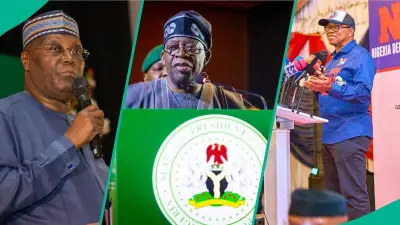
In a significant development ahead of the 2027 general elections, former Vice President Atiku Abubakar has categorically denied widespread rumors suggesting his retirement from active politics. The opposition leader has accused what he describes as "anti-democratic elements" of deliberately spreading false information to create confusion and undermine the momentum of the African Democratic Congress (ADC).
Formal Statement Refutes Social Media Claims
Through his media office on Monday, March 30, Atiku issued a comprehensive statement obtained by journalists, explicitly addressing what he termed "fake news" circulating on various social media platforms. The statement emphasized that reports claiming Atiku had decided to "step aside and retire from active politics" following a meeting with ADC stakeholders were entirely fabricated and misleading.
The official communication clarified: "We wish to state, for the record, that information circulating on social media about a purported meeting of His Excellency, Atiku Abubakar, with stakeholders of the African Democratic Congress (ADC), in which the former Vice President allegedly decided to 'step aside and retire from active politics,' is entirely false and deliberately misleading."
Emphasis on Formal Communication Channels
Atiku's media office stressed that any decision as consequential as exiting active politics would never be communicated through rumors, anonymous sources, or third-party fabrications. The statement asserted that such a significant announcement, if ever made, would be formally conveyed through official channels, specifically the Atiku Media Office, ensuring transparency and accuracy.
The clarification noted that Atiku's only recent engagement with ADC stakeholders occurred at the state level in Adamawa last Thursday, contradicting claims of a national-level meeting where retirement discussions supposedly took place.
Political Background and Presidential Aspirations
Atiku Abubakar remains one of Nigeria's most prominent political figures, having served as Vice President from 1999 to 2007 under President Olusegun Obasanjo. Throughout his extensive political career, he has demonstrated a consistent appetite for significant political battles, including:
- Opposing the adoption of Islamic law across Nigeria's Muslim-majority northern regions during his vice presidency
- Resisting constitutional amendments that would have extended President Obasanjo's tenure, potentially affecting his own presidential ambitions
- Making at least six previous attempts to secure Nigeria's presidency through various political parties
2027 Election Context and ADC Dynamics
As the 2027 elections approach, Atiku faces what could become one of the most challenging battles of his political career. The 79-year-old politician is reportedly seeking to secure the presidential nomination of the African Democratic Congress, a party that underwent revitalization in 2025. If successful in obtaining the ADC ticket, this would mark Atiku's record seventh attempt to occupy Nigeria's highest office.
Political analysts note that four of Atiku's previous presidential bids ended at party primaries, while others culminated in general election losses. His persistence in pursuing the presidency has made him a perennial candidate in Nigerian politics, with his latest denial of retirement rumors suggesting his political ambitions remain undiminished.
Broader Political Implications
The timing of these retirement rumors coincides with increasing political maneuvering ahead of the 2027 elections. Atiku's statement reflects growing concerns about misinformation campaigns targeting opposition figures and potentially destabilizing emerging political coalitions. His accusation against "anti-democratic elements" suggests a belief that certain forces are actively working to weaken opposition unity as election preparations intensify.
This development occurs against a backdrop of Atiku's ongoing criticism of President Bola Tinubu's administration, with the former Vice President previously alleging that Nigeria's future has been "effectively mortgaged" to the president, his family, and associates. These political tensions underscore the high-stakes environment surrounding Nigeria's upcoming electoral cycle.