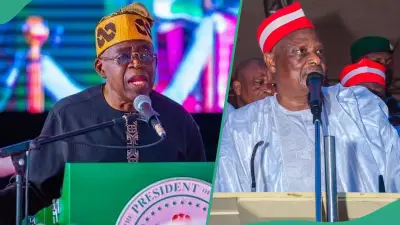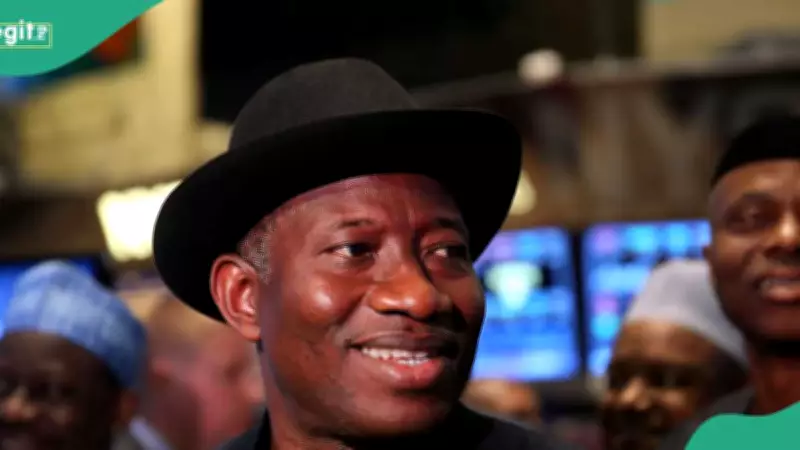
The Federal High Court in Abuja has adjourned proceedings in a case aimed at preventing former President Goodluck Jonathan from contesting the 2027 presidential election. The court issued summons to the Independent National Electoral Commission (INEC) and the Attorney General of the Federation (AGF) after key parties failed to appear for the scheduled hearing on Monday, May 11.
Court Session Stalls Due to Absence of Key Parties
When the matter was called, neither the plaintiff, lawyer Johnmary Jideobi, nor representatives of INEC and the AGF were present in court. Counsel to Jonathan, Chief Chris Uche (SAN), urged the court to dismiss the case, arguing that the plaintiff had failed to diligently pursue the matter. He even requested that the court award ₦5 million in costs against the claimant.
Uche contended that the plaintiff, being a legal practitioner, should have taken necessary steps to ensure proper prosecution of the case or communicated any inability to attend. However, Presiding Judge Justice Peter Lifu declined the application to dismiss the suit.
Court Prioritises Fair Hearing
Justice Lifu noted that there was no proof that hearing notices had been properly served on all defendants before the sitting. He stated that he would “bend backwards” once again in the interest of justice to ensure all parties are given a fair opportunity to be heard. The court subsequently adjourned the case until May 15 for definite hearing and directed that fresh hearing notices be issued to all absent parties.
Plaintiff Seeks to Bar Jonathan from 2027 Election
In the substantive suit, Jideobi is asking the court to restrain Jonathan from presenting himself to any political party as a presidential candidate in the 2027 general election. He is also seeking an order stopping INEC from accepting or publishing Jonathan’s name as a candidate. The plaintiff urges the court to interpret provisions of the 1999 Constitution, particularly Sections 1(1), (2), (3) and 137(3), to determine Jonathan’s eligibility.
Jideobi argues that Jonathan has already exhausted the constitutional limit of two presidential terms, having completed the tenure of the late President Umaru Musa Yar’Adua before winning a full term in 2011.
Affidavit Claims Constitutional Breach
In an affidavit supporting the suit, Emmanuel Agida stated that Jonathan assumed office on May 6, 2010, following Yar’Adua’s death, and later won the 2011 presidential election. He warned that allowing Jonathan to contest again would amount to a third presidential oath of office, which he described as unconstitutional.
“The plaintiff believes that the 1st defendant, having completed the unexpired term of late President Yar’Adua and subsequently served a full term after the 2011 election, has exhausted the constitutional limit of two tenures as president,” the affidavit stated. It further argued that the case was filed in the public interest to safeguard constitutional order and prevent political parties from presenting an allegedly ineligible candidate.
Jonathan's Position on 2027 Race
Meanwhile, Jonathan has previously stated that he is still consulting widely on whether to join the 2027 presidential race, amid growing political speculation across the country. In related developments, Festus Keyamo, Minister of Aviation and Aerospace Development, has referenced the ongoing factional crisis in the Peoples Democratic Party (PDP), citing reports linking Jonathan to the Kabiru Turaki faction. Keyamo argued that the Turaki-led bloc lacks legal standing to nominate or field candidates.