Seriake Dickson Welcomes Major Defections to Nigeria Democratic Congress, Issues Warning to INEC
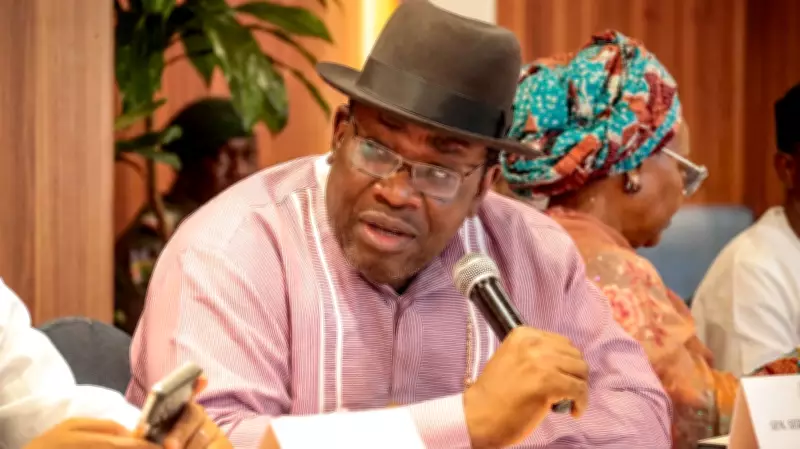
In a significant political development, former Bayelsa State Governor and Senator Seriake Dickson has officially received key members from the African Democratic Congress (ADC), Social Democratic Party (SDP), and Labour Party (LP) into the Nigeria Democratic Congress (NDC). This high-profile event, held in Guzape, Abuja, signals a fresh realignment of opposition forces as Nigeria approaches the 2027 general elections.
Defections Reshape Opposition Landscape
The defection ceremony saw Barrister Amanda Pam, a former ADC senatorial aspirant, lead a substantial portion of the party's structure into the NDC. Additionally, Farouk Dantsama, the former Deputy State Chairman of the Labour Party, along with the ex-SDP State Chairman in the Federal Capital Territory (FCT) and numerous grassroots officials, formally joined the NDC ranks. Dickson, who serves as the national leader of the NDC, expressed solidarity with the ADC during its ongoing internal crisis, while cautioning against perceived interference by state institutions.
Dickson's Call for INEC Neutrality
Dickson's intervention comes in response to recent actions by the Independent National Electoral Commission (INEC), which deleted the names of a factional ADC leadership led by David Mark from its portal. INEC has suspended further dealings with all groups within the ADC pending the outcome of a court case, a move explained by National Commissioner Mohammed Haruna as necessary to avoid prejudicing ongoing proceedings at the Federal High Court in Abuja.
However, Dickson warned that even the perception of interference could severely damage public confidence in democratic institutions. "A threat to one opposition party is a threat to all opposition parties. We must stand together to defend Nigeria's multi-party democracy," he stated. He emphasized that political parties should be allowed to resolve internal disputes independently, without involvement from state institutions. "INEC must not only be impartial—it must be seen to be impartial. Its image must be above board, like Caesar's wife," Dickson asserted, highlighting that any impression of pressure or manipulation poses a serious threat to Nigeria's democratic credibility.
National Realignment and Opposition Strength
Dickson confirmed that the NDC has been recording significant defections, particularly in the FCT, with the entire SDP leadership structure—including state and local executives—integrating into his platform. "What you are seeing in the FCT is happening across the country. This is not a regional movement, it is national," he declared, adding that the NDC remains open to all Nigerians seeking a credible political alternative.
Amid these developments, Dickson raised concerns about the potential drift toward a one-party system in Nigeria. "We are against Nigeria becoming a one-party state. Our country is too large and too diverse for that. There can be no democracy without opposition," he warned. He stressed that Nigeria's democratic history relies on tolerance and political competition, urging current leaders to uphold these values to ensure a healthy democracy with strong opposition parties.
Conclusion: Safeguarding Democratic Institutions
Dickson concluded by reiterating the critical need to protect the independence of institutions like INEC, warning that both real and perceived interference could undermine public trust ahead of future elections. As political alignments intensify in preparation for 2027, his remarks underscore growing tensions over institutional roles, opposition stability, and the broader trajectory of Nigeria's democracy.