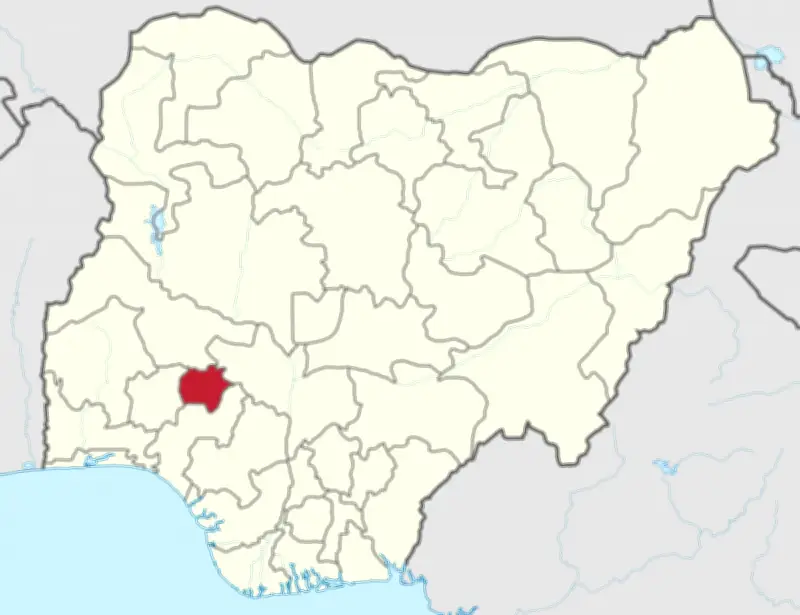
Ekiti State will head into the 20 June 2026 off-cycle governorship election with its largest voter register in history. Still, the expansion in numbers is unlikely to fundamentally alter how elections are decided in the state. According to the Independent National Electoral Commission (INEC), the state now has 1,059,360 registered voters, rising steadily from 989,224 in 2022 and 909,585 in 2018. On paper, this suggests a widening democratic base. In practice, however, Ekiti elections continue to be shaped by a much smaller and more consistent pool of active voters.
PVC Collection and Turnout Trends
INEC also reports that 1,028,929 Permanent Voter Cards (PVCs) have been collected, leaving 30,431 uncollected, a collection rate of about 97.1 per cent. While this points to strong administrative readiness, it does not necessarily translate into higher turnout on election day. That gap between registration and participation remains one of the most defining features of Ekiti politics.
In 2018, 403,451 votes were cast from 909,585 registered voters, representing about 44 per cent turnout. By 2022, participation dropped further, with 360,753 votes cast from 989,224 registered voters, translating to 36.5 per cent turnout. Despite fluctuations in registration numbers, the actual pool of voters who consistently show up has remained largely unchanged. Across three election cycles, the “active electorate” appears to hover between 300,000 and 400,000 voters.
Geographic Concentration of Electoral Power
Even though Ekiti has 16 local government areas, 177 wards, and 2,445 polling units, electoral outcomes are consistently shaped by a handful of high-population LGAs where mobilisation is strongest. Ado-Ekiti, the state capital, leads by a wide margin with 189,432 registered voters, accounting for nearly one-fifth of the entire state register. It is followed by Ikole (80,968), Irepodun/Ifelodun (75,603), Oye (71,603), Ikere (69,319), Ijero (67,776), Ekiti East (65,520), and Ido-Osi (61,652). Together, these LGAs form the real electoral backbone of the state.
Beyond their population size, they also host stronger party structures, denser urban or semi-urban settlements, and more aggressive voter mobilisation networks. Below them, LGAs such as Gbonyin (57,771), Moba (56,968), Ekiti West (56,175), Ise/Orun (49,183), and Emure (39,298) play supporting roles, while Efon (32,062) and Ilejemeje (20,862) remain the smallest voting blocs. In closely contested races, however, even these smaller LGAs can become decisive—not because of scale, but because of margins.
Party Dynamics and Candidate Field
The 2026 ballot features 14 political parties, but the contest is effectively concentrated among a few dominant platforms. The ruling All Progressives Congress (APC) fields incumbent governor Biodun Oyebanji (58) with Monisade Afuye (67) as running mate. The Peoples Democratic Party (PDP) presents Wole Oluyede (61) alongside Kazeem Ogunsakin (46). Other candidates include Dare Bejide (ADC), David Falegan (Accord Party), Olu Omotosho (Action Alliance), Blessing Abegunde (NNPP), Victor Adetunji (ZLP), Osinkolu Ayodele (YPP), and Ayodele Praise (PRP), among others.
In total, there are 14 governorship and 14 deputy governorship candidates – 28 individuals on the ballot. But beyond formal participation, only APC and PDP possess the organisational depth to mount coordinated campaigns across all 16 LGAs. Smaller parties remain largely confined to localised pockets of influence, without the structures required for statewide competitiveness. The race is also defined by an experienced but relatively ageing field of candidates, mostly between 40 and 65 years old, with an average age of about 52. Gender representation remains minimal, with no female governorship candidate among the 14 contenders. Women appear mainly at the deputy level, including Monisade Afuye (APC), Dorcas Adebiyi (PRP), Adenike Ilesanmi (APM), and Itunu Ibitoye (ADP).
Incumbency and Organisational Advantage
As the contest takes shape, incumbency becomes another layer reinforcing existing imbalances. The APC not only controls the governorship but also retains influence over local government structures and political appointments, giving it a significant advantage in mobilisation across the state. Supporters of the administration point to infrastructure projects, pension payments, SME support schemes, and social investment programmes as evidence of performance that could translate into electoral support. The PDP, meanwhile, continues to contend with internal fractures stemming from its primary disputes, while smaller parties lack the financial and organisational strength to compete at scale.
Expert Analysis
Speaking with PREMIUM TIMES, Mustapha Ogunsakin, publisher of Gavel International, said turnout in Ekiti has remained relatively stable over the years. “Over the years, there has been no time when the votes have been more than 400,000,” he said. “I don’t think it has ever reached 500,000.” “We may just see… if we are lucky, about 300,000 to 400,000 people will come out to vote,” he added. He also pointed to incumbency strength and internal party dynamics as key indicators of competitiveness in the race.
Also speaking with this newspaper, Mojeed Jamiu, publisher of Upshot Reports, offered a more data-driven perspective. He noted that while INEC has over one million registered voters, only a fraction typically participates. “Out of the one million registered voters, maybe only about 700,000 will have PVCs,” he said. Both analysts converge on a similar conclusion: Ekiti’s expanding voter register has not significantly altered the size of its active electorate, which appears to have plateaued around 300,000 to 400,000 voters. Mr Jamiu identified Ado-Ekiti, Ikere-Ekiti, and Oye-Ekiti as key voting blocs that often determine the outcome.
As Ekiti enters the 2026 governorship election with its strongest voter register to date, near-total PVC collection, and a wide field of candidates, the structure of participation still shows little sign of change. Turnout continues to lag behind registration, electoral influence remains concentrated in a handful of LGAs, and political competition is still shaped by a few well-organised parties. In the end, the question is not whether Ekiti now has one million voters—but whether those extra numbers ever go to the polling units where votes are cast.