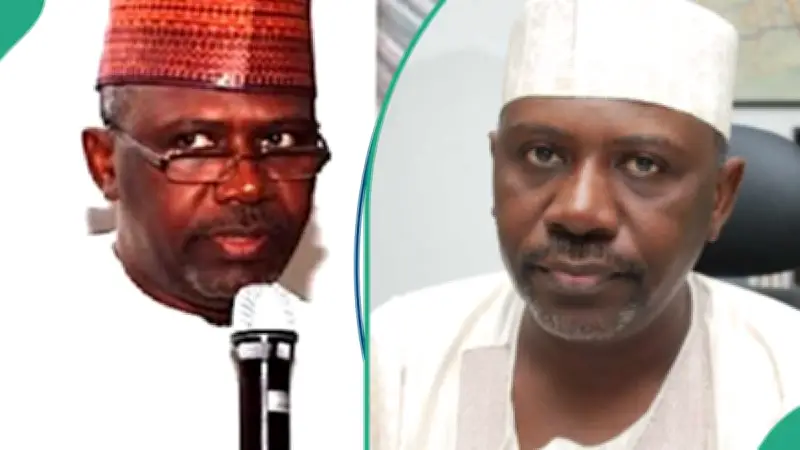
Former Head of the Civil Service of the Federation, Alhaji Bukar Goni, has disclosed that the Federal Government was willing to implement a N150,000 minimum wage during negotiations with organised labour. However, resistance from state governments, local councils, and private sector representatives prevented the proposal from advancing.
Goni Reveals N150,000 Wage Proposal at UN Public Service Day Lecture
Goni made the revelation in Abuja while delivering the keynote address at the Nigeria Public Service Lecture Series and Awards organised by the Bureau of Public Service to mark the 2026 United Nations Public Service Day. The event brought together senior government officials, security leaders, and public administration experts to discuss reforms within the civil service.
Why Was N150,000 Wage Rejected?
Reflecting on his role as chairman of the minimum wage negotiations committee, Goni said discussions became difficult as different stakeholders expressed concerns about their ability to meet a higher wage obligation. He argued that the current constitutional arrangement governing minimum wage should be reviewed. According to him, removing the issue from the concurrent legislative list would allow states, local governments, and private employers to determine salaries based on their financial strength.
“The Federal Government was willing to pay 150,000 as Minimum wage for workers, but the states and local governments said they cannot afford it. In the case of the representatives of the private sectors, they said, ‘Look, we cannot pay. You have increased fuel prices, you have increased tariffs on electricity, so the only way we can pay is to downsize.’
“And for us at the Federal level, downsizing will compound Nigeria’s problems. Nobody wants to hear that someone has been asked to go home from work because the Federal government increased the minimum wage. So unless the 1999 constitution is amended, Nigeria may not be able to address the minimum wage issue holistically. The amendment will allow for pay as you can afford across all sectors,” Goni said.
How Does Rivalry Affect Development?
Beyond wage issues, Goni raised concerns over competition among government institutions, describing it as a major obstacle to national development and efficient public service delivery. He said poor coordination among agencies has weakened efforts to tackle insecurity and execute strategic projects. According to him, military operations against terrorism and banditry have suffered because key security institutions often fail to work in harmony.
Goni recalled that during the administration of former President Muhammadu Buhari, cooperation between the Nigerian Army and the Nigerian Air Force was inadequate, a situation he believes contributed to the persistence of security challenges. He also cited disagreements among the Ministries of Works, Water Resources, and Transport over infrastructure projects, saying overlapping responsibilities have frequently slowed implementation.
N1m Minimum Wage Worthless, NLC President Says
In related news, the president of the Nigeria Labour Congress, Mr. Joe Ajaero, has asserted that the most important step the government should take right now for the citizens is not increasing the minimum wage but strengthening the currency. He said even if the minimum wage is increased to N1 million, and the present harsh economic conditions persist, such an increment would be worthless.