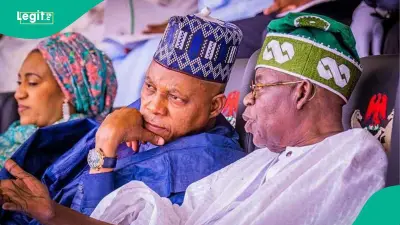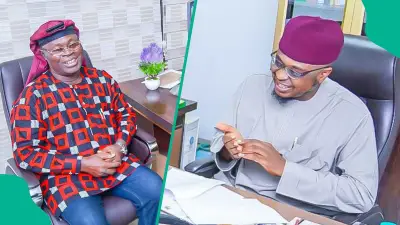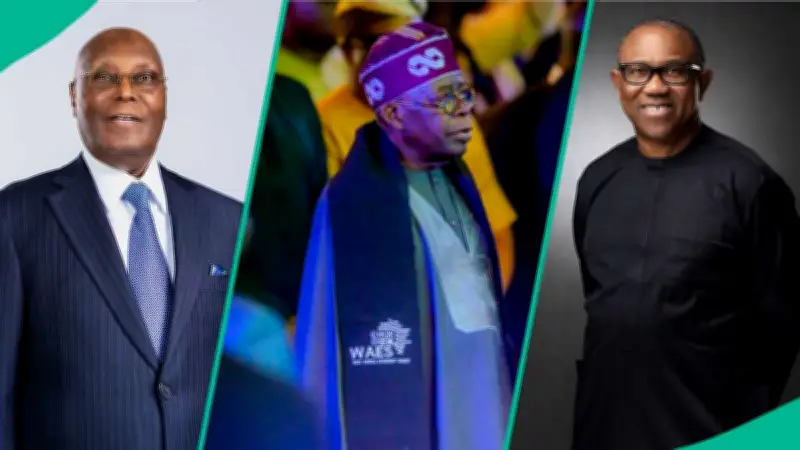
Six of Nigeria's major opposition political parties gathered in Abuja on Monday, August 31, 2026, to begin formal coalition arrangements aimed at uniting against President Bola Tinubu in the 2027 general elections. The summit, organized by the G-100 coalition of civil society groups, saw the absence of three prominent presidential candidates: Alhaji Atiku Abubakar of the African Democratic Congress (ADC), Peter Obi of the Nigeria Democratic Congress (NDC), and Oyo State Governor Seyi Makinde of the Allied Peoples Movement (APM).
Summit Draws Senior Party Figures Despite Absences
Despite the notable absences, the gathering attracted other senior opposition figures, including SDP's Prince Adewole Adebayo, Donald Duke of the Peoples Redemption Party (PRP), and APM's vice-presidential candidate, Lawal Musa Daura. National Working Committee and Board of Trustees members from the participating parties also attended, signaling a broad interest in the coalition effort.
The summit's convener, Mallam Salihu Lukman, speaking on behalf of the G-100 coalition, put forward a proposal for a Government of National Competence. He described this as a framework built on competence, integrity, national inclusion, and fair representation of every party contributing to the effort, tied to a single four-year transition term.
Lukman Calls for Enforceable Coalition Charter
Lukman stressed that any agreement must carry real consequences, not just goodwill. Drawing on the 2023 election results, he argued that the opposition had defeated itself through division. "The winner took just under nine million votes. One opposition candidate took close to seven million. Another took just over six million. Nobody stole thirteen million votes. We divided them ourselves in public, and we did it knowing exactly what the consequence would be," he said, as reported by Daily Trust.
He cited Kenya in 2002 and Malaysia in 2018 as examples where long-ruling parties fell to opposition coalitions that chose unity, describing the lesson as "arithmetical," not moral. The proposal included the establishment of three standing coalition bodies: a Central Leadership Committee, a publicity and communication committee, and a legal committee. Five working groups were also to be set up, each tasked with producing a paper within four weeks on issues ranging from a national reform programme to a roadmap for selecting a common presidential candidate, all ahead of a second summit.
House Minority Caucus Urges Opposition Unity
Lukman was clear that no party was being asked to dissolve or produce a candidate immediately. "That question is not on the agenda of this summit, and any report that says otherwise will be wrong," he said. Fred Agbedi, leader of the House of Representatives Minority Caucus, attended the summit and urged opposition leaders to close ranks as the APC did ahead of its 2015 victory. Agbedi warned that another divided campaign in 2027 would repeat the futility of 2023, when combined opposition votes far outnumbered those of the eventual winner but could not translate into a single victory.
Meanwhile, a political forecast by the Political Intelligence Group projects Tinubu winning 20 states if the 2027 presidential election were held today. Atiku Abubakar is projected to win nine states while Peter Obi is forecast to take eight states plus the FCT. The group warned the figures reflect the current political landscape and that alliances, defections and the economy could significantly shift the numbers.