INEC's Critical Path: Avoiding a Betrayal of Public Trust in Nigeria's Democracy
A democracy does not perish in obscurity. It collapses in plain sight—when the electoral umpire skews the playing field and labels it impartiality. In Nigeria, the role of the Independent National Electoral Commission (INEC) Chairman transcends mere administration; it holds a sacred duty. This position serves as the delicate boundary between the populace's will and the influence of power, acting as the referee in a contest where the prize is nothing less than the nation's soul.
The Weight of Office and the Test of Neutrality
What occurs when this referee loses neutrality? What unfolds when the guardian of electoral integrity starts molding outcomes? These pressing questions now confront Nigerians. History offers an uneasy lesson: individuals appointed to this office often arrive with impressive credentials—esteemed professors, legal experts, and disciplined intellectuals. They are cloaked in excellence, yet between nomination and confirmation, a subtle shift frequently occurs.
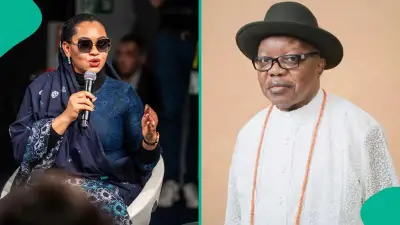
Power begins to murmur, posing a question never voiced publicly but often answered privately: How far will you go? This unspoken understanding underscores that power secures loyalty before announcing appointments. Professor Joash Ojo Amupitan, the current INEC Chairman, is no exception. His qualifications and achievements are undisputed, but in Nigeria, the true test of office lies not in past accomplishments but in actions during critical moments.
Controversial Policies and Their Implications
The proposed "revalidation" of the Permanent Voter Card (PVC) revealed deeper intentions beyond policy. Revalidation—a seemingly simple term—carries dangerous implications. If a voter card is permanent, mandating citizens to revalidate it contradicts its very nature. In a nation grappling with voter apathy, this becomes a barrier, an obstacle, and a quiet filter. Many Nigerians, burdened by daily hardships, may not undertake this process, leading to reduced voter turnout and easier control of election outcomes.
Although INEC has since retreated from this exercise, the retreat does not erase the initial intent. Leadership demands courage, not mere compliance. Neutrality in the face of pressure requires defiance, not silence. Anything less risks appearing as cooperation with external influences.
Patterns of Imbalance and Eroding Trust
The pattern extends further. Across the political landscape, opposition parties struggle under INEC's demands—tight deadlines, fluctuating requirements, and last-minute directives. While each decision might seem technical individually, collectively they paint a picture of an uneven playing field.
The ADC controversy exemplifies this. INEC's removal of the party's National Working Committee names from its portal, citing a court ruling, sent shockwaves through politics. The timing, coinciding with approaching primaries, inflicted immediate damage: weakening structures, stalling plans, and breaking momentum. When accused of favoring those in power ahead of the 2027 elections, the INEC Chairman's response failed to reassure, allowing doubt to take root.
Nigerians are now scrutinizing patterns: outcomes consistently leaning one way, neutrality proclaimed but not felt, and trust quietly eroding. Democracies decline not through overt tyranny but via small decisions, administrative tweaks, and technical justifications. Eventually, the system may persist, but faith in it vanishes, reducing democracy to a mere performance.
INEC at a Crossroads
INEC stands at a pivotal juncture. It can uphold its mandate as a shield for the people's will or morph into a dangerous instrument that perfects the illusion of choice. The stark truth is that a nation loses its democracy not when elections are canceled but when elections continue while outcomes no longer depend on the people. If that day arrives, the greatest tragedy will not be power seized but power surrendered quietly through a process that appears legitimate yet is never truly free.
Edaghese wrote from Wisconsin, USA.