Opposition Leaders Unite Under ADC to Challenge Tinubu in 2027
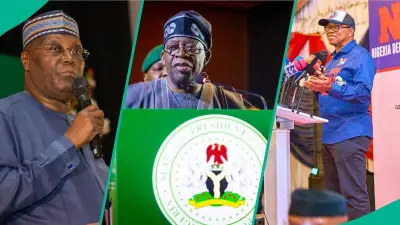
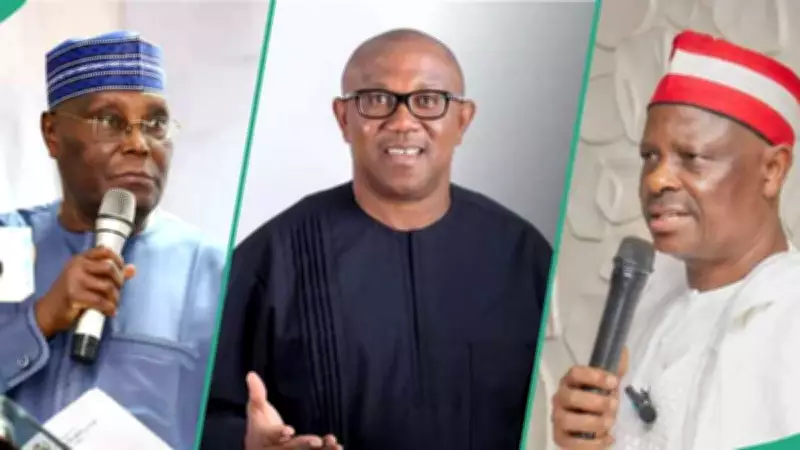
Nigeria's political landscape experienced a significant shift on Monday, March 30, 2026, as former Kano State governor Rabiu Musa Kwankwaso officially resigned from the New Nigeria Peoples Party. This strategic move has ignited fresh discussions about opposition unity ahead of the 2027 general elections, with Kwankwaso expected to join forces with former Vice President Atiku Abubakar and former Labour Party presidential candidate Peter Obi under the banner of the African Democratic Congress.
Strategic Realignment Against the Ruling Party
Political analysts view this alignment as a direct challenge to President Bola Ahmed Tinubu and the ruling All Progressives Congress. The opposition coalition discussions gained momentum after careful review of how divided votes among opposition candidates shaped the outcome of the 2023 presidential election. In that contest, the combined votes of Atiku, Obi, and Kwankwaso actually exceeded those of the APC candidate, but the lack of a unified platform proved decisive in determining the final result.
The renewed cooperation is driven by both political arithmetic and strategic necessity, as opposition figures recognize that fragmentation has consistently worked against their collective interests. This development comes amid growing concerns about the steady migration of politicians to the APC, with several heavyweight states now governed by the ruling party, creating anxieties about shrinking political space for alternative voices.
Kwankwaso's Departure from NNPP
Announcing his resignation, Kwankwaso stated that the current political climate required strategic repositioning. "Considering the current trajectory of the nation's political landscape, which calls for strategic realignment, I have found it necessary to identify with another political platform that offers the best opportunity to effect change," he explained.
Party insiders acknowledge that his departure leaves the NNPP significantly weakened on the national stage. The party, built largely around Kwankwaso's personality and regional appeal in Northern Nigeria, now faces serious questions about its relevance without its most recognizable figure. For Kwankwaso, the African Democratic Congress offers greater scale and flexibility, having already attracted other prominent political figures including former Transportation Minister Rotimi Amaechi and former Interior Minister Rauf Aregbesola.
ADC's Growing Opposition Profile
The African Democratic Congress has positioned itself as a clearing house for opposition interests, with party leaders insisting that no conditions were attached to Kwankwaso's entry. The party's spokesperson clarified, "The former Kano State Governor, Rabiu Musa Kwankwaso, is joining the ADC without precondition. He's coming in to contribute to building the party and supporting the work of the opposition. But ADC will provide a level playing ground for everyone."
This development has repositioned Kano State as a renewed political battleground and significantly strengthened the ADC's profile as an opposition hub. Analysts note that Kano remains central to Kwankwaso's political leverage, with his nearly one million votes there in the 2023 election underlining his substantial grassroots reach. If this base follows him to the ADC, the party would gain a strong foothold in the crucial North-West geopolitical zone.
Reactions and Implications
The Labour Party, Peter Obi's former political platform, responded to these developments with criticism, mocking Obi's defection speech as "lacklustre" and questioning what new message he intends to present to Nigerian voters. Despite this internal opposition criticism, the broader political implications are clear: Nigeria's opposition forces are recalibrating their strategy for the 2027 elections.
The unified front under the ADC banner represents the most significant opposition consolidation effort since the 2023 elections. Political observers will be watching closely to see how this coalition develops, particularly whether it can maintain unity across regional and ideological lines, and whether it can effectively challenge the ruling APC's political machinery in the coming electoral cycle.