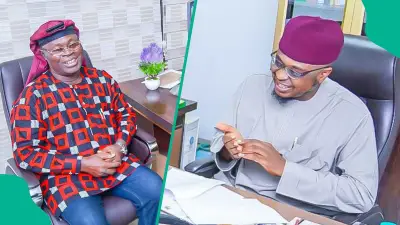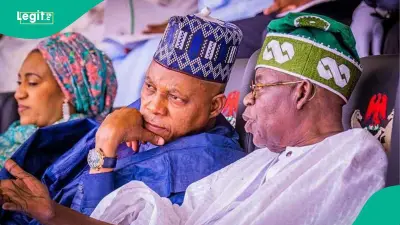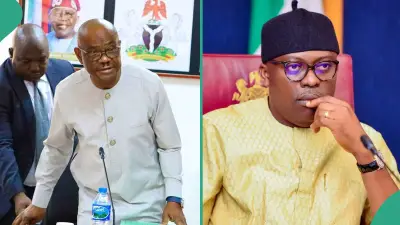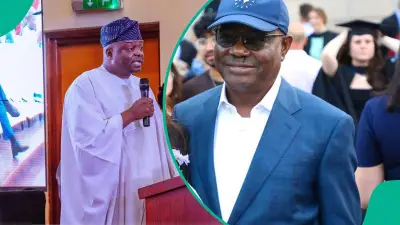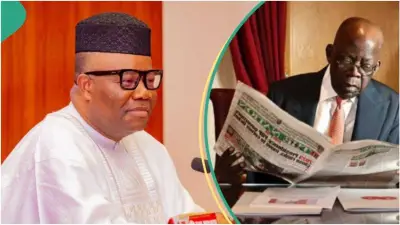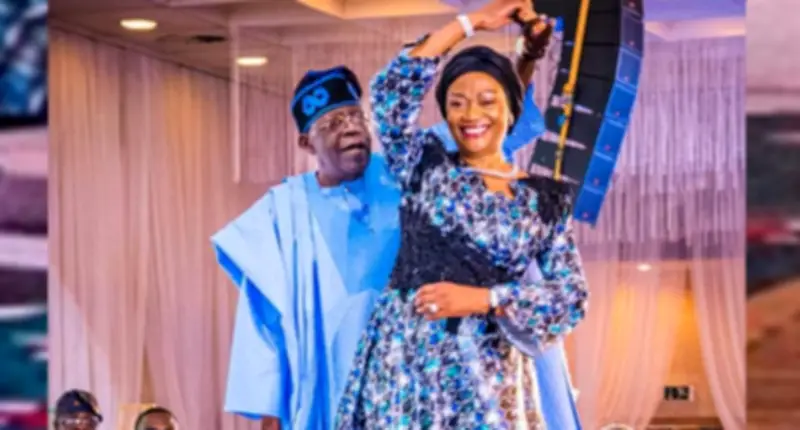
Rabiu Kwankwaso, the presidential running mate of the Nigeria Democratic Congress (NDC), has countered Sheikh Sani Jingir's call for a Muslim-Muslim ticket in 2027 by pointing to President Bola Tinubu's own practice of a Muslim-Christian ticket, including with First Lady Remi Tinubu, "in the other room."
Kwankwaso's Response to Sheikh Jingir's Call
Speaking in an interview with DCL Hausa, Kwankwaso described President Tinubu as a balanced and fair politician. He highlighted that during Tinubu's tenure as governor of Lagos, all his deputies were Christians, and he ensured a Muslim/Christian or Christian/Muslim ticket for all the governors he supported in Lagos.
"I know His Excellency Bola Tinubu is a man who values balance and fairness. For all the governors he supported in Lagos, he ensured a Muslim/Christian or Christian/Muslim ticket. Even when he was the governor of Lagos, all his deputies were Christians," Kwankwaso said.
"Even in his own home, he practices a Muslim/Christian ticket 'in the other room' (Tinubu/Remi)," he added.
Sheikh Jingir's Push for Muslim-Muslim Ticket
The controversy began when Sheikh Sani Jingir, a controversial Islamic cleric, urged Nigerian Muslims to vote for the All Progressives Congress (APC) Muslim-Muslim ticket in the 2027 presidential election. Speaking in Kano, Jingir affirmed his readiness to continue supporting the Muslim-Muslim ticket, as he did in 2023.
"I am one of those who raise the flag of Islam, I am calling on people to come and let us do Muslim-Muslim again," Jingir said.
"I know this statement pains the unbelievers. I am a Muslim who preaches Islam. If I say Muslim-Muslim, what have I taken away from them?" he added.
Implications for 2027 Election
Kwankwaso's remarks highlight the ongoing debate over religious balancing in Nigerian politics. His reference to Tinubu's personal practice suggests a contrast between the president's inclusive approach at home and the APC's Muslim-Muslim ticket in 2023, which he did not explicitly address.
The exchange underscores the sensitivity of religious considerations in the run-up to the 2027 presidential election, as political actors position themselves on the issue.