How Nigeria's 2027 Presidential Election Could Become Uncontested
As Africa approached the turn of the Millennium, leaders across the continent were moving toward a consensus that democracy, good governance, respect for human rights, and the rule of law are essential prerequisites for security, stability, and development. For many, this consensus translated directly into the conduct of free and fair elections. Two decades later, the African Court on Human and Peoples' Rights affirmed that the only legitimate basis for political power on the continent is the regular conduct of free and transparent elections through universal suffrage.
Historical Context of Election Observation in Africa
Around the same period, the Organisation of African Unity (OAU) grappled with defining what constitutes free and transparent elections. Senior OAU ambassadors recommended that the organization outlaw constitutional manipulation aimed at preventing democratic change of government, as well as any form of election rigging or malpractice established by credible bodies. A decade earlier, in 1989, the OAU observed the referendum on Namibia's independence, marking its first election observation mission in Africa.
Until then, since its creation in 1963, the OAU had largely avoided involvement in how governments came to power across the continent. In its initial decade of election observation, the OAU did not encounter an election it disapproved of, providing comfort to rulers throughout Africa. In Nigeria, for instance, General Sani Abacha, who ruled from November 1993, had no issue with elections as long as they did not imply a genuine contest.
The Abacha Playbook and Its Legacy
By June 1998, General Abacha was on the verge of transitioning Nigeria to elective governance. In the planned election overseen by him, five recognized parties—the Democratic Party of Nigeria (DPN), United Nigeria Congress Party (UNCP), National Centre Party of Nigeria (NCPN), Grassroots Democratic Movement (GDM), and Congress for National Consensus (CNC)—all shared one presidential candidate: General Sani Abacha. His death in June 1998 halted this plan but left behind a playbook for election management that has not been seriously revisited in Nigeria until now.
By the time the All Progressives Congress (APC) came to power in 2015, the African Union (AU), successor to the OAU, had conducted about 500 election observer missions across the continent. Over this period, the OAU/AU still rarely disapproved of elections. However, the AU developed principles for elections, later embodied in a continental charter on democracy, elections, and governance. These principles require independent election management bodies like Nigeria's Independent National Electoral Commission (INEC), political pluralism, tolerance, and an independent judiciary to resolve disputes through election litigation.
Judicial Intervention in Nigerian Elections
In Nigeria, pre-election litigation is handled by regular courts, while election petition tribunals adjudicate disputes over election outcomes. This distinction seemed settled until 2007, when the Supreme Court awarded the Rivers State governorship to Rotimi Amaechi, who was not on the ballot, after he was manipulated out of party primaries. This case elevated the significance of pre-election disputes and shifted voting rights from citizens to judges.
By 2019, the Supreme Court awarded the Zamfara State governorship to a defeated candidate by disqualifying the winner in a pre-election dispute and refusing to order a re-run. African governments have increasingly used courts to make elections largely uncontested. For example, six months ago, Ivorian President Alassane Ouattara used courts to ban competitive candidates, resulting in him receiving about 90% of votes.
Recent Developments and the 2026 Electoral Act
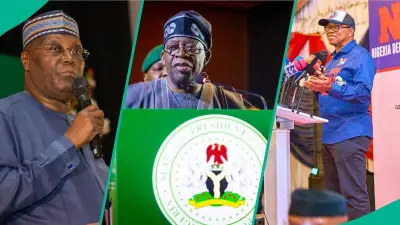
Recently, retired Court of Appeal President Isa Ayo Salami, aged 82, suggested uncontested elections for Nigeria, while criticizing his former judicial colleagues and questioning Peter Obi's candidacy in the 2023 elections. It is worth noting that in 2011, a National Judicial Council committee investigated Salami's conduct in the 2007 Sokoto State governorship election, including allegations of close contact with a political party now part of the APC.
Salami's proposal could lead to an Abacha-style election under legal guise. The Electoral Act 2026, enacted on February 19, creates opportunities for such mischief. It requires political parties to maintain a digital register of members with detailed information in both hard and soft copies, to be submitted to INEC at least 21 days before primaries between April 23 and May's end. Parties must create these registers in less than two months, with failure resulting in candidate disqualification.
Potential Consequences for 2027
In 1979, courts saved candidates like Nnamdi Azikiwe and Aminu Kano from disqualification, but Nigeria's judiciary has evolved, not necessarily for the better. The 2026 Electoral Act leaves ample room for pre-election judicial mischief, which courts could use to exclude competitive candidates. It would be unsurprising if this is deployed to block competitive candidates from the January 2027 presidential election.
The irony is that a president known for advocating against military rule might appropriate the methods of Nigeria's maximum military ruler to become the only competitive candidate in an uncontested election in 2027. This scenario highlights ongoing risks to democratic processes in Nigeria.