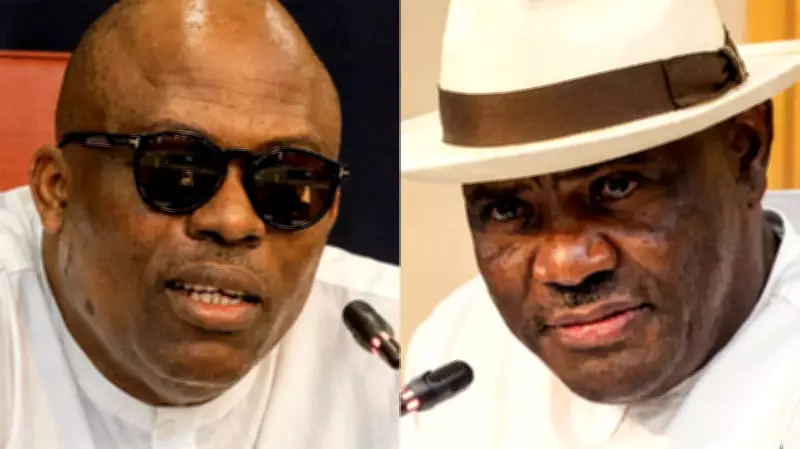
Rivers 2027: Ethnic Politics and Wike-Fubara Rivalry Shape Governorship Race
As preparations for the 2027 elections gain momentum in Rivers State, the longstanding rift between Governor Siminilayi Fubara and the Minister of the Federal Capital Territory, Nyesom Wike, continues to smolder, with ethnic politics and power rotation debates taking center stage. The unfolding contest is defined by deepening ethnic sentiments, unresolved tensions between political godfather and protégé, and the growing influence of external political actors, placing Fubara at the heart of a complex re-election equation.
Ethnic Balancing and Power Rotation Dynamics
A familiar fault line in Rivers politics, ethnic balancing and zoning, has resurfaced as the 2027 governorship race begins to take shape. Since the return to democracy in 1999, the governorship has rotated across a narrow spectrum, with upland areas, particularly the Ikwerre ethnic group, dominating for 16 years under leaders like Peter Odili, Rotimi Amaechi, and Nyesom Wike. In contrast, riverine areas have held power for about 11 years, including Fubara's current term from Opobo-Nkoro in Rivers South-East.
This disparity has intensified agitation, especially in Rivers South-West, where demands for equity and sustained riverine representation are growing louder. For many in these communities, 2027 is seen as a referendum on whether the state will institutionalize power rotation beyond informal arrangements, with riverine areas pushing for greater inclusion in the state's power structure.
Wike-Fubara Rivalry and Political Machinery
Beyond ethnic sentiment, the strained relationship between Wike and Fubara remains a decisive factor. Despite public gestures of reconciliation, lingering distrust persists, with Wike's reported vow not to repeat the "mistake" of 2023 highlighting that loyalty and personal trust may shape the succession battle more than zoning or equity. Fubara's path to re-election hinges on his ability to build an independent political base without triggering outright confrontation, as Wike's entrenched influence over grassroots structures, the legislature, and key networks continues to define Rivers' electoral arithmetic.
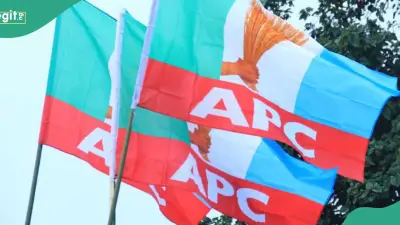
In a state where control of local structures often outweighs formal incumbency, Fubara faces the challenge of navigating this internal contest while also dealing with external actors. His alignment with the federal government-controlled APC and reported backing from national figures introduce new layers of political calculation, but Rivers' politics has historically resisted external imposition, with outcomes largely determined by local alliances.
Federal Influence and Tinubu's Role
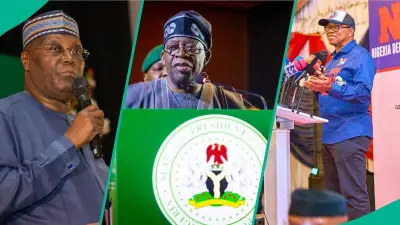
The federal might and President Bola Tinubu's 2027 re-election calculus are poised to play a crucial role in shaping the political fate of Wike and Fubara. As a politically influential and economically critical oil state, Rivers is too important to be left outside Tinubu's re-election map, with his overriding interest being stability and electoral deliverables. This places Wike in a strong position as a serving minister and proven political organizer with deep grassroots control, potentially tilting the governorship process in favor of a candidate aligned with him.
However, Fubara's survival is not foreclosed; his growing ties with APC power brokers and governors suggest an attempt to integrate into the federal ecosystem. If he repositions as a cooperative actor within Tinubu's broader strategy, he could secure conditional federal tolerance. The risk lies in a zero-sum contest, where federal priorities may favor predictability over incumbency if Fubara is perceived as weakening established structures.
Stakeholder Perspectives and Democratic Participation
Stakeholders have voiced diverse opinions on the race. Ann Kio Briggs, a prominent Niger Delta activist, supports zoning, arguing that political power has been unevenly distributed, with upland areas holding sway for years. She emphasizes the need for fairness and inclusivity, urging citizens to obtain Permanent Voter Cards and actively participate in elections to assert democratic rights.
In contrast, political analyst Olalekan Ige notes that Wike retains the right to support candidates of his choice, with electoral victory depending on broad-based support across the state. He stresses that while influential figures may shape conversations, the final decision rests with the electorate, urging grassroots mobilization.
Other observers, like Genesis Gideon, warn against political environments where "selection" is mistaken for "election," with powerful actors imposing loyalists. Citizen Peter Ijeoma describes parts of Wike's statements as "politically insensitive," potentially increasing tension and threatening power-sharing agreements. Human rights activist Chetam Nwala calls for active citizen participation to address neglect by political elites.
Implications for Governance and Development
The Wike-Fubara rift and APC's growing interest risk subordinating governance to power struggles, potentially slowing development and heightening tensions in Rivers State. Yet, a competitive 2027 race could benefit the people if it compels candidates to prioritize jobs, infrastructure, and security, shifting focus from political control to performance and accountability. As the race unfolds, the interplay of ethnic politics, local alliances, and federal influence will determine whether the election becomes an open contest or a managed succession, with lasting impacts on the state's democratic trajectory.