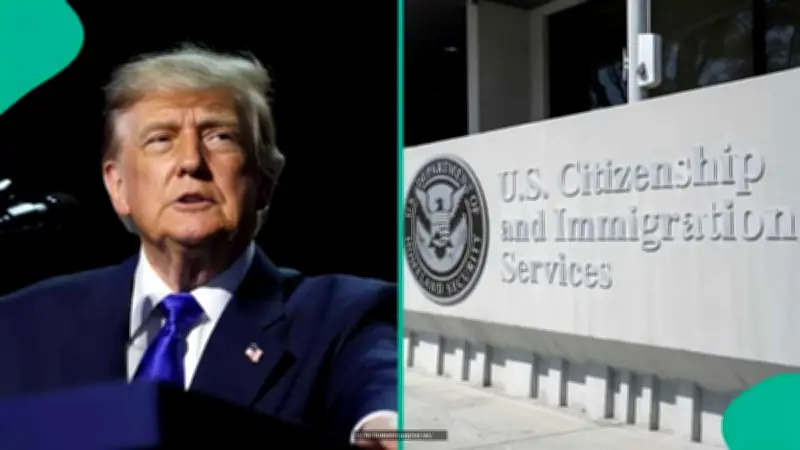
The United States Citizenship and Immigration Services (USCIS) administers the citizenship test, also known as the civics test or naturalisation civics test, to evaluate an applicant's English proficiency and basic knowledge of US history and government during the citizenship application process. The test has undergone significant changes since its origins as a purely oral examination in the 19th century.
Origins of the US Citizenship Test
Before the introduction of the written examination, the method of testing was basically oral during the 19th and early 20th centuries. According to USCIS, judges often conducted the citizenship test orally by examining applicants. During that era, the process was primarily the responsibility of the courts.
Judges mostly asked applicants questions about the duties of a citizen, the functions of government, and several other questions that could help determine whether an applicant qualified to become an American citizen. This oral tradition continued for decades.

Federal Bureau of Naturalization Takes Charge
In 1906, USCIS explained that a body, the Federal Bureau of Naturalization, was charged with the responsibility of overseeing the citizenship application process for foreign applicants or individuals interested in becoming US citizens. However, the body soon received reports or letters from judges, candidates, and several groups who raised concerns about immigrants' applications for US citizenship being denied.
The Federal Bureau of Naturalization took steps to find a way to help immigrants learn about the history of the United States and several other things they needed to know to attain US citizenship. However, this did not lead to any positive results, and the judges or courts continued to take charge of the test by asking oral questions to determine eligibility.
Key Legislation and Reforms
Later in the 1930s, the Immigration and Naturalization Service (INS) made plans to introduce questions in a way that the questions asked would show the applicant's attachment to the principles of the Constitution. Also in the 1930s, the INS, under D.W. MacCormack, made major improvements to the process as he introduced policies that emphasised that the citizenship test was to be based on the applicant's knowledge of the Constitution rather than the memorisation of facts.
In 1940, the US Congress included an English language requirement for the naturalisation process and introduced a method for questioning immigrants or aliens who applied for naturalisation. Eventually, in 1950, the Internal Security Act put into place what was described as the educational requirements for naturalisation. It made knowledge of American history and other areas part of the requirements for naturalisation.
Evolution of the Test and Recent Changes
In 1986, the Immigration Reform and Control Act laid requirements for aliens to demonstrate their understanding of US history. The INS later formed a list of 100 civics questions from Federal Textbooks on Citizenship.
In 1997, the US Department of Justice (DOJ) reviewed the process and tasked a body with developing a uniform approach to the system. On December 26, 2000, the body announced plans to redesign and test the process. Several modifications followed in 2000, 2003, and 2008.
In 2020, USCIS announced a redesigned naturalisation civics test, and it came into effect in July and August of the same year. Not long after its implementation, it reverted to the 2008 version. In September 2025, the body announced that it would resume using the 2020 Naturalisation Civics Test, with certain changes for applicants going through the US citizenship application process.
Why the US Citizenship Test Is Important
Here are some reasons why the United States citizenship test is important:

- To ensure an alien demonstrates an understanding of the English language, including an ability to read, write, and speak words in ordinary usage.
- To ensure that, upon becoming US citizens, the alien is willing and able to carry out the rights and responsibilities of citizenship.
- To familiarise the alien with some of the rights of US citizens, including the right to vote and the right to hold public office.
The US citizenship test is therefore an important part of the naturalisation process because it helps determine whether an applicant has the required knowledge of the English language, US history and government. The test has changed several times over the years, with the US government introducing different versions and modifications to reflect its requirements for people seeking American citizenship.
For foreigners who want to become US citizens, understanding the history and requirements of the test can help them prepare for the naturalisation process and understand what is expected of them before they can complete their citizenship application. Legit.ng recently reported that the US had announced the updated 2025 Naturalisation Civics Test for foreigners applying for American citizenship. Applicants who filed Form N-400 on or after October 20, 2025, must answer at least 12 out of 20 oral questions correctly to pass the test.