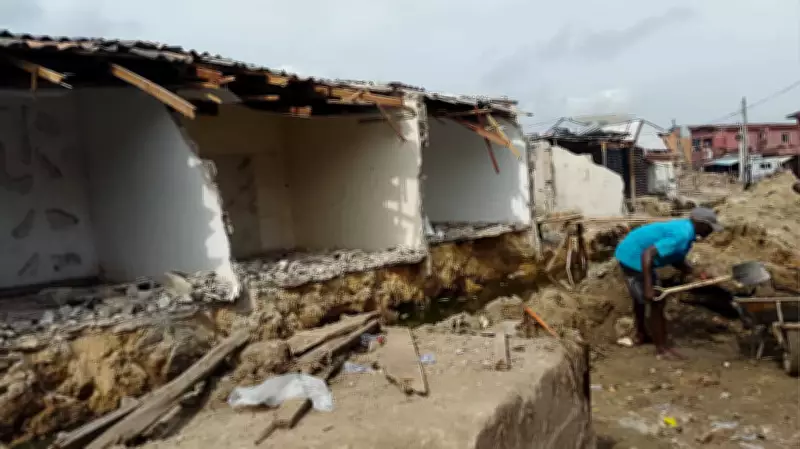
Residents of Langbasa and Harmony Estate in Eti-Osa Local Council Area of Lagos have expressed deep sorrow over the demolition of their homes, shops, and kiosks as part of an ongoing road construction project initiated by the Lagos State Ministry of Works and Infrastructure. The project, aimed at enhancing infrastructure and economic development, covers Oba Elejigbo Street, Mallam Eshinlokun Street, and parts of Kingsley Osuh Avenue. Visible Construction Limited is handling the construction, which is expected to last approximately 15 weeks, though officials have indicated that the broader scope may extend to six months or more.
Mixed Reactions from Residents
Residents have shown mixed reactions to the demolition exercise. Those whose properties were unaffected described the project as long overdue, believing it will improve mobility and living conditions. One resident remarked, "This is a welcome development. Good roads will improve business and even bring solar street lights." However, residents of the Osho area and adjoining streets, including Abel Abayomi Street, reported that the demolition has left many families displaced and traders counting their losses. Many affected residents described the exercise as sudden and devastating, alleging they were not given adequate notice before demolition equipment arrived. "Heavy machines moved in and started pulling down buildings. We were not given enough time to prepare," a resident lamented.
Calls for Government Intervention
Some affected residents have appealed to Lagos State Governor Babajide Sanwo-Olu to intervene, citing a lack of compensation and relocation plans. Mallam Mohammed Sheriff, a trader, stated that many families have been rendered homeless. "We are pleading with the government to come to our aid. People are sleeping outside," he said. Joshua Ogunmeye, whose father's property was affected, questioned the level of communication from authorities. "A large part of our compound was taken. There was no clear compensation plan or proper notice," he explained. Eyewitnesses also reported that the demolition extended to sensitive areas, including graves. A relative of the late Baale of the community said the family had to exhume and rebury their loved one to allow the project to continue. "We accepted it as part of development, but it was painful. The road will pass through that area," he noted.
Another resident, known as Madam Londoner, lamented the partial destruction of her building. "I spent so much building this house to roofing level, but now half of it is gone," she said. Additionally, residents indicated that the demolition disrupted electricity supply in the area after power infrastructure was damaged during the exercise.
Government's Position
Government officials maintained that the demolition followed consultations with stakeholders, including the traditional ruler of Langbasa, community leaders, and residents. According to an official, a stakeholders' meeting was held where residents agreed that the project should proceed despite the demolition. The monarch was said to have appealed for cooperation to allow the completion of the Ebi Ijugbo Masquerade Festival before full-scale construction commenced. Another official described the project as a major state government intervention aimed at improving infrastructure and security in the community. "This is a capital-intensive project aimed at improving infrastructure and security. It is not targeted at residents but at development," the official said. "The duty of the government is to ensure safety and proper environmental standards. The road will benefit the entire community," the source added.
Human Cost and Demands
Despite the assurances, many residents insisted that the human cost of the demolition has been severe. They called for urgent intervention, compensation, and clearer resettlement plans. The situation remains tense as displaced families seek assistance and clarity on their future.