
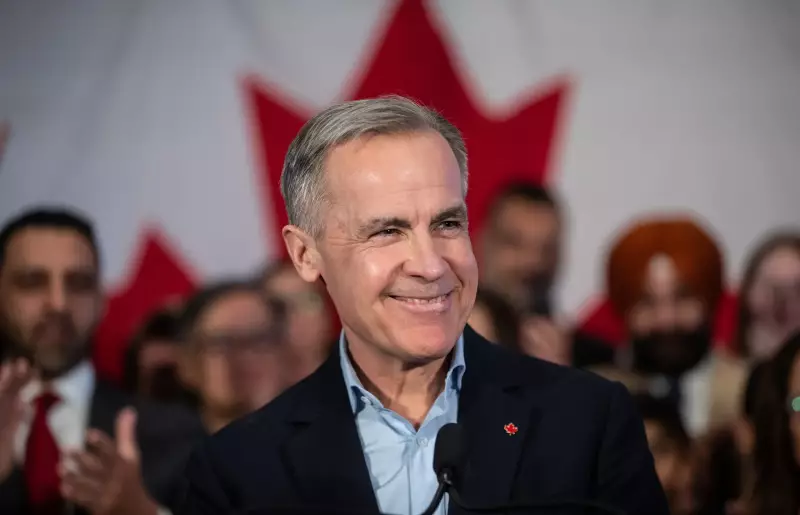
Carney's Stark Admission at Davos: A Wake-Up Call for Africa
In a landmark speech delivered at the World Economic Forum in Davos on January 20, 2026, Canadian Prime Minister Mark Carney issued what may be the most candid admission from a Western leader in recent decades. He described the so-called rules-based international order as a fading fiction, selectively applied by powerful nations. This declaration, made before an elite audience amid geopolitical tensions, signals a profound shift in global dynamics that African states must urgently address.
The Collapse of a Selective System
Carney characterized the current geopolitical shift not as a mere transition but as a rupture. He highlighted how rising Sino-American protectionism has turned economic ties into tools of coercion through tariffs and supply-chain pressures. The Prime Minister urged an end to the pretence of mutual benefits in global integration, noting that compliance no longer guarantees safety. For middle powers like Canada, he emphasized the need to build domestic strength and form flexible coalitions to avoid subordination.
This confession that the international order was partially false with asymmetric enforcement echoes long-standing critiques from African scholars and leaders. They have consistently viewed this system as a mechanism to maintain unfair advantages rather than promote equality. Historically, Africa's encounters with Europe and North America have been marked by inequality, from the colonial-era Berlin Conference, which drew borders and extracted resources under the guise of civilizing missions, to post-independence institutions like the World Trade Organization (WTO) that enforced trade terms favoring Western manufactures over African raw commodities.
Implications for West Africa's Policy Landscape
The fading rules-based order fundamentally alters West Africa's approach to energy, exports, industry, and security. In the energy sector, countries like Nigeria, with Africa's largest oil reserves, and Senegal and Mauritania, with growing gas fields, face new challenges. Western-led climate frameworks have pushed decarbonization with promises of just transition funds that have arrived sparingly. Unilateral measures, such as the European carbon border adjustment mechanism, could now impose costs on fossil fuel exports without negotiated offsets.
With Washington's withdrawal from multilateral climate commitments under its current administration, financing for renewables may dry up. Consequently, West African governments are likely to prioritize deals that secure immediate revenue, such as Chinese investments in Nigerian refineries or Qatari gas partnerships. Nigeria's expanding domestic refining capacity, exemplified by the Dangote facility, aims to cut import dependence and process local crude at scale.
Trade and Export Vulnerabilities
Exports from West Africa face direct risks from great power coercion. Cocoa dominates the earnings of Ghana and Ivory Coast, flowing mainly to European processors, while oil and mineral production from Nigeria and Sierra Leone follow similar patterns. If protectionism rises as Carney warns, tariffs could slash revenues overnight, reminiscent of past United States steel duties that impacted indirect suppliers.
To insulate themselves, West African states must deepen intra-regional trade under the African Continental Free Trade Area, which allows processed goods to move tariff-free across borders. Agreements with partners like India and Turkey are gaining traction for market diversification, as these nations often demand fewer governance conditions compared to Western aid, which has become increasingly scarce.
Urgency in Industrial Policy
Industrial policy must gain urgency in this new environment. Leaders in Senegal and Ghana are already restricting raw mineral exports to force local value addition, such as bauxite smelting or lithium processing. Under the old order, trade rules often blocked such measures through investor-state disputes, where companies sued governments over profit losses. With these constraints weakening, states can impose bolder requirements on foreign firms.
Nigeria's local content laws in oil services are extending to manufacturing zones, attracting assembly plants for electronics and vehicles. This approach builds resilience against external shocks by shortening supply chains within Africa.
Security Policy Shifts
Security policy is undergoing the most dramatic shift. The French and largely Western security presence in the region has eroded, while rising and established Eastern powers like Russia and Turkey have stepped in as security partners. Jihadist groups are expanding into coastal states like Benin and Togo, compounding maritime threats such as Gulf of Guinea piracy.
However, Carney's call for middle-power coalitions offers little direct inclusion for West Africa, as Canada focuses on Europe, Asia, and Latin America. Regional bodies like ECOWAS are strengthening joint forces, as seen in recent deployments against coups. Partnerships with Russia and Turkey fill gaps through equipment supplies and training without heavy political strings. Forward movements point to balanced alignments, where West Africa engages BRICS mechanisms for infrastructure loans alongside selective Western counterterrorism support.
Path Forward for African Sovereignty
Carney's proclamation validates African assertions that the rules-based order primarily served Northern interests. West African states now stand to gain sovereignty in policy choices, free from enforced liberalization. However, risks persist if middle powers form exclusive clubs that further sideline the continent.
Leaders in Abuja, Accra, and Dakar must accelerate regional integration and pragmatic engagements across divides. Energy sales should fund industrial bases, from which exports can diversify, and security must rest on collective African capabilities. This path demands clear-eyed decisions, akin to Carney's knee-jerk realism, but adapted to local realities.
Confidence MacHarry is a senior security analyst at SBM Intelligence.




