
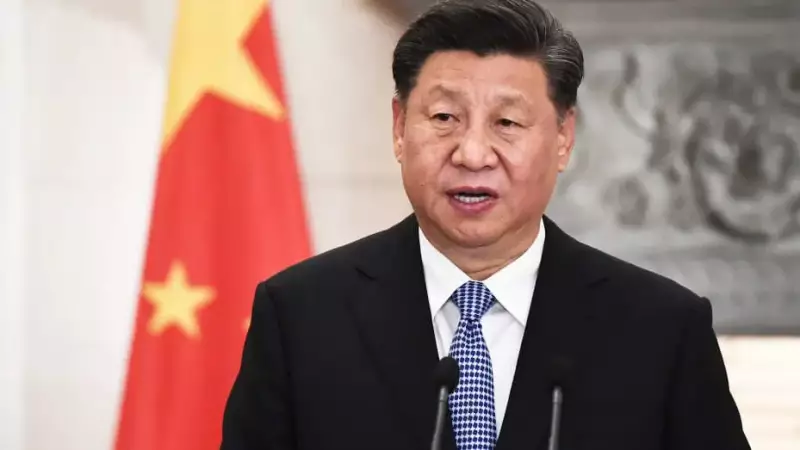
China has publicly reaffirmed its steadfast commitment to upholding the international system centered on the United Nations, following its confirmation of receiving an invitation from the United States to participate in a newly proposed global conflict resolution initiative. The announcement came on Wednesday, January 21, 2026, through a statement from the Chinese Foreign Ministry, which emphasized Beijing's unwavering position despite evolving geopolitical dynamics.
China's Response to the 'Board of Peace' Invitation
On Tuesday, January 20, 2026, Beijing acknowledged that it had been formally invited by Washington to join the so-called "Board of Peace," a body envisioned by US President Donald Trump to address and mediate international disputes. According to its charter, this board aims to facilitate the peaceful resolution of conflicts across the globe, though specific operational details remain under discussion. As of now, China has not disclosed whether it will accept this invitation, leaving its participation in the initiative uncertain.
Foreign Ministry's Firm Stance on UN Leadership
During a press briefing on Wednesday, Foreign Ministry spokesman Guo Jiakun articulated China's clear and consistent policy regarding the international order. He stated that regardless of shifting political landscapes worldwide, China remains dedicated to supporting the UN-centric framework. "No matter how the international situation changes, China firmly upholds the international system with the United Nations at its core, and international relations based on the objectives and principles of the UN Charter," Guo declared. This statement underscores Beijing's prioritization of multilateralism and established global governance structures over unilateral or alternative mechanisms.
China's Role as a Defender and Reformer of the UN
As the world's second-largest economy and a permanent member of the United Nations Security Council, China has long portrayed itself as a staunch defender of the UN system. This role is integral to its foreign policy, which seeks to balance maintaining the status quo with advocating for necessary reforms. Beijing has repeatedly called for updates to the UN framework to better mirror contemporary global realities, such as the rising influence of emerging economies and shifting power dynamics. This dual approach allows China to assert its leadership while navigating complex international relations.
Implications for Global Diplomacy
The invitation to the "Board of Peace" and China's subsequent response highlight ongoing tensions and collaborations in US-China relations. While the US initiative represents an attempt to create new avenues for conflict resolution outside traditional UN channels, China's reaffirmation of its commitment to the UN system signals a preference for existing multilateral institutions. This dynamic could influence future diplomatic engagements, as both nations grapple with competing visions for global governance. Observers note that China's cautious stance may reflect broader strategic calculations, including concerns about sovereignty and the potential dilution of UN authority.
In summary, China's announcement serves as a reminder of its pivotal role in international affairs, emphasizing a continued reliance on the United Nations as the cornerstone of global order, even as it evaluates new proposals like the "Board of Peace." The situation remains fluid, with further developments expected as diplomatic dialogues progress.




