
Colombian President Petro's Jesus 'Made Love' Remark Triggers Widespread Christian Fury
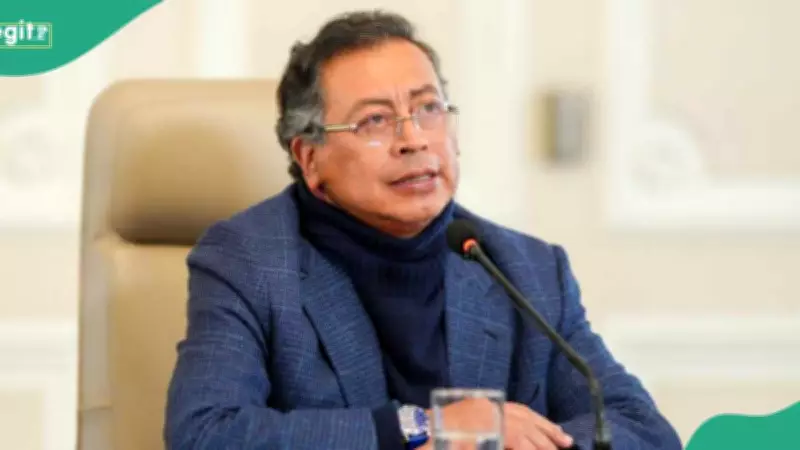
Colombia's left-wing president, Gustavo Petro, has ignited a firestorm of controversy and anger within Christian communities both domestically and internationally. The uproar stems from provocative statements made by the president regarding the personal life of Jesus Christ, specifically suggesting an intimate relationship with his disciple, Mary Magdalene.
Controversial Remarks Challenge Christian Doctrine
During a public address, President Petro asserted that a man of Jesus's stature "could not exist without love." He elaborated further, claiming that Jesus "died surrounded by women who loved him, and there were many." The most incendiary part of his commentary was the insinuation that Jesus "made love," and that this may have been "perhaps with Mary Magdalene." These declarations stand in direct opposition to long-held Christian doctrine, which venerates Jesus as having lived a life of chastity and never having married.
Immediate Backlash from Religious Communities
The reaction from the Christian faithful was swift and severe. Many believers publicly urged President Petro to show respect for their religious convictions. Benjamin Gonzalez, a Christian from Bogota, expressed the sentiment of many, stating that the president had gone "against the Church and against all churches" and had "spoken against a very sacred being, our Lord Jesus Christ."
The institutional response was equally critical. The Evangelical Confederation of Colombia issued a strong rebuke, accusing Petro of distorting "historical, biblical and theological truth." The organization highlighted the president's status as a non-practicing Catholic and condemned what they perceived as a profound "lack of respect" for religious sensibilities.
Political and Theological Repercussions
The controversy quickly spilled over into the political arena. The Episcopal Conference of Colombia called on politicians to refrain from making public "theological" statements, emphasizing the need to separate political discourse from matters of faith. Opposition figures seized on the issue, with presidential candidate Vicky Davila labeling Petro's remarks a deliberate "provocation" aimed at stirring division.
This incident is not isolated in the context of theological debates sparking public outrage. It recalls recent controversies, such as the criticism leveled by Catholic priest Fr. Ugochukwu Ugwoke against Pastor David Ibiyeomie's claim that Jesus hated the poor. Fr. Ugwoke emphasized the importance of theological accuracy, a principle many feel President Petro has violated. Similarly, the placement of a 'Jesus Christ is not God' banner at a mosque in Lagos, Nigeria, previously drew condemnation from the Christian Association of Nigeria for its provocative nature.
The ongoing debate underscores the delicate intersection of politics, personal belief, and public religious sentiment. President Petro's comments have opened a deep wound for many Christians who revere Jesus as the son of God and the savior of the world, challenging core tenets of their faith in a very public and, to them, disrespectful manner.




