
EU Unveils Major €290 Million Investment Package for Nigeria
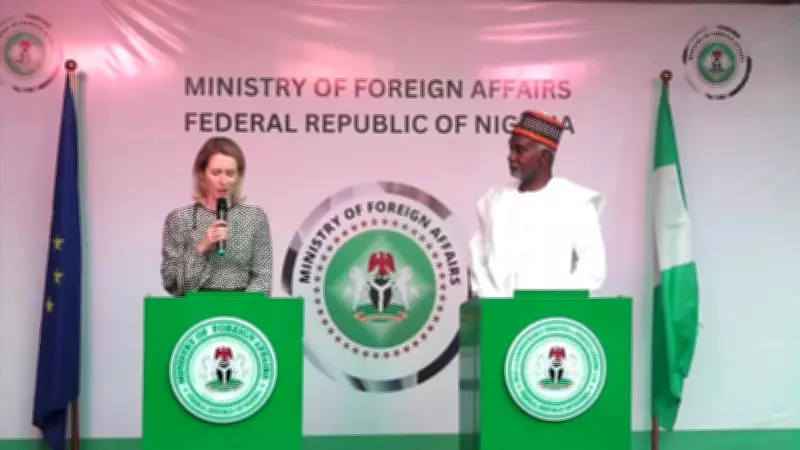
The European Union has officially launched a substantial €290 million investment initiative aimed at bolstering Nigeria's key economic sectors. This significant financial commitment was revealed during the eighth Nigeria–EU ministerial dialogue held in Abuja, where discussions were co-chaired by Nigeria's Minister of Foreign Affairs, Yusuf Tuggar, and European Union representative Kaja Kallas.
European officials emphasized that this funding, which forms part of the EU's broader Global Gateway strategy, is strategically designed to enhance Nigeria's economic resilience and foster deeper bilateral cooperation between the two entities. The investment package represents a concerted effort to address critical development needs while strengthening international partnerships in an evolving geopolitical landscape.
Digital Infrastructure Receives Largest Allocation
The digital sector stands as the primary beneficiary of this investment, with an impressive €131 million earmarked specifically for expanding connectivity and improving digital services across Nigeria. This ambitious initiative plans to deploy approximately 90,000 kilometres of fibre-optic cable infrastructure, a development projected to provide reliable internet access to an estimated 33 million Nigerian citizens.
Beyond physical infrastructure, the programme will also support the development of digital public infrastructure systems and actively work to cultivate Nigeria's technology talent pipeline. This comprehensive approach aims to create sustainable digital ecosystems that can drive innovation and economic growth for years to come.
Healthcare Manufacturing Gets €50 Million Boost
In the healthcare sector, a significant €50 million financing agreement has been formalized between the European Investment Bank and Nigeria's Bank of Industry. This funding is specifically targeted at enhancing local manufacturing capabilities for pharmaceuticals, vaccines, diagnostic tools, and medical devices.
Olasupo Olusi, Managing Director of the Bank of Industry, characterized this partnership as truly transformative for Nigeria's healthcare landscape. "This collaboration marks a pivotal step in Nigeria's journey from being a major importer of medical products to becoming a competitive producer within the global market," Olusi stated emphatically.
EIB Vice-President Ambroise Fayolle reinforced this perspective, noting: "Our support not only strengthens national health security but also improves the resilience of essential supply chains, creating a more self-sufficient healthcare ecosystem."
Agricultural Value Chains Supported with €85 Million
Another substantial component of the investment package includes €85 million dedicated to supporting agricultural value chains, with particular focus on enhancing cocoa and dairy production systems. This funding is strategically designed to improve agricultural productivity while providing crucial support to smallholder farmers and emerging agribusiness enterprises.
EU Commissioner Jozef Sikela highlighted the broader economic implications of this agricultural investment, explaining that it would help Nigeria reduce its dependence on imported food products while simultaneously scaling up local production capacity. This approach aligns with broader food security objectives while creating sustainable livelihoods within rural communities.
Migration Management Receives €16 Million Allocation
The comprehensive investment package also includes €16 million specifically allocated for migration management initiatives. These funds will focus on supporting the reintegration of returning migrants while strengthening efforts to combat human trafficking networks that exploit vulnerable populations.
Kaja Kallas emphasized the strategic importance of this multifaceted partnership, stating: "In the current geopolitical context, the European Union is particularly keen to enhance and deepen its partnership with Nigeria across multiple sectors of mutual interest."
Alignment with Continental Development Goals
Officials noted that these investments strategically align with broader continental development objectives, including the African Union's ambitious target of producing 60 percent of vaccines locally by the year 2040. The initiatives also support the implementation framework of the African Continental Free Trade Area, which aims to boost regional trade integration and economic cooperation.
The European Investment Bank further revealed that it has invested over €2.3 billion in Nigeria since beginning operations in the country in 1978. These historical investments have supported critical infrastructure development, climate resilience projects, innovation initiatives, and small business development programmes across various sectors of the Nigerian economy.
This latest €290 million investment package represents a significant enhancement of the EU's ongoing commitment to Nigeria's sustainable development, with potential to create lasting positive impacts across digital, agricultural, healthcare, and social sectors.




