
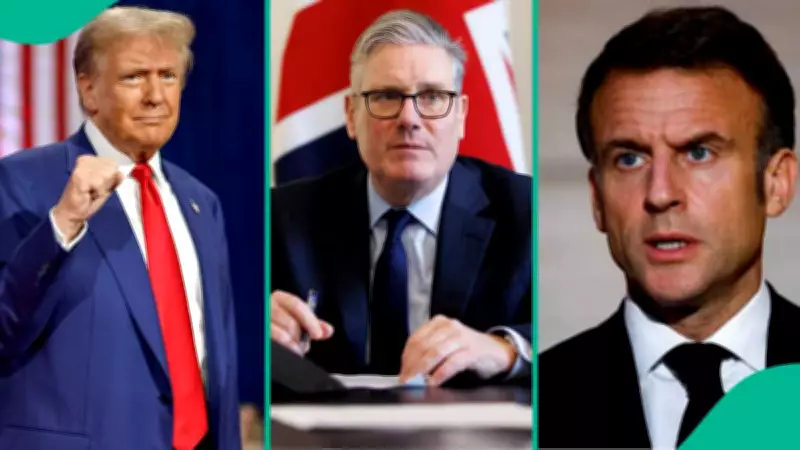
European Allies Reject Trump's Call for Military Help to Reopen Strait of Hormuz
President Donald Trump's urgent appeal for international military assistance to reopen the strategically vital Strait of Hormuz has encountered widespread rejection from European allies and other global powers. As the United States-led conflict with Iran enters its third week, multiple nations have declined to contribute warships or military forces to what they perceive as an escalating regional confrontation.
Key European Nations Decline Military Involvement
Germany has taken a firm stance against military escalation, with Defense Minister Boris Pistorius explicitly stating that the country will not deploy additional warships to the region. "This is not our war; we did not start it," Pistorius declared, emphasizing Germany's position of non-involvement in the direct military conflict.
The United Kingdom, under Prime Minister Keir Starmer, has similarly rejected Trump's coalition plan. While acknowledging diplomatic efforts to discuss potential solutions for reopening the critical waterway, Starmer stressed that Britain "will not be drawn into the wider war" with Iran, maintaining a cautious approach to regional military engagement.
Italy has joined the chorus of European rejections, with Foreign Minister Antonio Tajani dismissing suggestions that Italy's navy would participate in securing tanker passages through the strait. Tajani noted that no European country had offered to send warships to force passage through the waterway, stating clearly: "We are not involved in military operations in the Strait of Hormuz."
Additional Countries Refusing Military Support
France has maintained its existing naval posture, with the foreign ministry confirming that the country's deployment in the eastern Mediterranean remains unchanged and defensive in nature. The French position reflects a broader European reluctance to escalate military involvement in the region.
Poland has explicitly ruled out sending forces into the conflict, with Foreign Minister Radoslaw Sikorski stating that the government had "ruled out" participating in military operations against Iran. This decision aligns with Poland's cautious approach to international military engagements beyond its immediate security interests.
According to international reports, several other nations have also rejected Trump's call for military assistance, including Australia, Estonia, Japan, and Greece. These refusals collectively represent a significant diplomatic setback for the Trump administration's efforts to build an international coalition to address the Strait of Hormuz closure.
Strategic and Economic Implications
The Strait of Hormuz remains a critical global chokepoint, with approximately one-fifth of the world's oil passing through this narrow waterway. Its continued closure has already triggered significant disruptions to global energy markets, driving up oil prices and creating uncertainty in international commerce. The situation has even affected regional aviation, briefly halting flights at Dubai International Airport as tensions escalate.
Iran maintains that the waterway remains open to all nations except the United States, Israel, and their allies, while rejecting ceasefire calls from international mediators. This position has created a complex diplomatic standoff with significant implications for global energy security and Middle East stability.
Trump's Escalating Appeals
President Trump's recent statements have highlighted growing American frustration with the situation. In a March 14 address, Trump claimed that American forces had "destroyed the Iranian military capacity" while simultaneously warning that Iran might launch additional missile attacks. The president urged countries affected by the strait's closure to deploy warships to the region, specifically calling on China, South Korea, and three other nations to contribute naval assets.
The widespread rejection of these appeals underscores the complex geopolitical calculations nations are making regarding Middle East involvement. Many European allies appear reluctant to be drawn into what they perceive as an American-led conflict with potentially far-reaching regional consequences.
As global energy prices continue to spike and diplomatic efforts stall, the international community faces mounting pressure to find a resolution to the Strait of Hormuz crisis. The collective European rejection of military involvement suggests that any solution will likely require renewed diplomatic engagement rather than military escalation.




