
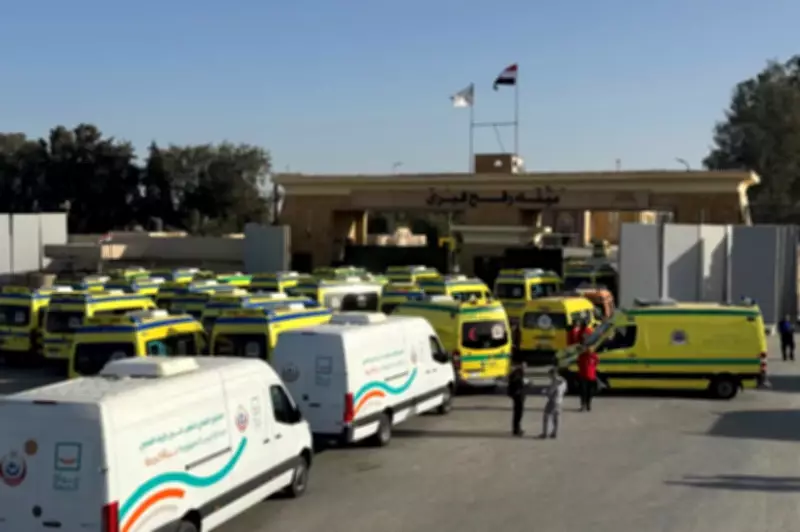
The sole border crossing connecting the Gaza Strip with Egypt has partially resumed operations on Monday morning, February 2, marking a significant development nearly two years after its closure by Israeli authorities. According to an Israeli security official, this reopening permits a restricted number of Palestinians to enter and exit the war-torn enclave, offering a glimmer of hope amid ongoing humanitarian challenges.
Ceasefire Agreement Facilitates Border Access
The Rafah crossing is now being managed by the European Union as part of the final implementation stage of the first phase of a ceasefire agreement mediated by the United States, which took effect in mid-October. This border point had remained largely sealed since Israel assumed control in May 2024, with preparatory work conducted on Sunday involving coordination between the EU, Egypt, and other parties responsible for border management.
Limited Daily Crossings and Patient Preparations
Initial operations will be highly constrained, with only 50 individuals allowed to cross in each direction daily, as reported by Egypt's state-affiliated AlQahera News, citing an unnamed source. Earlier indications suggested that while up to 150 Palestinians might be permitted to leave Gaza each day, only 50 would be authorized to enter, highlighting the cautious approach to reopening.
At Al-Aqsa Martyrs' Hospital in Deir al-Balah, patients have begun preparing for potential travel opportunities. Ibrahim Al-Batran, a kidney dialysis patient, emphasized the severe limitations of medical care in Gaza, stating, "Many people have died while waiting for treatment, and I may die today, tomorrow or the day after tomorrow while I'm waiting for treatment." He noted that no patients had been allowed to depart until this recent development.
Humanitarian Crisis and Barriers to Movement
The Palestinian Ministry of Health reports that over 20,000 patients in Gaza are awaiting authorization to travel abroad for medical care, including at least 440 cases considered life-threatening. The ministry further disclosed that nearly 1,300 individuals have died after being forced to wait for treatment outside the territory, underscoring the urgent need for improved access.
Despite the reopening, significant obstacles persist for Palestinians seeking to cross. High costs, protracted bureaucratic processes, and stringent security restrictions mean that few can realistically expect to leave. Prior to the closure, some travelers reported paying thousands of dollars to pass through, a financial burden that remains insurmountable for many.
Ceasefire Stipulations and Political Context
The reopening of Rafah was a condition outlined in the first phase of the ceasefire agreement, but Israel postponed it until the return of all living and deceased hostages. The final deceased hostage, Ran Gvili, was repatriated last week, enabling the border's partial resumption. Israeli Prime Minister Benjamin Netanyahu has clarified that the reopening will be limited, with no passage of humanitarian aid or commercial goods permitted.
The return of Gvili and the reopening of the Rafah crossing signify the conclusion of the initial phase of the 20-point ceasefire deal. The United States announced the commencement of the second phase two weeks ago, indicating ongoing diplomatic efforts.
Symbolism and Future Oversight
Ali Shaath, who leads the Palestinian technocratic committee expected to oversee Gaza, described the reopening as "a lifeline and a symbol of opportunity" for Palestinians in the enclave. This development represents a critical step toward addressing humanitarian needs, though challenges remain in ensuring broader access and support for the affected population.




