
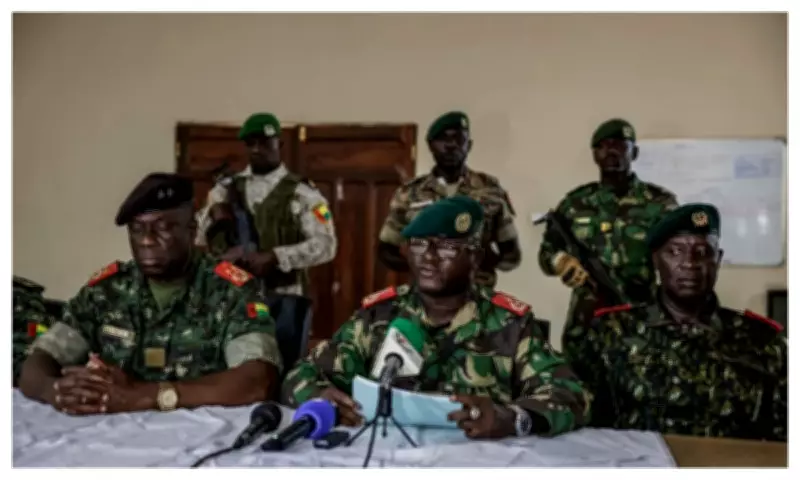
The military junta currently governing Guinea-Bissau has initiated a partial relaxation of stringent measures imposed on key opposition figures, according to statements from opposition officials and military commanders. This development occurs amidst ongoing regional pressure for a return to constitutional governance following the November coup that ousted President Umaro Sissoco Embalo.
Shifting Stance on Opposition Figures
An opposition official confirmed on Saturday, January 31, that the junta is no longer actively pursuing the arrest of Fernando Dias, a senior opposition politician who had been evading capture. Dias, who claimed victory in the presidential election held just before the military takeover, initially sought refuge within the Nigerian embassy to avoid detention. His communications manager, Gabriel Ye, clarified to AFP that while most restrictions have been lifted, Dias remains barred from making public statements or engaging in political activities.
Releases and Continued Detention
In a related move, Geraldo Martins, the former prime minister under ousted President Embalo, has been released from custody. However, the situation remains complex for another prominent opposition leader. Domingos Simoes Pereira, who leads the historic PAIGC party, was freed from prison on Friday after months of detention, only to be immediately placed under house arrest on the outskirts of the capital, Bissau.
Army commander Jorgito Biague stated that all individuals detained in connection with the November 26 coup have now been released. He emphasized that Pereira's house arrest is specifically related to allegations of economic crimes, asserting that his case has been transferred to the judiciary and is no longer under military jurisdiction. Pereira, a long-time critic of Embalo, was disqualified from the recent presidential election due to a late application and subsequently endorsed Fernando Dias.
Regional Response and Historical Context
The Economic Community of West African States (ECOWAS) issued a statement on Saturday cautiously welcoming what it described as "recent measures taken by the transitional authorities." The regional bloc acknowledged these steps as potentially fostering a more inclusive political environment and advancing the country's return to constitutional order. ECOWAS simultaneously called for Pereira's "full release" and urged guarantees of fundamental rights and freedoms for all citizens.
The organization appealed to all stakeholders in Guinea-Bissau to collaborate towards a peaceful and credible transition leading to democratic elections. This political crisis unfolds against a backdrop of chronic instability; since gaining independence from Portugal in 1974 under the guidance of the PAIGC party, Guinea-Bissau has experienced five successful coups and several attempted military takeovers, highlighting the fragile nature of its democratic institutions.
The Coup's Aftermath
The current junta seized power on November 26, detaining several senior politicians shortly after a presidential election and before official results could be announced. The military suspended the entire electoral process following the takeover, prompting President Embalo to flee the country. The recent adjustments in the treatment of opposition figures suggest a possible, albeit limited, shift in the junta's approach as it navigates both domestic political realities and international diplomatic pressure.




