
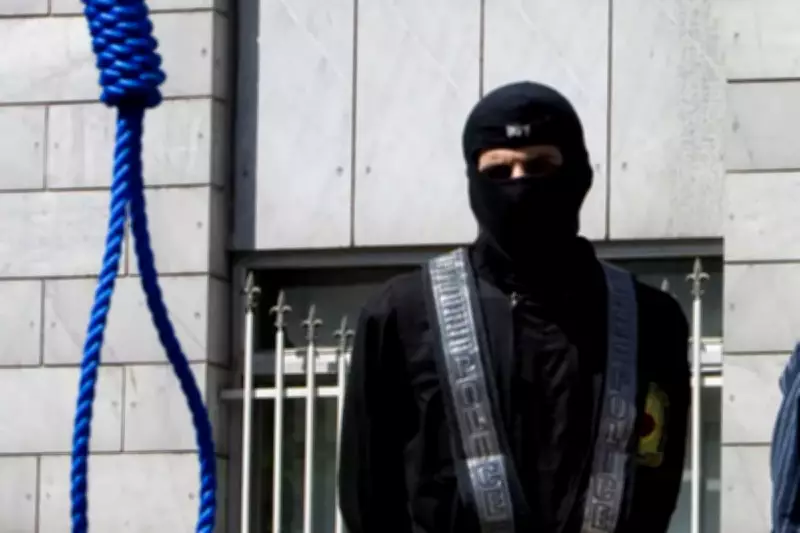
Iran Executes Man Accused of Spying for Israel Amid Regional Tensions
Iran has executed a man accused of spying for Israel, marking the first such execution since the regime's conflict with the United States and Israel escalated. The execution occurred as Iran launched retaliatory missile attacks following the death of a top security official, highlighting the volatile regional situation.
Details of the Espionage Case
Kourosh Keyvani was arrested during a 12-day war in June last year and was allegedly providing images and detailed information about sensitive Iranian locations to Mossad intelligence officers. According to the Mizan Online website, which is affiliated with Iran's judiciary, Keyvani received training in Tel Aviv and six unnamed European countries.
The death sentence was carried out this morning, Tehran announced, stating that Keyvani had been convicted of espionage for the Zionist regime. Israel has not commented on the execution, as reported by the Times of Israel, maintaining its usual stance of not publicly addressing such allegations.
Legal Context and Sham Trials
Iran is widely known for conducting sham trials that frequently lead to the executions of suspected spies and protesters. Last year, Iranian authorities passed a law that specifically made spying for Israel or the United States a capital offense, punishable by death.
"All deliberate assistance is condemned as corruption on Earth," the law stated, according to the Islamic Republic News Agency. This legal framework has been criticized by human rights organizations for its lack of due process and transparency, often resulting in swift and severe punishments.
Retaliatory Attacks and Military Posturing
The execution coincides with a series of retaliatory attacks launched by Iran on Wednesday, which the regime claims are in response to the death of top security official Ali Larijani. Iran's Tasnim News Agency shared a video showing missiles reportedly bound for Tel Aviv being launched, including a Khorramshahr-4 missile with a range of 1,242 miles and the capacity to carry a nearly 4,000-pound warhead.
Amir Hatami, the Iranian army commander-in-chief, warned that the response to Larijani's assassination would be "decisive and regrettable." The regime asserts that these missile attacks are in revenge for the blood of Larijani and his companions, consistently claiming that Larijani was martyred in Tuesday's airstrike.
Escalating Threats and Regional Implications
Senior military official Ali Abdollahi Aliabadi, who has been sanctioned by the US Treasury, issued a stark warning to former President Trump, stating that he must "wait for our surprises." According to the Tasnim News Agency, Aliabadi claimed that Iran's response would be more devastating than the actions and imagination of the enemy, underscoring the heightened tensions in the region.
This execution and the accompanying military actions reflect Iran's aggressive stance in its ongoing conflicts with Israel and the United States. The situation remains fluid, with potential for further escalations as both sides continue to engage in covert operations and overt military maneuvers.




