Iran Warns of Wider War as Trump Seeks Allied Naval Escorts in Strait of Hormuz
Iran has issued a stark warning to additional countries against entering the escalating conflict with the United States and Israel, emphasizing that foreign military involvement could trigger a broader war centered around the strategic Strait of Hormuz. This caution follows former President Donald Trump's call for several global powers to deploy naval forces to escort oil tankers through the narrow waterway, which serves as a critical conduit for Gulf oil exports to worldwide markets.
Global Energy Prices Surge Amidst Rising Tensions
Global energy prices have experienced a significant surge, reportedly jumping by about 40 percent, since Iran began restricting maritime traffic through the Strait of Hormuz and launching attacks on energy targets in neighboring Gulf states. These actions were in retaliation for a joint U.S.–Israeli air campaign that resulted in the death of Iran's supreme leader and ignited a wider Middle East conflict. Approximately one-fifth of the world's oil shipments traverse this vital passage, heightening economic stakes.
On Saturday, Trump specifically urged "China, France, Japan, South Korea, the UK and others" to contribute ships for escort missions, even as U.S. military operations continue to target Iranian drone, missile, and naval launch sites along the northern Gulf coast. However, the nations mentioned have responded with caution, reflecting the delicate geopolitical balance.
International Responses and Diplomatic Efforts
Iran's foreign minister, Abbas Araghchi, reinforced the warning during a phone conversation with French foreign minister Jean-Noel Barrot, urging parties to "refrain from any action that could lead to escalation and expansion of the conflict." The UK Ministry of Defence acknowledged ongoing discussions with allies but stopped short of committing forces, stating, "As we've said previously, we are currently discussing with our allies and partners a range of options to ensure the security of shipping in the region."
Britain's energy security minister, Ed Miliband, advocated for diplomatic solutions, telling the BBC, "The plan now has to be to de-escalate the conflict... We are talking to our allies. There are different ways in which we can make maritime shipping possible." Asian governments echoed this cautious stance, with South Korea "closely monitoring President Trump's remarks on social media" and Japan's Takayuki Kobayashi noting that the legal threshold for deploying naval forces remains "extremely high."
Military Escalation and Humanitarian Impact
Despite mounting pressure on global markets, Trump suggested the United States might continue military operations against Iran's energy infrastructure, including potential strikes on Kharg Island, a key oil export hub, which he mentioned "just for fun" in an interview with NBC News. He also indicated that negotiations with Tehran were possible but not imminent, stating, "Iran wants to make a deal, and I don't want to make it because the terms aren't good enough yet."
Iran's new supreme leader, Mojtaba Khamenei, has vowed to keep the Strait of Hormuz closed, though he has not yet made a public appearance since assuming power. Trump cast doubt on his status, remarking, "I don't know if he's even alive. So far, nobody has been able to show him," while Iranian officials insisted on Saturday, March 14, that "there is no problem with the new supreme leader."
The conflict has intensified militarily, with the Israel Defense Forces launching new strikes in western Iran after the Islamic Revolutionary Guard Corps threatened Israeli Prime Minister Benjamin Netanyahu and pledged to "pursue and kill" him. Meanwhile, Gulf countries reported renewed attacks, including Bahrain and Saudi Arabia intercepting projectiles after warning sirens sounded in Manama, and Dubai authorities noting air defence interceptions following Iranian advisories for civilians to avoid port areas.
Humanitarian and Economic Consequences
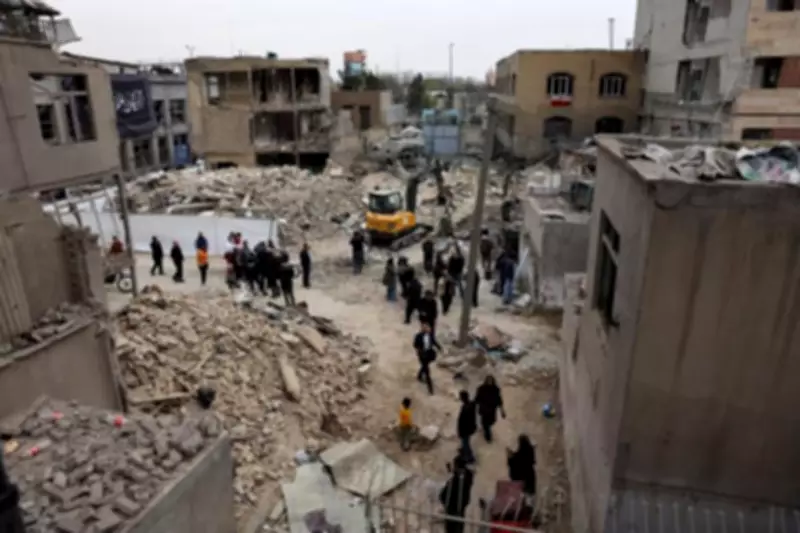
The humanitarian toll is severe, with the Iranian health ministry reporting over 1,200 fatalities from U.S. and Israeli strikes, and the United Nations High Commissioner for Refugees estimating up to 3.2 million people displaced within Iran since the conflict began. According to the U.S. Department of Defense, more than 15,000 targets in Iran have been struck by U.S. and Israeli forces since the war's inception.
As tensions mount, the Pentagon has deployed the amphibious assault ship USS Tripoli (LHA-7) along with thousands of Marines to the region, signaling a potential escalation. Despite the harsh rhetoric, life in Tehran shows signs of normalization, with increased traffic, reopened cafés and restaurants, and more than a third of stalls at the popular Tajrish Bazaar resuming business as residents prepare for Nowruz.