
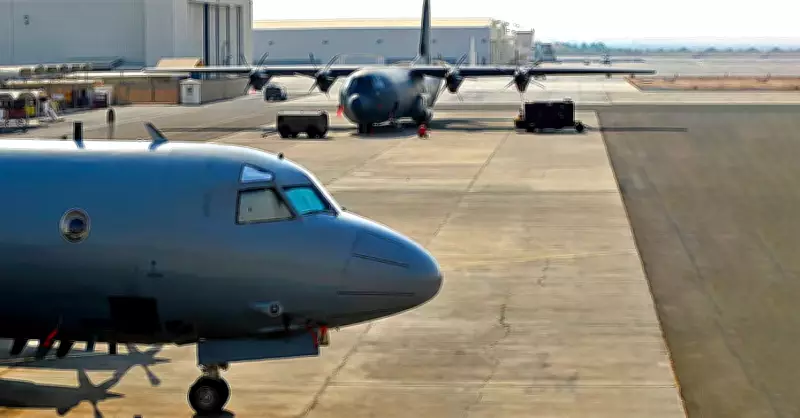
Iranian Missile Strikes Key Military Base Housing Western Forces
An Iranian missile has struck the Al Minhad Air Base, a critical military facility that hosts forces from the United States, United Kingdom, and Australia. This attack occurs as tensions rapidly escalate across the Gulf region, raising fears of a broader conflict.
Details of the Strike and Immediate Aftermath
The missile reportedly hit a road just outside the base, causing a small fire and minor damage near an accommodation block and medical centre. Fortunately, no casualties were reported. Explosions were heard in the vicinity of the base, which serves as a major transit hub for Western military operations throughout the Middle East.
Australian Prime Minister Anthony Albanese confirmed that a projectile had impacted near the base. “The Iranian regime is engaging in random attacks right across the region. We know that is the case,” he stated, adding that it remains unclear whether the base itself was the intended target.
Australia’s Defence Department responded by saying: “Defence’s focus is on ensuring the safety and security of our people and we will continue to revise force protection measures as the situation in the Middle East evolves.”
Wider Wave of Attacks Across the Gulf Region
This incident is part of a larger wave of attacks reported across the Gulf. There have been strikes or attempted strikes in Saudi Arabia, Kuwait, Bahrain, Qatar, and the United Arab Emirates. In Dubai, missile alerts were triggered, with interceptor systems activated as explosions were heard overhead.
Saudi Arabia announced it had intercepted a ballistic missile targeting the Prince Sultan Air Base, which also hosts US forces. Additionally, a drone aimed at Riyadh’s diplomatic quarter—home to multiple foreign embassies, including that of the United States—was successfully intercepted.
Background and Escalating Hostilities
The escalation follows ongoing hostilities involving Iran, the United States, and Israel. Tehran has been targeting military installations and energy infrastructure across neighbouring states. Iranian authorities have also continued to assert control over the strategically vital Strait of Hormuz, a key maritime route through which roughly one-fifth of global oil supplies pass.
Iran has indicated that while the waterway remains open, access is being restricted for the United States and its allies. This move intensifies concerns over global energy markets and supply chains, already strained by the conflict.
Economic Implications and Global Concerns
The widening conflict has prompted major energy firms to scale back operations, while oil prices have surged significantly. This raises fears of broader economic consequences, including higher costs for consumers and potential disruptions to global trade. The situation remains fluid, with international observers closely monitoring developments for any signs of further escalation or diplomatic resolution.




