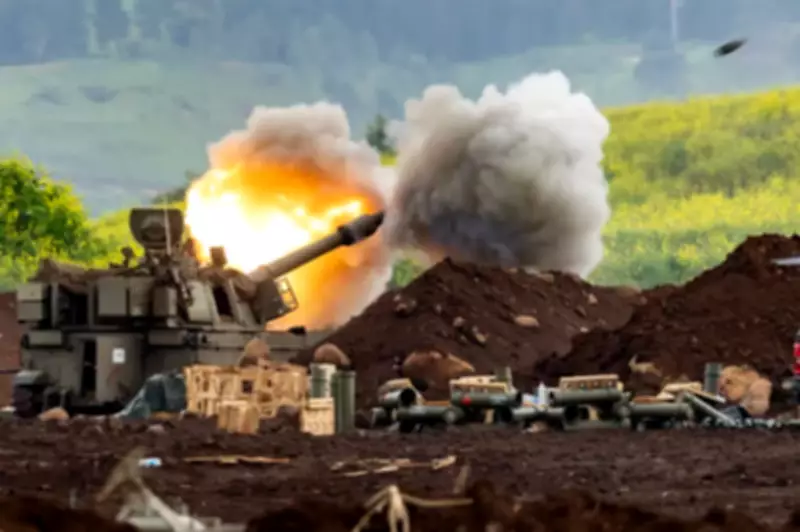
Israel Launches Ground Operations in Southern Lebanon Amid Escalating Hezbollah Clashes
The Israel Defense Forces (IDF) has announced the commencement of what it describes as "limited and targeted ground operations" in southern Lebanon, marking a significant escalation in ongoing hostilities with Hezbollah militants. The military actions are concentrated around the strategically vital town of Khiam, where clashes have intensified in recent days.
Military Operations and Strategic Objectives
According to official statements from the Israeli military, troops from the 91st Division have advanced into border areas over recent days with the explicit purpose of striking Hezbollah positions and dismantling militant infrastructure. The IDF emphasized that these operations are designed to strengthen Israel's forward defensive line and prevent further cross-border attacks from Lebanese territory.
"In recent days, IDF troops from the 91st division have begun limited and targeted ground operations against key Hezbollah strongholds in southern Lebanon," the military stated. "This campaign includes destroying militant infrastructure and eliminating fighters operating near the border."
Targeted Strikes and Geographic Focus
Regional reports indicate that at least three Israeli air strikes targeted Khiam on Monday, with additional raids reported in several nearby southern Lebanese towns including:
- Yater
- Burj Qalawiya
- Sultaniya
- Chaqra
- Qantara
- as-Sawana
While immediate casualty reports from some strikes remain unclear, the geographic scope of operations demonstrates Israel's expanding military footprint in the region.
Strategic Importance of Khiam
Khiam represents a particularly significant military objective due to its geographic positioning. The town, widely considered a Hezbollah stronghold, occupies elevated terrain just kilometers from the Israeli border and near the Litani River. This strategic location provides commanding views over northern Israel and surrounding Lebanese areas, making it a crucial asset in the ongoing conflict.
Regional Context and Escalation Triggers
The current escalation follows a broader regional crisis triggered by the killing of Iran's Supreme Leader, Ali Khamenei. In response to this development, Hezbollah launched rocket attacks toward Israel, effectively opening a new front in the conflict. This represents a significant departure from the group's previous restraint, as Hezbollah had largely refrained from attacking Israel since a 2024 ceasefire agreement brokered by the United States.
Military Analysis and Strategic Implications
Military analysts suggest that Israel's operations appear designed to achieve several strategic objectives:
- Cutting off Hezbollah's supply routes
- Limiting the group's ability to move weapons and fighters into areas south of the Litani River
- Disrupting key transportation corridors connecting Khiam to eastern Lebanon and the Bekaa Valley
The roads surrounding Khiam serve as vital arteries connecting to regions where Hezbollah maintains substantial presence and operational capabilities.
Humanitarian Crisis and Casualty Figures
The intensifying conflict has precipitated a major humanitarian emergency in Lebanon. More than 800,000 people have reportedly fled their homes in southern Lebanon following Israeli military evacuation orders covering extensive portions of the region, including sections of the capital, Beirut.
According to available reports, Israeli strikes across Lebanon have resulted in at least 850 fatalities to date, including more than 100 children and dozens of women. These mounting casualties have heightened concerns that the fighting could expand further across the Middle East, potentially drawing additional regional actors into the conflict.
The situation remains fluid as both sides continue military operations, with international observers closely monitoring developments that could have far-reaching implications for regional stability and security.