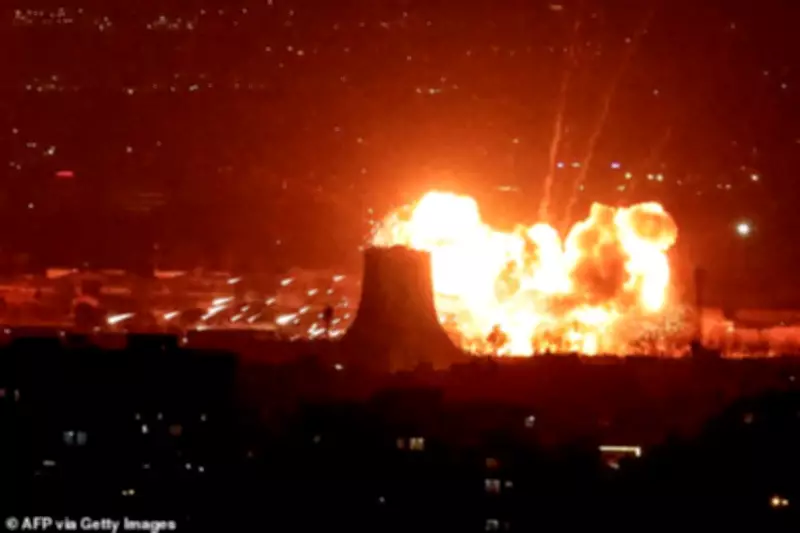
Israel Destroys Late Ayatollah Khamenei's Plane; Heir Mojtaba Reportedly in Moscow for Treatment
The Israel Defense Forces (IDF) have announced the destruction of the private plane belonging to the late Ayatollah Ali Khamenei, targeting it at Tehran's Mehrabad Airport. In a statement released on Monday morning via social media platform X, the IDF claimed that the aircraft was utilized by Khamenei and other senior Iranian officials to facilitate military purchases and manage communications with Axis countries through both domestic and international flights.
The destruction of this plane is intended to impair the Iranian regime's leadership coordination capabilities with Axis nations, hinder the process of strengthening military capabilities, and disrupt the regime's ability to rebuild, the post elaborated. This action underscores ongoing tensions in the region, highlighting Israel's strategic efforts to counter Iranian influence.
Reports of Mojtaba Khamenei's Injuries and Moscow Treatment
Simultaneously, new reports have emerged suggesting that Mojtaba Khamenei, the 56-year-old son and successor of the late supreme leader, is currently in Moscow receiving treatment for serious injuries. These injuries are alleged to have been sustained during a joint US-Israeli airstrike, part of America's Operation Epic Fury. Mojtaba succeeded his father following Ali Khamenei's assassination on February 28, but there have been persistent reports indicating he has been in a coma.
According to Kuwaiti news outlet Al-Jarida, which cites a high-ranking source close to the new Iranian Supreme Leader, Mojtaba's injuries necessitated specialized medical care unavailable in Iran due to constant attacks from the US and Israel. The source revealed that Russian President Vladimir Putin personally offered to provide treatment, leading to a top-secret mission to transport Mojtaba out of Iran aboard a Russian military aircraft.
He then headed to one of Putin's presidential palaces, where he underwent successful surgery, the report stated, though it remains unconfirmed by official sources. The secrecy of the operation was paramount, involving careful coordination to avoid detection.
Conflicting Accounts of Mojtaba's Condition
Details about Mojtaba Khamenei's condition vary among sources. A separate source, communicating through secret messages to an exiled dissident in London, previously told The Sun that the heir is in a very serious state, being treated at Sina University Hospital in Mashhad, Iran. This source, who requested anonymity due to safety concerns, described severe injuries:
- One or both of his legs may have been amputated.
- His liver or stomach has reportedly ruptured.
- He is apparently in a coma as well.
The source added that Mojtaba is under the care of Mohammad Reza Zafarghandi, Iran's Minister of Health, Treatment and Medical Education, and one of the country's top trauma surgeons. It remains unclear whether Mojtaba was injured in the same airstrikes that killed his 86-year-old father, adding to the ambiguity surrounding the events.
Official Statements and Regional Implications
US Secretary of Defence Pete Hegseth commented on the situation during a press conference on Friday, expressing belief that Mojtaba is wounded. We know the new so-called, not-so-supreme leader is wounded and likely disfigured, Hegseth stated, reflecting the US perspective on the matter. This statement aligns with the broader narrative of ongoing conflict and instability in the region.
The destruction of Khamenei's plane and the reports of Mojtaba's injuries highlight the escalating tensions between Israel, the US, and Iran. These developments could have significant implications for regional security and diplomatic relations, particularly as Iran navigates leadership transitions amid external pressures.
As the situation continues to evolve, further updates are expected to shed light on the veracity of these reports and the potential consequences for all parties involved. The international community remains watchful, with many awaiting official confirmations or denials from Iranian and Russian authorities.