
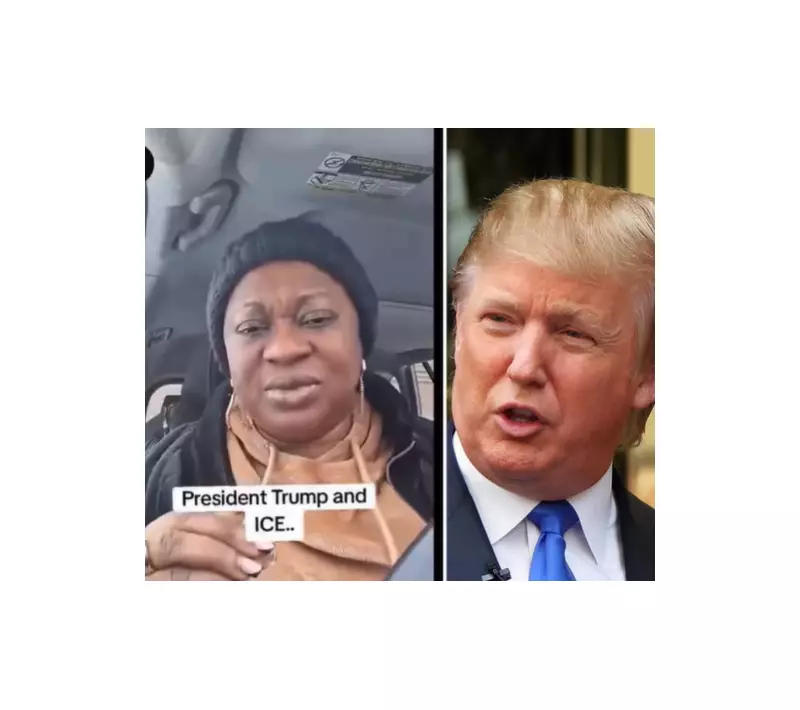
A Nigerian woman residing in the United States has issued a heartfelt plea to President Donald Trump, urging him to provide immigrants with adequate time to prepare for their departure from the country if that aligns with his administration's wishes. In a powerful video that has rapidly gained viral attention across social media platforms, the elderly woman expressed deep emotional distress over the treatment of immigrants by Immigration and Customs Enforcement (ICE) agents.
Emotional Appeal Against Inhumane Treatment
The woman revealed that she has been profoundly heartbroken by numerous videos depicting ICE agents conducting summary arrests in what she described as "the most inhumane way." She emphasized that these brutal actions have tragically resulted in the deaths of some immigrants, creating widespread trauma within communities.
"I watched some ICE videos yesterday with the video of the nurse that they just killed. It is very traumatizing, the way these people are treating people," she stated with visible emotion. "President Trump, if you want the immigrants to leave America, tell us! Just come out and say all immigrants, we want you out, whether you are a criminal or not a criminal, because these people (ICE) don't care about who you are."
Personal Connection to the Crisis
The Nigerian woman shared a deeply personal moment that intensified her concern, describing how a video sent by her son featuring a teenager's encounter with ICE agents affected her. "I was so sad yesterday when I saw the video that my son sent to me, a teenager! And I have a teenage son... I felt like going to school and telling my son 'come, let's go and pack our belongings, we are going back to Nigeria'," she recounted.
This personal connection to the immigration enforcement tactics has fueled her determination to speak out publicly about the need for humane treatment and proper notice for those facing potential deportation.
Request for Transition Time and Economic Contributions
The woman made a specific request for at least one year of preparation time, arguing that immigrants need this period to properly gather their affairs and make arrangements for returning to their home countries. "If you want us to leave America, give us time let us gather ourselves, we will all leave," she implored.
She further highlighted the essential economic contributions of immigrants, noting that "The work all immigrants are doing, you Americans cannot do them! All your people are in nursing homes, needing help... Not of you people could take care of them and you are treating people this way?"
Contrasting Safety Perceptions Between Countries
In a striking comparison, the woman suggested that despite challenges in Nigeria, the fear experienced by immigrants in the United States under current enforcement practices exceeds what many face back home. "Whether our country is bad or not, people are there, they are surviving. The fear in Nigeria is not this much. Enough is enough," she declared emphatically.
She concluded her emotional appeal with a direct message to the president: "President Trump, give us time... we will leave America for you. No problem, we will leave. At least we still have our country."
Broader Implications of Immigration Enforcement
The woman's testimony sheds light on the psychological impact of aggressive immigration enforcement tactics on immigrant communities. Her description of ICE agents "traumatizing, killing people on the streets in broad daylight" and treating individuals "like animals" regardless of their citizenship claims underscores the tension between enforcement priorities and human rights considerations.
Her observation that "There is no ICE video I have seen that they spoke to people gentle" points to systemic concerns about procedural justice and respectful treatment during enforcement actions.
This viral appeal from a Nigerian immigrant woman represents a poignant intersection of personal narrative, policy critique, and transnational identity, highlighting how immigration enforcement decisions reverberate through families with connections across continents.




