
North Korea Re-elects Kim Jong Un as President in 2026 Legislative Session
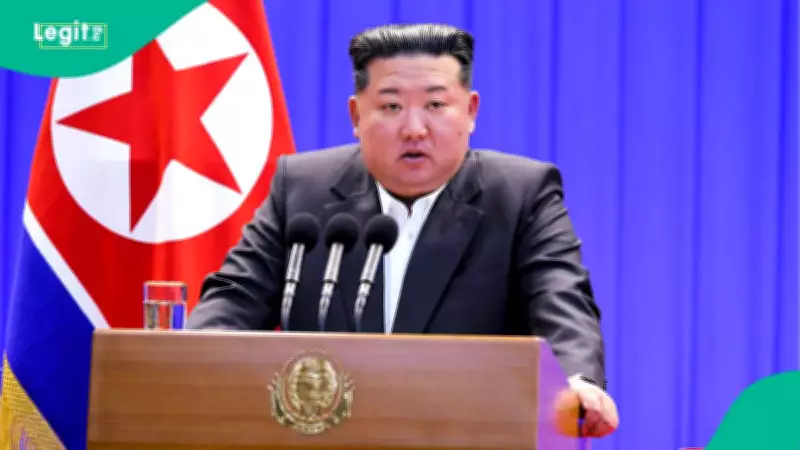
North Korea's legislature, the Supreme People's Assembly, has officially re-elected Kim Jong Un as president of state affairs during its first session of the 15th term on March 22, 2026. According to state media reports from the Korean Central News Agency (KCNA), the decision was announced on March 23, reaffirming Kim's position as the nation's top leader and head of the State Affairs Commission, which serves as the country's highest policymaking body.
Critics Question the Legitimacy of the Election Process
Analysts and critics have raised significant concerns about the legitimacy of North Korea's electoral process, describing it as a carefully staged event with a pre-determined outcome. Lee Ho-ryung, a researcher at the Korea Institute for Defense Analyses, emphasized that the vote was a "highly choreographed event" designed to project a façade of democratic legitimacy rather than offer genuine choice to the citizens.
She further explained that throughout the third-generation rule of the Kim dynasty, North Korea has consistently staged such events to showcase procedural legitimacy, but no one expects any different outcome to emerge from these elections. The process is seen as a tool to reinforce the regime's control and present an image of unanimous support.
Background on Kim Jong Un's Leadership and the Election Results
Kim Jong Un is the third-generation leader of North Korea, a nuclear-armed state founded by his grandfather Kim Il Sung in 1948. He assumed power in 2011 following the death of his father, Kim Jong Il. According to KCNA, the re-election decision reflects "the unanimous will and desire of all the Korean people," though this claim is widely disputed by external observers.
Prior to the assembly session, 687 deputies were elected to the Supreme People's Assembly. Citizens over the age of 17 were given the option to approve or reject the sole candidate presented by the ruling party. KCNA reported that 99.93 percent of voters cast their ballots in favor of Kim Jong Un, with turnout reaching an astonishing 99.99 percent. The Pyongyang assembly hall was described as "full of the extraordinary political awareness and revolutionary enthusiasm" of the newly elected members.
Potential Constitutional Changes and Stance Towards South Korea
Analysts suggest that the current assembly session may consider significant constitutional amendments, which could include formally defining inter-Korean relations as those between "two hostile states." Hong Min, a senior analyst at the Korea Institute for National Unification, noted that Kim Jong Un's language in his assembly speech will serve as a "barometer" of his stance towards South Korea.
He explained that the extent to which terms like "national unification" are replaced with more aggressive expressions such as "territorial control" could reveal Kim's ideological direction and signal tougher policies ahead. This potential shift comes amid ongoing tensions on the Korean Peninsula and could have far-reaching implications for regional stability.
Visuals and Context of the Assembly Session
Photos released by KCNA show Kim Jong Un dressed in a formal western suit, seated at the center of a stage flanked by senior officials, with giant statues of his father and grandfather prominently displayed behind him. The gathering follows a five-yearly meeting of the ruling party held last month, underscoring the regime's efforts to maintain continuity and control.
Critics argue that North Korea's election process presents a façade of legitimacy while remaining entirely pre-determined, with no room for dissent or alternative candidates. This re-election reinforces Kim Jong Un's grip on power and highlights the tightly controlled nature of the country's political system.
Recent Developments in North Korea
In related news, North Korea has recently barred foreigners from a newly opened beach resort on its east coast, just days after Russia's top diplomat visited the area. The sprawling seaside resort, which is a pet project of Kim Jong Un, opened to domestic visitors earlier this month with great fanfare in state-run media. This move reflects the regime's ongoing efforts to control external influences and maintain isolation while promoting domestic tourism.
The re-election of Kim Jong Un as president of state affairs in 2026 solidifies his leadership for another term, amid ongoing scrutiny from the international community regarding the legitimacy and transparency of North Korea's political processes.




