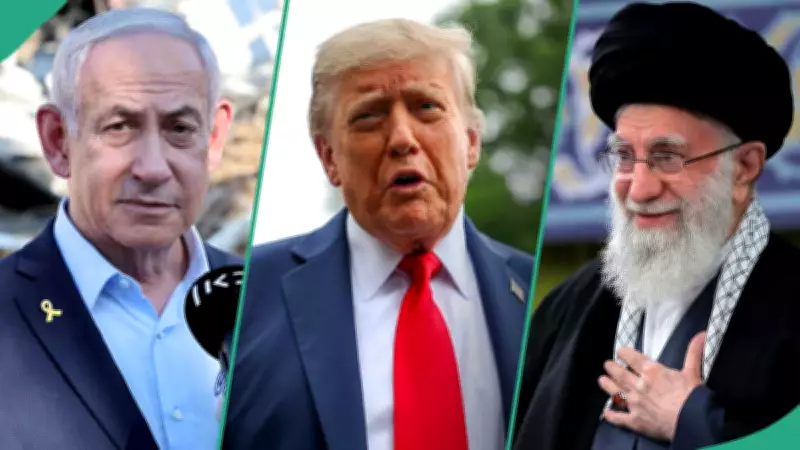
Pentagon Denies US Involvement in Khamenei Killing, Attributes Operation to Israel
The United States Department of Defense has categorically denied playing any role in the military strike that resulted in the death of Iran's Supreme Leader, Ayatollah Ali Khamenei. This clarification came during a significant Senate Armed Services Committee hearing on Tuesday, March 3, where top Pentagon officials addressed the escalating tensions in the Middle East.
Official Testimony Points to Israeli Operations
Elbridge Colby, the Pentagon's principal policy official, testified before the committee that the fatal strike targeting Khamenei and other senior Iranian leaders was conducted by Israeli forces, not the United States military. When questioned by lawmakers about the attack, Colby explicitly stated, "Those are Israeli operations," distancing American forces from the specific incident.
Colby emphasized that the strike was not part of the United States' declared military campaign objectives in the region. He avoided suggestions that the US was attempting to remove Iran's leadership from power, instead focusing on explaining the scope of American military goals.
US Military Objectives Focused on Missile Capabilities
According to Colby's testimony, the primary focus of the US military campaign has been to degrade and weaken Iran's rapidly expanding missile program. He detailed that Iran's missile capabilities have grown substantially in recent years, posing a significant regional threat.
The Pentagon official outlined specific American objectives, which include targeting Iran's missile systems, disrupting its weapons production capabilities, and neutralizing certain elements of its naval forces. Colby described these goals as "scoped and reasonable objectives that can be attained" within the framework of the US military strategy.
Contrast with Presidential Rhetoric
Colby's measured and careful responses during the hearing stood in stark contrast to the bold, triumphant language used by President Donald Trump regarding the conflict. In social media posts following the strikes, Trump claimed that Khamenei was "unable to avoid our Intelligence and Highly Sophisticated Tracking Systems."
The President further stated that "working closely with Israel, there was not a thing he, or the other leaders that have been killed along with him, could do." This rhetoric suggested a level of coordination and capability that Colby's testimony carefully avoided confirming.
Senate Committee Questions Strategic Alignment
During the hearing, Senator Jack Reed, the committee's ranking Democrat, pressed Colby on how the death of Iran's supreme leader aligned with America's stated military objectives. Colby reiterated that he was specifically "talking about the goals of the American military campaign," again separating US operations from the strike that killed Khamenei.
This careful distinction highlights the complex diplomatic and military considerations surrounding the conflict, with the Pentagon maintaining a clear separation between US strategic goals and specific tactical operations conducted by allied forces.
The testimony underscores ongoing tensions in US-Iran relations while clarifying the operational boundaries between American and Israeli military actions in the region.