
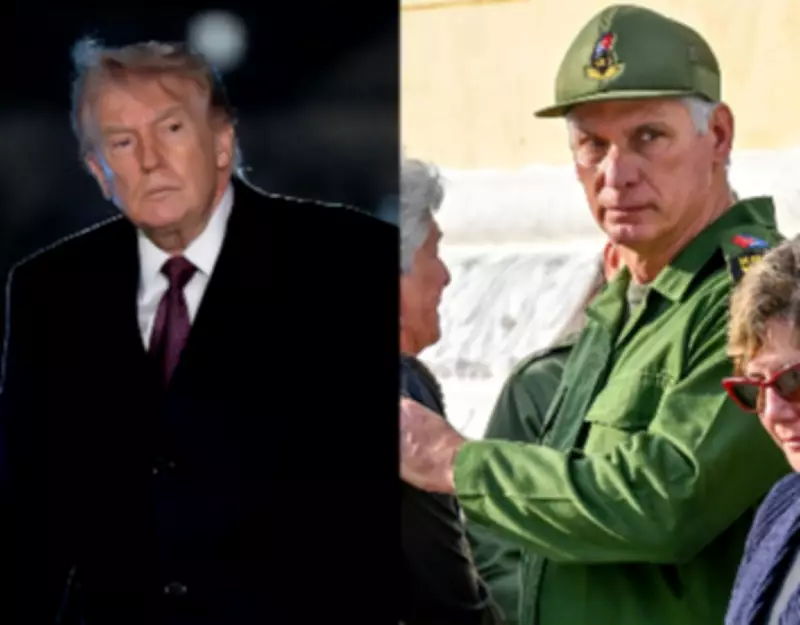
Russia Issues Strong Response to Trump's Comments on Cuba
Russia has formally reacted to recent statements by United States President Donald Trump, in which he suggested he could "take" the Caribbean island nation of Cuba, describing it as a "very weakened nation right now." This diplomatic response comes as Cuba grapples with a severe electrical grid collapse, marking the third major blackout in the country over the past four months.
Trump's Remarks and Cuba's Ongoing Crisis
On March 16, Trump told reporters in the Oval Office that he believes Cuba is "seeing the end" and that he would have the "honor" of "taking" the country. These comments align with reports that his administration has been working to remove Cuba's current leader, President Miguel Díaz-Canel. Trump indicated that once the conflict with Iran is resolved, he would turn his attention to Cuba, following earlier regime changes this year, including the killing of Iran's Supreme Leader Ayatollah Ali Khamenei and the capture of Venezuela's President Nicolás Maduro.
The Cuban Ministry of Energy and Mines announced on social media that the National Electric System (SEN) experienced a "total disconnection," though details on the cause or restoration timeline for the country's 10 million inhabitants were not provided. Efforts to restore power are underway, but such grid failures have become increasingly common in Cuba, which has faced decades of economic crisis with acute shortages of food, fuel, and electricity. This situation has been worsened by longstanding U.S. sanctions aimed at toppling Cuba's communist regime.
Russia's Statement of Solidarity
In a statement on March 17, Russia declared its "unwavering solidarity" with the Cuban government and its people, condemning what it termed interference in the affairs of a sovereign state. Without directly naming Trump, Russia's foreign ministry warned against intimidation and unilateral sanctions, emphasizing that such actions undermine international stability.
Moscow affirmed that it remains in contact with Cuban leadership and is prepared to offer support, including financial assistance, as the island confronts mounting economic and energy challenges. Russian officials noted that Cuba is dealing with "unprecedented" difficulties due to prolonged U.S. sanctions and a recent energy embargo, which have further strained the country's already fragile power infrastructure.
Historical Context and Geopolitical Tensions
Cuba has been under communist rule since the 1959 revolution led by Fidel Castro, who ousted a U.S.-backed regime and allied with the Soviet Union. After Fidel Castro's death in 2016, leadership passed to his brother Raúl, who served as the Communist Party's First Secretary until 2021. Even with the current presidency of Miguel Díaz-Canel, Castro family members remain influential in Cuban politics.
Russia and Cuba have maintained close ties since the revolution, with Moscow providing ongoing financing and material aid. The latest developments highlight escalating tensions between global powers, as Russia backs Cuba while the United States intensifies pressure on the Caribbean nation. Reports suggest Washington is pushing for political changes in Havana, including the potential removal of President Díaz-Canel, though no official confirmation has been made.
This situation underscores the complex interplay of domestic crises and international diplomacy, with Cuba's internal struggles becoming a focal point in broader geopolitical rivalries.




