
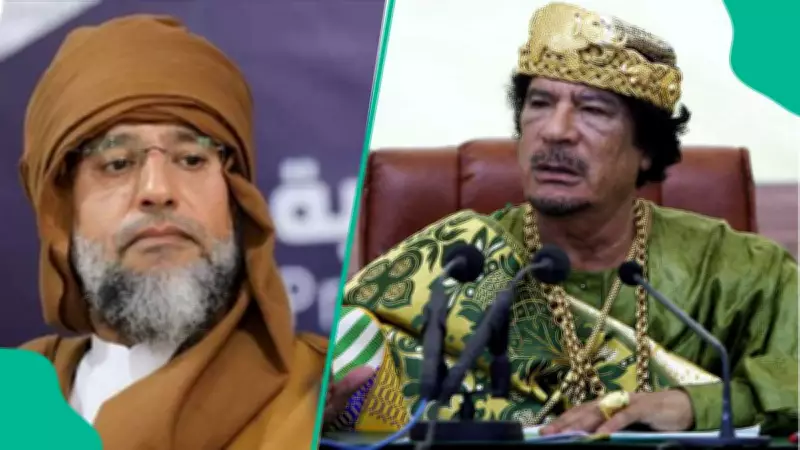
Saif al-Islam Gaddafi Assassinated in Libya: Global Dismay Over Killing of Gaddafi's Son
Saif al-Islam Gaddafi, the prominent and influential son of former Libyan leader Muammar Gaddafi, has been assassinated in Libya by yet-to-be-identified gunmen at his residence in Zintan. The killing of this controversial figure, once viewed as a reformist voice within the Gaddafi regime, has ignited global attention and widespread dismay, casting a shadow over Libya's fragile political landscape.
Details of the Assassination
According to reports from Al Jazeera, Saif al-Islam Gaddafi's lawyer, Khaled al-Zaidi, and his political adviser, Abdullah Abdurrahim Othman, confirmed the 53-year-old's death in separate posts on Facebook on Tuesday, February 3. The lawyer informed AFP that a four-man masked commando unit carried out the assassination at his home in Zintan, though it remains unclear who orchestrated the attack.
Othman, who represented Gaddafi in United Nations-brokered political dialogues aimed at resolving Libya's long-running conflict, told Al-Ahrar TV that the attackers disabled surveillance cameras before executing Saif al-Islam in his house. He stated, Four armed men stormed the residence of Seif al-Islam Kadhafi after disabling surveillance cameras, then executed him. Hamid Kadhafi, Gaddafi's cousin, described the slain politician as having fallen as a martyr.
Saif al-Islam Gaddafi's Turbulent History
Saif al-Islam, born in June 1972 in Tripoli, was the second-born son of the longtime dictator and was often seen as his father's potential successor. He studied for a PhD at the London School of Economics (LSE), earning certification in 2008, and emerged as a prominent, pro-Western figure for his father's regime. He led diplomatic initiatives and oversaw the Gaddafi International Charity and Development Foundation, an NGO focused on humanitarian aid.
In 2021, he announced his candidacy for president, but those elections were indefinitely postponed. While he held no official position under his father's rule, he was described as Libya's de facto prime minister, cultivating an image of moderation and reform before the 2011 Arab Spring revolt. However, his reputation collapsed when he promised rivers of blood amid the uprisings.
His turbulent history includes an arrest in November 2011 under an International Criminal Court (ICC) warrant, a death sentence in 2015 following a swift trial, and a subsequent amnesty. Throughout his life, Saif al-Islam called himself a reformer and campaigned for a Libyan constitution and respect for human rights.
Global Reaction and Implications
The assassination has sparked international dismay, with many viewing it as a setback for stability in Libya. As a key figure in the country's political dialogue, his death raises concerns about the future of peace efforts and the ongoing conflict. The trending photos and widespread media coverage underscore the global attention on this event, highlighting Libya's continued volatility.
This killing not only marks the end of a controversial political journey but also reignites debates about justice, reform, and the legacy of the Gaddafi era in North Africa. With Libya still grappling with internal strife, the assassination of Saif al-Islam Gaddafi adds another layer of complexity to the nation's path forward.




