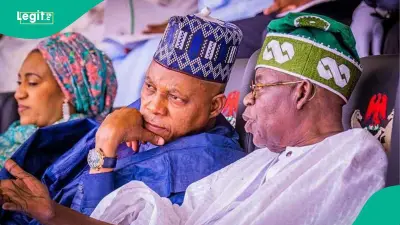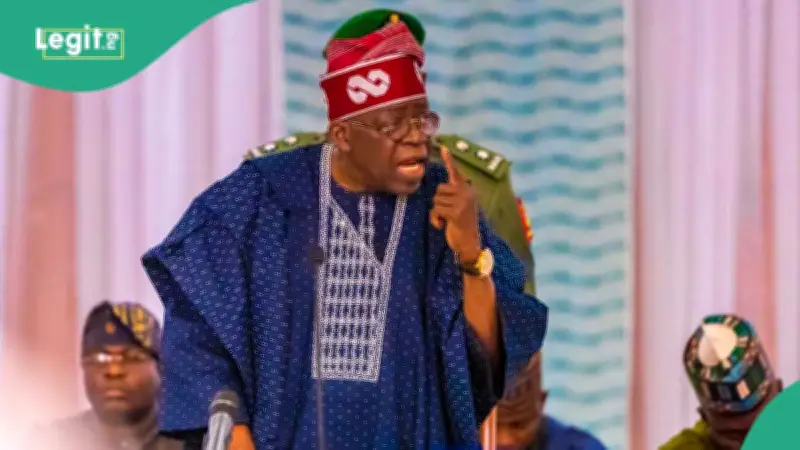
President Bola Tinubu has formally raised the issue of xenophobic and Afrophobic attacks against Africans in South Africa at the African Union (AU) level, requesting that the matter be given a dedicated slot on the agenda of the next AU summit. The President spoke through Vice President Kashim Shettima at the 21st Extraordinary Session of the AU Assembly held in Luanda, Angola, on Sunday, August 30, 2026.
According to a statement by Stanley Nkwocha, Senior Special Assistant to the Vice President on Media and Communication, Nigeria expressed its concern over the recurring attacks, which it said undermine African solidarity, unity, and peaceful coexistence. The statement was confirmed by The Punch.
Nigeria Demands AU Agenda Slot for Xenophobia
While acknowledging South Africa's sovereign right to enforce its immigration laws and recognising its broader contributions to the continent, Tinubu made clear that the attacks required a collective continental response. He formally called on the AU Assembly to include the matter in the agenda of the 40th Ordinary Session, scheduled for January 2027.
"It is on this note that Nigeria calls on this august Assembly to place the matter on the agenda of the upcoming 40th Ordinary Session of the AU Assembly, scheduled for January 2027, for consideration and appropriate action," Tinubu said.
He further urged African leaders to invest more heavily in dialogue, preventive diplomacy, and joint action as the foundation for preserving unity across the continent.
Broader Security and Financing Concerns Raised
Beyond xenophobia, Tinubu used the Luanda platform to address wider security challenges facing Africa. According to Daily Trust, he threw Nigeria's weight behind the adoption of the Luanda Action Plan as a practical framework for conflict prevention, arguing that stopping conflicts before they start was less costly than managing them after they erupt.
"For Nigeria, conflict prevention remains more cost-effective and sustainable than conflict management," he said.
Tinubu expressed concern over the growing presence of foreign military forces, mercenaries, and private defence contractors on the continent, warning that such external interference risked hollowing out the AU's own peace and security institutions. He called on member states to recommit to the principle of African ownership over the continent's affairs.
He also urged arms-producing countries to work more closely with African governments to stop weapons from being diverted to terrorist groups and other non-state actors. Tinubu acknowledged that the AU already had strong conflict resolution tools in place but said limited trust between member states and poor implementation were undermining their impact.
Nigeria additionally backed sustainable financing for AU peace operations and called for the full operationalisation of UN Security Council Resolution 2719, which is aimed at boosting the continental body's capacity to respond to crises.
"Let us therefore renew our collective commitment to solidarity, cooperation, and shared responsibility as we build the Africa we want," Tinubu said.
Background: Tinubu Snubs South African Delegation
The AU intervention follows a period of heightened tension between Nigeria and South Africa. Recall that Tinubu refused to personally receive South Africa's special delegation led by Minister Ronald Lamola, who had been in Abuja since July 25, 2026. The South African envoys had waited through the weekend expecting a presidential audience over the ongoing attacks on Nigerians in South Africa.
Nigeria's Minister of State for Foreign Affairs met the delegation instead, raising the issue of police complicity in mob violence targeting Nigerians. The snub underscored Nigeria's frustration over the persistent attacks.
Meanwhile, Legit.ng reported that some Nigerians in South Africa reportedly armed themselves for self-defence after renewed anti-migrant attacks and growing tensions. At least four foreign nationals were killed during the latest violence, while thousands of migrants were processed for voluntary departure.
A viral video showed police separating Nigerians and South Africans during a tense confrontation, while Nigerian authorities continued to urge citizens to remain calm. The formal AU agenda slot in January 2027 will now serve as the platform for a continental discussion on the issue, with Nigeria pressing for concrete action to address the recurring attacks.