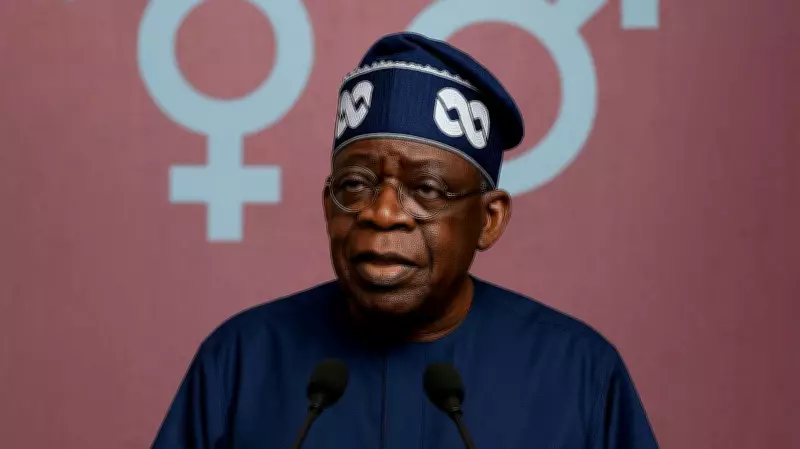
President Tinubu's Royal Visit to the UK Marks a Diplomatic Milestone for Nigeria
Diplomacy often communicates through powerful symbols long before formal policies are articulated. The state visit of President Bola Ahmed Tinubu to the United Kingdom, extended by invitation from King Charles III and Queen Camilla, stands as a profound symbol of Nigeria's reemergence on the global stage. Scheduled for today, March 17, this event represents the first time in nearly four decades that a Nigerian Head of State has received such royal honors. In the nuanced language of international relations, this is far more than a ceremonial gesture; it is a clear recognition of Nigeria's strategic importance.
Nigeria's Renewed Relevance in Global Affairs
For a nation whose international reputation has often fluctuated between promise and skepticism over the years, this invitation sends a significant message: Nigeria is once again a key player in global conversations. State visits are the highest form of diplomatic engagement within the United Kingdom's foreign relations framework, reserved exclusively for nations and leaders deemed strategic partners. Nigeria's return to this elite diplomatic circle speaks volumes about the country's evolving international posture and the leadership currently guiding its trajectory.
A Multidirectional Foreign Policy Under President Tinubu
Symbols like this royal visit do not emerge in isolation. Since taking office, President Tinubu has pursued a deliberate and multidirectional foreign policy, engaging with major global power centers while maintaining Nigeria's strategic autonomy. In an increasingly complex world defined by shifting alliances and economic competition, Nigeria has repositioned itself as a pragmatic partner across various geopolitical blocs. This includes simultaneous collaborations with the United States, China, the European Union, Turkiye, Brazil, and Gulf states.
This diplomatic balancing act has yielded tangible outcomes. In China, the Tinubu administration secured substantial investment commitments focused on industrialization and job creation. Notably, the $3.3 billion Brass Industrial Park and Methanol Complex project is set to enhance Nigeria's petrochemical capacity and reduce import dependency. In Brazil, Nigeria forged a strategic partnership through the $1.1 billion Green Imperative Project, a large-scale agricultural mechanization initiative aimed at modernizing farming and boosting food security. Complementing this agreement is a renewed aviation pact that could establish direct Lagos–São Paulo flights, potentially unlocking billions in trade and investment.
Resolving Diplomatic Challenges and Strengthening Security
Equally significant was the resolution of the diplomatic impasse with the United Arab Emirates, which had previously led to visa restrictions and grounded flights affecting Nigerian travelers. Through persistent engagement, the Tinubu administration restored normal relations and reopened travel channels, highlighting Nigeria's renewed diplomatic confidence. Beyond economic diplomacy, the administration has also fortified Nigeria's security partnerships. Cooperation with Turkiye, particularly in drone technology, intelligence sharing, and specialized military training, has bolstered Nigeria's counter-terrorism capabilities amid ongoing regional security challenges. Engagement with the United States on security cooperation has similarly expanded, facilitated by structured dialogue coordinated through the Office of the National Security Adviser.
These developments illustrate a broader shift in Nigeria's diplomatic approach: one that prioritizes engagement, negotiation, and pragmatic partnerships over rhetorical confrontation.
Domestic Reforms and International Validation
However, diplomacy cannot thrive abroad without credibility at home. Nigeria's growing international recognition has been shaped by the administration's commitment to difficult economic reforms, which initially sparked domestic debate but are now gaining global validation. The removal of fuel subsidies and the liberalization of the foreign exchange market were not politically easy decisions; successive administrations had avoided them for decades. Yet, the Tinubu government prioritized long-term fiscal sustainability over short-term political comfort.
The results, while still unfolding, have begun to earn endorsement from major international financial institutions, including the World Bank and the International Monetary Fund. Nigeria's macroeconomic indicators show gradual stabilization, with foreign reserves climbing above $43 billion and investor confidence improving. Additionally, Nigeria's removal from the Financial Action Task Force grey list reflects progress in financial transparency and anti-money laundering compliance, significantly enhancing the country's credibility in global financial markets.
The Broader Implications of the Royal Visit
These achievements are crucial because international perceptions directly influence investment flows, diplomatic partnerships, and economic opportunities. When global institutions and governments acknowledge a country's reform direction, it alters the calculus for investors and policymakers alike. The royal visit must be understood within this broader context. For the United Kingdom, the invitation underscores Nigeria's enduring importance within the Commonwealth and its role as Africa's leading economy. For Nigeria, it presents an opportunity to deepen bilateral cooperation in areas such as trade, security, climate policy, technology, and education. It also offers a platform to celebrate the dynamic contributions of the Nigerian diaspora in Britain, one of the most influential African communities in Europe.
Symbolism and Future Prospects
Perhaps the greatest significance of this visit lies in its symbolism. In international politics, perception often precedes transformation. A country perceived as stable, reform-oriented, and strategically relevant attracts partnerships that reinforce these qualities. Nigeria's current diplomatic momentum suggests that the world is beginning to reassess the nation through a more optimistic lens. Of course, diplomacy alone cannot solve Nigeria's domestic challenges. Economic reforms must translate into tangible improvements in citizens' lives, security must continue to strengthen, and governance must remain accountable. Yet, global recognition, earned through credible policy direction, creates opportunities that can accelerate national progress.
The royal visit to Windsor Castle is therefore more than a ceremonial exchange of handshakes and state banquets. It serves as a reminder that Nigeria, despite its complexities, remains a nation of immense strategic importance—a country capable of reclaiming its voice and influence on the global stage. History often marks turning points with quiet but powerful gestures, and this state visit may well be one of them.