
President Tinubu's UK State Visit: Symbolism and Economic Gains for Nigeria
In a display of diplomatic grandeur, Nigeria's President Bola Tinubu embarked on a two-day state visit to the United Kingdom from March 18 to 19, 2026. The visit, marked by ceremonial splendour and substantive discussions, underscored Nigeria's renewed prominence on the international stage following economic reforms under the Tinubu administration.
Ceremonial Highlights and Historical Significance
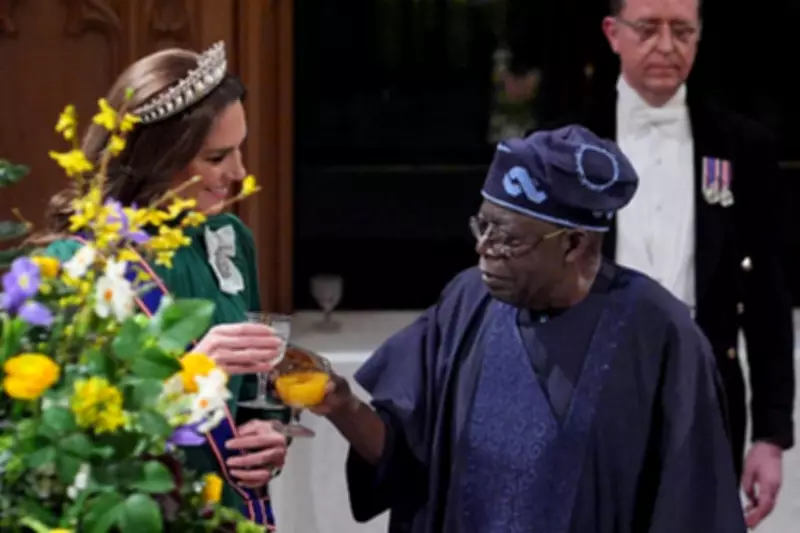
The visit commenced with a royal reception at Windsor Castle, where His Majesty King Charles III and Queen Camilla welcomed President Tinubu and First Lady Oluremi Tinubu. The President reviewed a guard of honour and received a 42-gun salute, a traditional honour reserved for distinguished guests. A state banquet followed, where President Tinubu toasted with Britain's Catherine, Princess of Wales, symbolising the warm bilateral ties.
This visit holds historical weight as it occurred 37 years after a similar state visit by military President Ibrahim Babangida in 1989. Unlike Babangida's visit during Nigeria's military dictatorship, Tinubu's trip took place under a flourishing 27-year-old democracy, reflecting Nigeria's political evolution. Notably, President Tinubu became the first Nigerian leader to be hosted at Windsor Castle, a site steeped in over 900 years of British monarchy history.
Economic Reforms and Global Recognition
The visit highlighted the Tinubu administration's economic reforms, which have stabilised the Naira, liberalised the investment climate, and modernised the tax system. These efforts have garnered global commendation, positioning Nigeria as a key player in international affairs. The pomp and ceremony surrounding the visit were not merely symbolic but indicative of Nigeria's return to the global spotlight.
Trade and Investment Agreements
Beyond the ceremonies, the visit yielded tangible economic benefits. Nigeria and the UK share a longstanding relationship, with trade totalling £8.1 billion, an 11.4% increase from the previous year. Energy products dominate this trade, with Nigeria exporting £1.0 billion in crude oil and the UK exporting £1.6 billion in refined oil.
A significant outcome was the signing of a £746 million financing deal for the refurbishment of two major Nigerian ports: Apapa Quays and Tincan Port Complex. This agreement aims to enhance operational efficiency and speed up goods clearance, potentially boosting Nigeria's economy through improved logistics.
Additionally, Nigerian banks like Zenith Bank and Fidelity Bank are expanding their presence in the UK, with growing investments in fintech, manufacturing, and education sectors. King Charles noted in his speech that Nigerian banks are choosing London as a global base, and British schools are opening campuses in Nigeria, fostering closer educational and technological partnerships.
Bilateral Discussions and Global Challenges
President Tinubu held bilateral meetings with British Prime Minister Keir Starmer at 10 Downing Street, focusing on trade, economy, climate change, terrorism, and Middle East tensions. Tinubu emphasised the importance of improving livelihoods through collaborative efforts, stating, "My reaction is the economy and the welfare of the people and how we should work together to improve the livelihood of our people."
Prime Minister Starmer praised the enduring UK-Nigeria relationship, highlighting strong collaboration in defence, security, and economic areas. He also noted vibrant people-to-people connections, with 251,000 British travellers visiting Nigeria and Nigerian visitors spending £178 million in the UK in 2024.
Cultural Engagement and Conclusion
Before departing, President Tinubu attended an art exhibition at Tate Modern sponsored by Access Bank, where he commended Nigerian creativity and resilience. The visit, though brief, is expected to have lasting impacts, reinforcing Nigeria's diplomatic and economic ties with the UK.
In summary, President Tinubu's state visit to the UK was a blend of symbolic gestures and concrete achievements, marking a historic moment for Nigeria's international relations and economic prospects.




