Trump Condemns NATO Allies for Declining to Participate in Iran Strait of Hormuz Operation
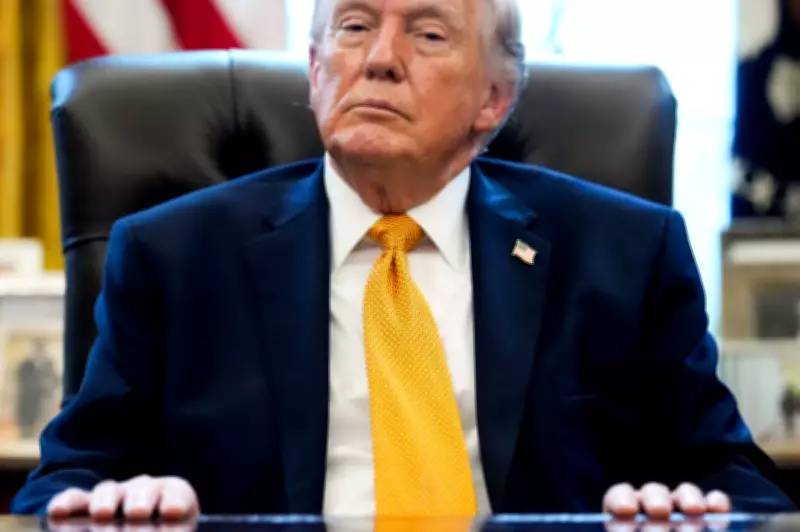
U.S. President Donald Trump launched a fierce verbal assault on NATO allies on Tuesday, following their refusal to support American efforts to reopen the strategic Strait of Hormuz in the face of escalating tensions with Iran. During a meeting at the White House with Irish Prime Minister Micheál Martin, Trump asserted that the United States is fully capable of confronting Iran independently and does not require assistance from its traditional military partners.
NATO's Loyalty Questioned in Key Security Test
Trump characterized NATO's decision as a "very foolish mistake" and framed the situation as a critical examination of the alliance's commitment to the United States. "I've long said that I wonder whether or not NATO would ever be there for us. So this was a great test," the president remarked, implying that the alliance had failed to demonstrate unwavering support during a pivotal moment.
His comments came in response to several key U.S. allies, including France, publicly declining to join a proposed multinational mission aimed at escorting commercial vessels through the vital waterway. French President Emmanuel Macron explicitly stated that France would "never" participate under the current volatile conditions, emphasizing the necessity for stabilization before any military involvement.
Asserting American Self-Sufficiency and Criticizing Global Partners
Undeterred by the international pushback, Trump maintained a stance of robust self-reliance. "We don't need too much help. We don't need any help," he declared, reinforcing this position in a separate social media post where he highlighted past U.S. military successes as justification for operating without NATO's collaboration.
The president broadened his critique beyond European allies, describing NATO as a "one-way street" and alleging that other nations such as Japan, Australia, and South Korea were also reluctant to engage. He hinted at a potential reevaluation of the U.S. relationship with NATO, though he clarified there are no immediate plans for structural changes.
Targeted Criticism of World Leaders and Regional Tensions
Trump did not hesitate to single out individual leaders for reproach. He accused British Prime Minister Keir Starmer of lacking support, labeling it a "big mistake," and dismissed Macron's stance by suggesting the French leader's tenure is nearing its end.
The backdrop to this diplomatic friction is heightened tension around the Strait of Hormuz, where Iran has targeted regional energy infrastructure and threatened oil tankers. This strategic chokepoint, crucial for global crude oil shipments, has seen disruptions that risk impacting worldwide energy supplies and economic stability.
Mixed Signals on Conflict Duration and Broader Implications
Offering ambiguous perspectives on the conflict's trajectory, Trump described the situation in Iran as "just a military operation" and suggested U.S. involvement might conclude shortly. However, he remained vague regarding long-term strategies for Iran's governance and regional influence.
The escalating conflict across the Middle East has contributed to rising global oil prices and increased pressure on U.S. allies to define their positions clearly. This episode underscores deepening fissures in international alliances and highlights the complex geopolitical dynamics surrounding energy security and military cooperation.