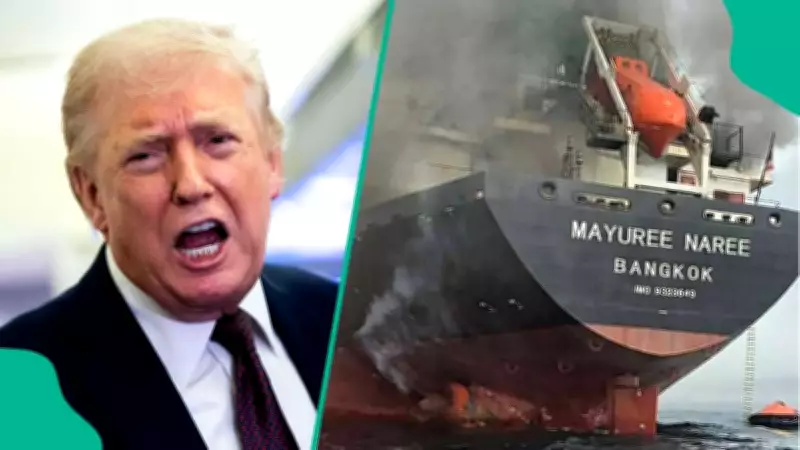
Trump Calls for Naval Coalition as Iran Closes Strait of Hormuz to US and Allies
United States President Donald Trump has urgently called upon multiple nations to deploy warships to help reopen the strategically vital Strait of Hormuz, after Iran effectively blocked the waterway to vessels from the United States, Israel, and their allies. The dramatic closure has severely disrupted global oil exports and commerce across the Gulf region, with ripple effects being felt worldwide.
Global Oil Trade and Travel Disrupted
The Strait of Hormuz is a critical maritime chokepoint, normally facilitating the transit of nearly one-fifth of the world's traded oil. Its closure has immediately driven global oil prices higher, creating economic uncertainty. The disruption has also impacted regional travel, with Dubai International Airport—the world's busiest—briefly halting all flights following a drone strike that ignited a fuel tank fire. Authorities confirmed the blaze was quickly contained and resulted in no casualties.
In a statement on Monday, March 16, President Trump revealed he has asked "about seven" countries to contribute naval assets to form a coalition aimed at patrolling and reopening the strait. He emphasized that while the United States is prepared to lead, the nations most dependent on Middle Eastern crude oil should bear responsibility for protecting their own shipping interests.
"It's something that we don't need, and these countries do need," Trump stated, framing the request as a matter of allied burden-sharing. "We're always there for NATO... It'd be interesting to see what country wouldn't help us with a very small endeavor. Really, I'm demanding that these countries come in and protect their own territory."Iran's Stance and Escalating Tensions
Iranian Foreign Minister Abbas Araghchi asserted that, from Tehran's perspective, the Strait of Hormuz remains open to all maritime traffic except that belonging to the United States, Israel, and their allies. "From our perspective, it is open," Araghchi declared, clarifying that the waterway is "only closed to our enemies, to those who carried out unjust aggression against our country and to their allies."
Araghchi also firmly rejected international calls for a ceasefire in the ongoing conflict, which began over two weeks ago with US and Israeli strikes on Iranian targets. He described Iran's position as one of "proud resistance...without any hesitation," insisting that any resolution must ensure such hostilities do not recur.
In retaliation for the initial strikes, Iran has launched missile and drone attacks against Israeli sites, American bases in the region, and energy infrastructure in Gulf states. The conflict has intensified a humanitarian crisis in Lebanon, where Israeli military action has displaced hundreds of thousands and resulted in numerous casualties.
Diplomatic Maneuvers and Economic Warnings
President Trump hinted he might postpone a planned diplomatic trip to China later this month to increase pressure on Beijing to assist in reopening the strait and stabilizing turbulent oil markets. However, the US administration has not named the specific countries approached for the naval coalition, and no firm commitments have been publicly announced, with some governments responding cautiously.
Iran has further accused the United States, without providing evidence, of utilizing "ports, docks and hideouts" in the United Arab Emirates to launch strikes on Kharg Island, a central hub for Iran's oil export capacity. Tehran has also issued a stark warning that the prolonged Middle East conflict could trigger a severe and extended global economic crisis, particularly if key trade routes like the Strait of Hormuz remain compromised.
The Iranian government declared its readiness for a protracted war of attrition, signaling that commercial vessels linked to the US and its allies would be considered legitimate targets, following recent attacks on Gulf shipping and infrastructure. This stance underscores the high stakes and potential for further escalation as diplomatic and military tensions continue to mount.